Ah Tatua, You've Done It Again!
Waikato milk processor Tatua has again declared a record milk payout to farmer shareholders, leaving other processors in the dust.
 increase font size
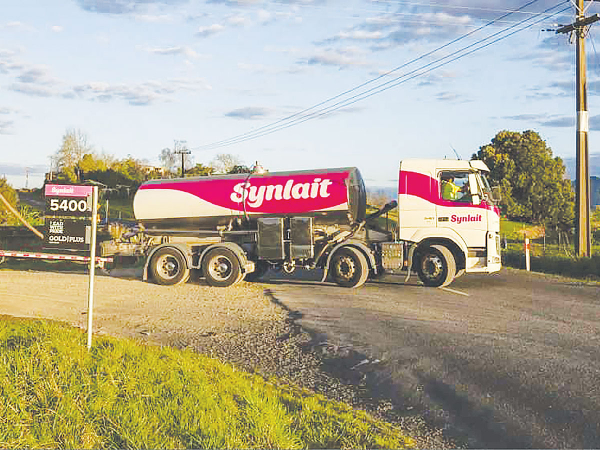 Synlait's fortunes are closely tied to a2 Milk, which recently issued its fourth earnings downgrade.
Embattled Canterbury milk processor Synlait has taken another hit, with key customer and shareholder a2 Milk issuing its fourth earnings downgrade.
Synlait's share price plunged 20c after a2 Milk trimmed its full-year earnings guidance 20% to between $1.2 billion and $1.25 billion.
a2 expects underlying profit margin to fall from between 24 and 26% to between 11% and 12%.
It is also writing down the value of between $80m and $90m worth of stock.
Synlait's fortunes are closely tied to a2 Milk, which owns 19.8% of the milk processor and is its biggest customer for packaged infant formula and base powder.
In a trading update this month, a2 Milk says steps taken to improve profitability through the Daigou and e-commerce channels had been ineffective.
The Daigou channel is an unofficial trade route whereby Chinese students and tourists snap up large amounts of A2 branded products to then on-sell them in China.
The company was battered by the Covid-19 pandemic as it wrestled with the effects of closed borders, declining infant births in China and excess supply of its premium infant formula brand. All of which, combined to curb demand for its products throughout the pandemic and led to multiple earnings downgrades.
Delivering its half-year results, six weeks ago, Synlait chairman Graeme Milne says the revised demand forecast received from its cornerstone customer and shareholder a2 Milk Company was "significant and sudden".
The knock-on effects of this demand-change continue to play out in real time: Synlait's sales of consumer packaged infant formula fall 16% to 18,085 MT and infant formula base powder production dropped 61%.
Milne says it continues to take a conservative view on the recovery.
However, there's no end to a2 Milk woes. Its share price shed $1.39/share and slumped to a new three-year low last week. The company has had a wild ride on the sharemarket. It was once NZ's largest dairy company, with a market capitalisation of $9 billion. It is now valued at $4.6b.
Waikato milk processor Tatua has again declared a record milk payout to farmer shareholders, leaving other processors in the dust.
Synlait has swung to second-half profit as operations stabilise, but the dairy processor still posted a $75.4m annual loss.
OPINION: It seems Canterbury processor Synlait is still in the doldrums.
Speculation of a possible joint move by Fonterra and a2 Milk to buy Synlait raises a much bigger strategic question, says agribusiness expert Dr Nic Lees.
A revolving door of chief executives at milk processor Synlait is a warning sign, says Lincon University senior lecturer in agribusiness Nic Lees.



Mark Hooper has been appointed the new chair of NZPork, the industry organisation representing New Zealand pig farmers.

As the India-New Zealand free trade agreement enters into force, New Zealand’s apple industry has reaffirmed its commitment to the long-term development of India’s apple sector.
Fonterra shareholders can begin voting on Tuesday 20 October in the 2026 Board of Directors’ election, a Co-operative Council election in one Ward, and seven Annual Meeting resolutions.
National’s pledge to introduce 19 new national standards shows the party is serious about getting Wellington out of farming, Federated Farmers says.
The National Party’s policies to make it easier to grow fresh vegetables, secure reliable water and energy and simplify farm planning are practical changes that will give growers the confidence to invest, according to Horticulture New Zealand (HortNZ).
Fonterra Co-operative Group chief financial officer Andrew Murray has resigned to take up a role outside the dairy giant.