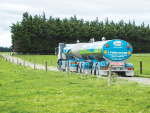
A marked turnaround in the financial performance of Canterbury milk company Synlait has halted a threatening exodus of farmer suppliers.
Synlait last week announced its half-year result for the six months to the end of January, with earnings before interest, taxes, depreciation, and amortisation (EBITDA) up 217% at $63.1 million, and net profit after tax (NPAT) up 105% to $4.8 million, compared with the same period to January 2024.
Net debt was $391.9 million, down 29%, revenue was $916.8 million, up 16%, and gross profit was $87.0 million, up 99%.
Having revealed last year that a majority of its South Island farmer suppliers had advised an intention to stop supplying milk to the company, Synlait says that is now not the case, with many withdrawing their cease notices.
"This is a significant improvement in the company's position from six months ago," Synlait said in its announcement to the NZ Stock Exchange.
"The reversal of ceases continues to gain momentum. Given the company's return to profitability, as released in today's results, it is expected the number of withdrawals will increase further ahead of 31 March 2025, which is the final date for farmers to remove their cease if they wish to access all the new, secured milk premiums."
The forecast base milk price for the 2024-25 season is $10/kgMS with additional premium payments available to suppliers without a cease notice, taking the total forecast average milk payment for Synlait suppliers to $10.48/kgMS.
In its guidance statement for the second half year Synlait said it balances opportunities and risks related to milk stream returns and foreign exchange.
But it says interest from potential new farmer suppliers has exceeded expectations and it expects to recruit new farmer suppliers in the coming seasons based on the strength of its on-farm offering.
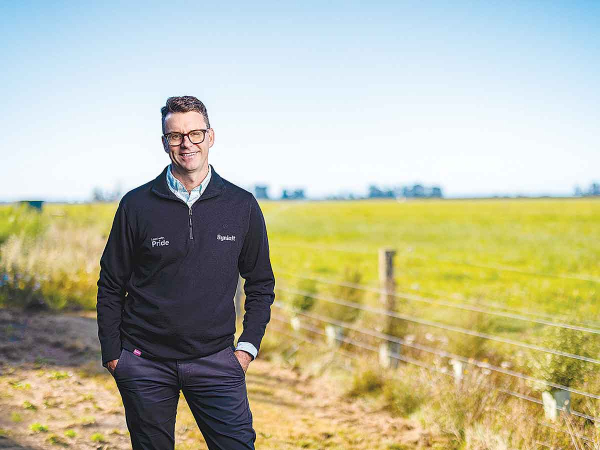
Speaking a day after the result announcement and with a week to go to the March 31 deadline, Charles Fergusson, Synlait’s director of on-farm excellence, sustainability and corporate affairs, would not put a figure on the number of cease notices but told Dairy News that it was now in a minority of suppliers and getting smaller every day.
“I have had phone calls from two large multi-farming groups yesterday advising that they would be pulling their ceases this week.
“We’ve had good momentum since the start of February and we’re expecting a pretty big week because a lot of farmers had linked their decision to the publishing of this result.”
The announcement followed last year’s equity raise through issuing extra shares to major shareholders Bright Dairy and a2 Milk Company. Bright chipped in $185m to increase its stake to 65% and a2’s $32.8m injection maintained its 19.8% stake – while diluting minority investors’ overall stake.
Fergusson said the equity was not the key to the turnaround, but it gave certainty to Synlait’s various stakeholders.
“We identified quite a long time ago that we had performance challenges coming and we started focusing on those well over a year ago and we’re starting to see the benefit of that come through now.”
Monthly financial performance is driven by the business growing volume and customers, new products, and keeping control of costs.
The equity raise “just provided certainty for us to accelerate our turnaround rather than driving it,” he said.
Welcome Relief
Prominent Mid-Canterbury dairy man Willy Leferink welcomed the result.
He said the A2 and Bright Dairy capital injection halved the company’s interest bill and the company also had a number of other things “go their way.”
“On top of that, I think they really started to focus on what was really important to Synlait.”
Leferink was among the farmers who had advised Synlait that he would leave but had already lifted his cease notice.
“I already knew that it was going a lot better.
“There was a number of people that were looking for a good half year results to return their cease notices.”
Leferink was now confident for the future “if they stay on the straight and narrow”.
“I’m grateful that it turned around, and I had every option to walk away because I own a lot of shares in Fonterra. But I have faith in the current team, and the field team are doing an awesome job.”