Southerly Winds Hit Taranaki Dairy Pasture Growth
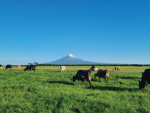
A spate of southerly winds bringing cold temperatures has presented challenges for Taranaki dairy farmers.
 increase font size
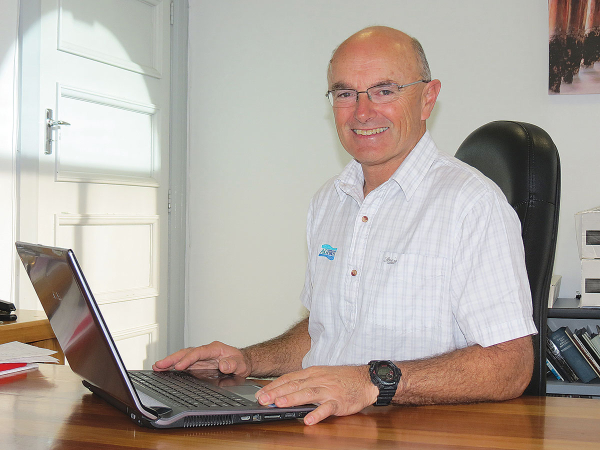 Peter Andrew says that the Gisborne region has received 2.5 metres of rain so far this year.
Recent rains are almost the last straw for sheep and beef farmers in Tairawhiti.
Gisborne-based AgFirst consultant Peter Andrew says many farmers who'd just completed repairing infrastructure on their properties, damaged by Cyclone Gabrielle and subsequent rain storms, have found this work destroyed by rain in the past couple of weeks.
He says it's a tough situation for many.
"A lot of farmers had just finishing clearing their tracks and suddenly awoke to them damaged again by more slips," he told Rural News.
Andrews says the rain started in January and has kept going at various times during the year. He notes that Gisborne has received 2.5 metres of rain so far this year.
"While most farms have access to their properties, there are at least ten bridges that are still not repaird and it will be some time before this is done."
Andrew says despite the challenges, farmers are resilient and getting on with the job of farming. He adds taht some farmers have made good gains, while others continue to struggle.
Meanwhile, in Hawke's Bay, the main issue concerning farmers is what will happen in the next 12 months.
Lochie MacGillivray of AgFirst says while farmers are feeling a little more confident with the new government and feel that they will get a better hearing, they are realistic in expecting no change in the fundamental direction the country is taking.
He says the biggest issue of concern is the current state of the lamb market with falling prices and an oversupply on the global market caused by Australia liquidating its sheep flock. MacGillivray believes the situation is similar to what happened in 2016/17, but is likely to get worse.
"I have been told by one very experienced farm accountant, who's seen seven cycles of prices over many years, that 2024 will be the worst," he told Rural News. "This is because of low stock prices, high interest rates and inflation, plu the concerns around when the China market will bounce back."
MacGillivray says the situation in 2024 for some farmers looks scary.
However, back on farm he says things aren't that bad.
"The rain that caused problems in Tairawhiti didn't affect Hawke's Bay, but the cold and overcast days have not been conducive to good stock growth."
MacGillivray says lamb and cattle don't like the cooler weather and need the sun to grow to their potential. He notes that it's been a good lambing overall and survival rates have been high.
"The other issue that farmers will be thinking about is flystrike as humidity levels rise and the grass is still wet. If that happens, flystrike will be a problem," he says.
In terms of damage from Cyclone Gabrielle, MacGillivray says farmers have been busy repairing their farms and most are now fully operational. He points to one farmer he know who has clocked up five hundred hours of digger work getting tracks and other bits of infrastructure fixed.
MacGillivray estimates that for the worst-hit farmers it will cost $1,000 per hectare to repair the damage, meaning the bill for a 300ha farm would be $300,000. Meanwhile, he says other farms have suffered minimal damage.
"That aside, there is still a nervous wait to see what 2024 brings."
A spate of southerly winds bringing cold temperatures has presented challenges for Taranaki dairy farmers.
Surprised, humbled and quite thrilled. That’s the reaction of James Allen, one of the founding partners and now chief executive of AgFirst, on being made a life member of the Institute of Rural Professionals.
A warning to dairy farmers not to expect the same good conditions that they experienced last season, has been issued by a leading farm consultant.
As fuel and fertiliser prices rise and with uncertainty in the future, farmers are being urged to go over their budgets with a fine-tooth comb.
For the most part, dairy farmers in the Waikato, Bay of Plenty, Tairawhiti and the Manawatu appear to have not been too badly affected by recent storms across the upper North Island.


Good medium to long term prospects for NZ beef, especially in the US, has heighted the focus on various initiatives to capitalise on this situation.
High country stations, mixed sheep and beef farms, Māori-owned farms, corporates and family operations are among the nine commercial farms taking part in the Livestock Innovation Farming Transformation programme, known as LIFT.
OPINION: New health and safety guidance unveiled by the Government recently provides farmers greater certainty about what is expected of them when managing risks on farm.
The National Animal Welfare Advisory Committee (NAWAC) is seeking public feedback on proposed changes to the Code of Welfare for Rodeos.
A New Zealand initiative supporting farmers to restore the health of grazing landscapes has received international backing through the Regenerative Fund for Nature, a global collaborative fund supporting regenerative agriculture and the communities that produce natural fibres for the fashion industry.
Combine premium New Zealand products, blend in a family ritual and what do you get? A world-class functional drink.