Health and Safety Law Progress
Worksafe New Zealand has advised that the Health and Safety Reform Bill, currently working its way through Parliament, is expected to be passed into law mid-year.
 increase font size

BIOSECURITY HAD been used as a “political football”, including by some industry leaders, Minister for Primary Industries David Carter has told Parliament.
He was speaking in the debate before the Biosecurity Law Reform Bill was passed. The bill makes a wide range of amendments to the current Biosecurity Act, along with related amendments to four other acts.
Carter said in the parliamentary debate that he acknowledged the genuine concerns of growers, farmers and producers about the New Zealand biosecurity system.
However, he was disappointed about biosecurity being used as a political football by some politicians and industry leaders. He hoped the passing of the bill, with good cross-party support, would bring about “more constructive engagement”.
Labour party primary industries spokesman Damien O’Conner said Labour supported – and in fact had initiated – most of the provisions of the bill. But he was concerned that it came at a time when the Government was slashing about 90 staff at Biosecurity New Zealand.
Labour was also concerned at the self-regulation aspects of the bill, as there were “real dangers” when industries were put under pressure to cut corners, he said.
Carter later outlined, in a statement, that New Zealand’s biosecurity was world-leading, but the legislation has not kept pace with the way the system has had to evolve.
“The amended act covers the areas of border biosecurity, joint decisionmaking on newly detected harmful organisms and ongoing management of established pests,” he says. “The reforms will enable better use of information to target risks and encourage partnerships in the management of potential biosecurity incursions.”
Carter says a key plank of the reforms is developing government-industry agreements on preparing for, and responding to, newly detected pests and diseases, and for sharing the costs of jointly-agreed activities.
Worksafe New Zealand has advised that the Health and Safety Reform Bill, currently working its way through Parliament, is expected to be passed into law mid-year.

The Government is establishing a company to act as a bridging investor for regional water infrastructure development, outgoing Primary Industries Minister David Carter says.
The NZPork Annual Report 2012 labels the last year a watershed for the industry with many positive changes.
The report of the Local Government Efficiency Taskforce released last week is an essential building block of the Government's reform programme, says Local Government Minister David Carter.
Primary Industries Minister David Carter is welcoming a boost to New Zealand's biosecurity frontline with the graduation on Friday of 46 new recruits.



Now in its fourth year, the 2026 Fencing Industry Awards, formed part of the proceedings of the FCANZ Conference, held in Nelson during August.
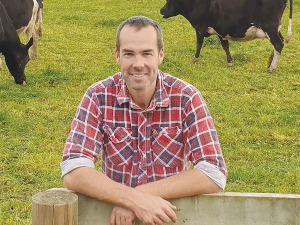
DairyNZ deputy chair Cameron Henderson has been re-appointed unopposed for another term.
OPINION: The stats speak for themselves.
Farms across the upper North Island are trialling different pasture mixes as part of a research programme that aims to build greater resilience into farming systems.
Election years are always a concerning time for farmers, according to DairyNZ chair Tracy Brown.
The Ballance Farm Environment Awards are coming to the West Coast of the South Island.