Calf Shed Hygiene Starts with Chemistry
Good Calf shed hygiene has always been about providing clean, dry bedding.
 increase font size
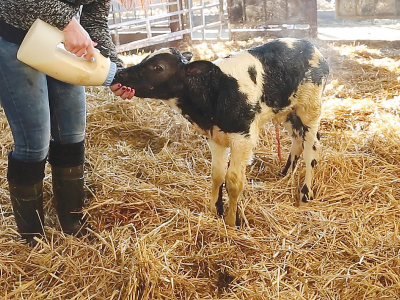
All calves, including bobbies, must get adequate fresh colostrum in their first 24 hours of life.
And in their first four days, or more, feed them colostrum or a colostrum substitute.
Calves should drink about 4-6L of fresh colostrum in their first 12 hours to get protective antibodies. To achieve this, pick up calves twice a day and give them gold colostrum as soon as possible.
DairyNZ says farmers can test the level of antibodies in a batch of colostrum using a Brix refractometer, available from the vet, farm supply store or a home brew shop. Brix higher than 22% is best for newborns.
Gold colostrum is best fed fresh but may be frozen for up to six months. Thaw/heat in warm water, do not microwave.
Store colostrum in a lidded drum or vat and stir regularly. Colostrum should be refrigerated (at 4°C) or preserved using a chemical preservative such as potassium sorbate.
It is crucial that calves receive colostrum after birth as they are born without an active immune system, making them highly vulnerable to infection.
Calves should receive 10% of their body weight of colostrum in the first 10 hours. Colostrum is important because it is a rich source of:
• Fat and lactose: this provides energy as the newborn calf is born with low energy stores and poor insulation
• Protein: for protein synthesis and muscle growth
• Immunoglobulins (antibodies) provide passive immunity and help fight infection
• Vitamins and minerals which provide high levels of vitamins A and E for health and immunity
Early feeding of colostrum is essential because although when a calf is born its intestines are able to absorb the antibodies in the cow’s colostrum, the cells mature rapidly and lose their ability to absorb these antibodies.
After 24 hours only a small percentage will reach the calf’s bloodstream so will provide less immunity. The calf should receive colostrum soon after birth to have the best chance of absorbing antibodies. Tube feed calves colostrum if necessary.
Colostrum should be good quality and from the first milking, as later milk production contains lower antibodies and nutrients.
The quality of colostrum is affected by the number of pregnancies the cow has had.
Because older cows have been exposed to more infections than heifers, they have higher levels of antibodies in their colostrum.
A supply of frozen colostrum should be kept on hand for feeding when fresh colostrum is not available. Take care to thaw it gradually.
Overheating the colostrum will destroy the antibodies and supply lower immunity to the calf. Colostrum should be good quality, fed in sufficient quantities and fed quickly.
Without this passive immunity from colostrum, calves are much more susceptible to disease and have a higher risk of dying. Colostrum should be fed for the first three to four days after birth before changing to whole milk or milk replacer.
Good Calf shed hygiene has always been about providing clean, dry bedding.
Matt Collier, Probiotic Revolution, says calves will drink a lot of milk once-a-day with their probiotic Calf Xtreme.
Body Condition Score (BCS) is a critical element in managing the health and reproduction of the dairy herd.
Rearing facilities should be set up and maintained well to ensure calves stay healthy.
Clean and comfortable calf sheds help create a nurturing environment for calves, reduces the risk of disease and encourages high growth rates.



Waikato milk processor Tatua has again declared a record milk payout to farmer shareholders, leaving other processors in the dust.

A Labour-led Government won’t be bringing back the controversial freshwater rules of 2020.
National’s much-touted free trade deal with India featured in the Rural Issues Debate at Mystery Creek, Hamilton on Wednesday night.
New Zealand's 2026-27 freshwater fishing season has opened, with anglers encouraged to head to rivers and lakes over the coming days as conditions look favourable across much of the country.
Central Otago District Council (CODC) has voted against a plan to spread treated sewage sludge from Cromwell and Alexandra on farmland near Lauder, a decision Federated Farmers says reflects strong opposition from rural residents.
Pāmu has released its FY26 Integrated Annual Report, reporting a Net Operating Profit of $113 million, more than double the $49 million recorded in FY25.