Replacing farms with forests?
A horror story - that’s how Federated Farmers describes new research looking at forestry conversions’ impact on water quality.
 increase font size
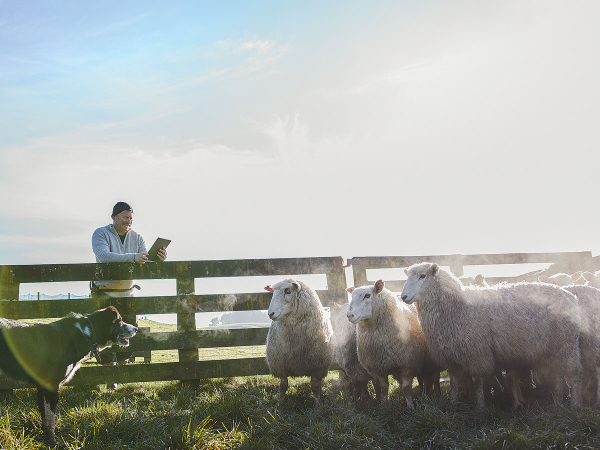 According to new research, the urban-rural divide could be a myth.
The urban-rural divide is a myth.
These are just some of the findings from Farming for Good, a new collection of social science research exploring New Zealanders relationship with farming.
Initiated by the Our Land and Water National Science Challenge, the collection is New Zealand's most comprehensive study of the social licence to farm, drawing on findings from five research projects conducted during 2022-2023.
"The Farming for Good research collection is about understandng where trust and connection is strong in our food & farming system, where it might be faltering and how to build it back," says Peter Edwards - senior researcher at Manaaki Whenua Landcare Research and lead on the 'Connecting Food Producers and Consumers' research project.
The collection also launches alongside a social experiment. The 'Food & Farming People's Panel' brings the research to life. It asks hard questions of eight everyday people from across the food system - like how climate change makes them feel, what the farmer of the future looks like and how we solve New Zealand's food security issues.
Some of the findings across the 26-piece collection include:
https://ourlandandwater.nz/wp-content/uploads/2024/03/Farming-for-Good_Factsheet.pdf
A horror story - that’s how Federated Farmers describes new research looking at forestry conversions’ impact on water quality.

New Zealand's dairy sector is more threatened than our meat producers by the development of new proteins, according to new research funded by the Our Land and Water National Science Challenge.
A free interactive tool has been launched to provide grape and apple growers with information on how climate change may affect the risks and costs of living with common plant diseases in different parts of New Zealand.
A free interactive tool has been launched to provide apple and grape growers and prospective investors with a glimpse into how climate change may affect the risk and costs of living with plant diseases in different parts of New Zealand.
A study arising from a partnership with Ravensdown, AgResearch and Ngāi Tahu Farming, has created a benchmark approach to testing the health of soils.


Farmer-owned fertiliser company, Ballance Agri Nutrients is welcoming National’s plan to negotiate security agreements with key supplier countries to protect New Zealand-bound products from export restrictions and greater supply chain certainty.

Carrfields has announced the appointment of Stu Hall to the newly created role of chief operating officer, Carrfields Ltd, reflecting the continued growth of their agribusinesses and the need to ensure the company has the leadership capacity and support in place as it pursues the emerging opportunities ahead.
New Zealand's role is not to compete with Indian growers, according to NZ Apples and Pears.
The potato industry is celebrating the success of two rising stars - James Blair, the 2026 Young Grower of the Year and runner-up and innovation award winner, Amber Davy.
Twenty-eight emerging leaders from across the horticulture sector spent two days last month learning valuable skills and connecting with industry experts.
There are five entrants in this year’s Young Horticulturist of the Year, competing in a series of technical, practical, business and leadership challenges.