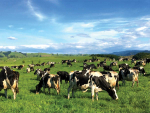
DairyNZ's Tracy Brown Flags El Nino Risk for Dairy Farms
Most dairy regions around the country have had a pretty good season so far says Tracy Brown.
 increase font size
 Hayley Moynihan, Rabobank.
Milk price recovery is more likely in 2016-17 than this season, says Rabobank director of dairy research Hayley Moynihan.
The recovery is a question of when not if, Moynihan told Rural News.
“The timing of the recovery will depend on how much of that price improvement is seen in the 2015-16 season and how much is seen in the following season,” she said. “Rabobank still expects it will be largely a 2016 recovery therefore a dramatic lift in this season’s milk price is unlikely but recovery should be seen in 2016-17.”
Moynihan says production lifts are still being seen in Europe, the United States and the tail end of the New Zealand season was much stronger than initially expected. “The rate of increase is starting to slow slightly but it is still increasing.” This is contributing to the delay in price recovery.
The European Union is boosting production after the lift on quotas, as predicted. Those countries which geared up for the removal of quota have seen strong increases in production but lower prices are curtailing their enthusiasm.
“So production is growing but not as strongly as it could be if we were in a higher milk price environment.”
Synlait announced its forecast milk price for the forthcoming 2015-2016 dairy season at $5.50 kgMS.
“Despite the small recovery in commodity prices we saw earlier this year, the market has not delivered the stability we had hoped for,” said John Penno, Synlait managing director.
“We’re very aware of how financially tough this current season is for our suppliers. We are confident commodity prices will recover over time and our 2015-2016 forecast milk price assumes we will see the beginning of this recovery from the current low prices.”
“The global oversupply is being met by soft demand across the board. This creates a lot of uncertainty in an already volatile market, so it will remain a fragile environment for the immediate future.”
Most dairy regions around the country have had a pretty good season so far says Tracy Brown.

Chinese beef trade quotas and a looming suspension of Brazilian beef imports into the European Union are expected to reshape global beef trade flows over the remainder of 2026, with implications for New Zealand exporters, according to Rabobank's Q3 Global Beef Quarterly report.
New Zealand consumers are paying more for beef mince than ever before, with the average retail price now sitting above $24 per kilogram, according to Rabobank.
West Otago dairy farmer Luke Kane has been awarded the 2026 Rabobank Dr John Morris Business Development Prize.
Twenty five secondary school students from around New Zealand recently completed a three day residential programme designed to explore career opportunities across the food and fibre production supply chain.

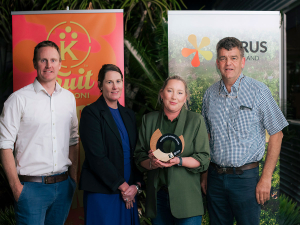
New Zealand's citrus growers were challenged to build their future on the value embedded in their fruit rather than the volume they produce, at Citrus New Zealand's annual gathering in Gisborne on 17 September.
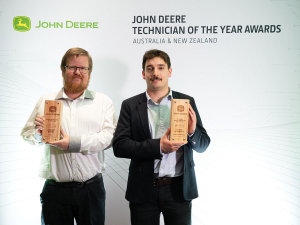
Leading John Deere technicians and apprentices from New Zealand and Australians were recognised at the recent sixth annual JD Technician of the Year Awards, held in Brisbane.
In Dacre, near Invercargill in New Zealand’s South Island, Bruce Dinnington is running a dairy operation unlike any other.
A free online platform aggregating governance vacancies across rural and regional New Zealand has been launched.
Environment Minister Nicola Grigg has announced details of a new rural plastics recycling scheme.
Agricultural drone operators say that a government decision to allow lower-risk drone work without certification won’t lower standards but drive innovation and efficiency.




