
Federated Farmers Praises Labour's Emissions Tax Backdown
For the first time in a quarter of a century, Federated Farmers has something positive to say about the Labour Party’s climate change policy leading into a general election.
 increase font size
 Lord Deben – John Gummer.
A British conservative politician and head of its climate change committee has rebuked New Zealand for not showing enough leadership on climate change issues for agriculture.
Speaking at a climate change conference in Auckland, Gummer said NZ does not need to start its climate change action with agriculture because it has “remarkable” advantages in other areas.
However, we should be a world leader on agricultural issues and the UK would back it, says John Gummer, a former MP who is now in the House of Lords as Lord Deben.
“After all you are the convenor of the international group dealing with agriculture. And yet I have to say NZ has not been as active in that as it should be.”
Gummer says the National Party should be leading the charge because that would provide more certainty for business.
It needs to realise that in the UK the centre-right has pushed the agenda all the way along to give business certainty.
The UK Committee on Climate Change advises the Government and produces recommendations to Parliament, backed by cross-party support, he says. And NZ also needs to make sure everyone realises it is not a party political issue, Gummer told the conference.
An issue for NZ is “whenever you talk about climate change everyone rushes to talk about the problems of agriculture”.
“I want you to start with the things you can do and the advantages you have.
“There is absolutely no point in going for the most difficult things first when you have some remarkable advantages.”
He says NZ has “almost carbon-free [electricity] generation” without trying.
The UK has a terrible problem in getting to a low-carbon economy, has already spent 7.6 billion pounds getting there and won’t reach it until the 2030s.
But while agriculture does not have to come first, he believes NZ should be a leader in this area of climate change.
“We in Britain will be as supportive as is humanly possible to help you in those discussions of agriculture because we’ve got to do it too.
“Agriculture is not as important to us and livestock in particular isn’t as important to us as it is to you, but it is crucial to the economies of Wales and Scotland,” Gummer says.
“So we’ve got to solve these problems as well. We’ve got to find a way of feeding animals [that prevents] the belching that produces so much methane.
“We have to find ways of solving the real problems of land use, and putting new heart into the soil, not only because it can be in a real sense a carbon sink but also because we are going to have to produce more food for a world in which by 2030 there will be 1.5 billion more middle-class people who have the opportunity to choose more food and choose their diets.”
Gummer was recently reappointed chairman of the UK climate change committee for five more years.
For the first time in a quarter of a century, Federated Farmers has something positive to say about the Labour Party’s climate change policy leading into a general election.
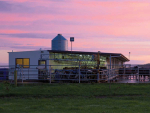
Climate, nature and animal wellbeing make up Fonterra's refreshed sustainability roadmap released last week.
A five-year study has found that the cost of reducing emissions without technology may be significant and unsustainable for Northland dairy farmers.
OPINION: With the winter months officially here, I trust all is well at your place.
OPINION: The global crusade against fossil fuel is gaining momentum in some regions.


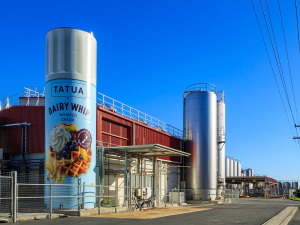
Waikato milk processor Tatua has again declared a record milk payout to farmer shareholders, leaving other processors in the dust.
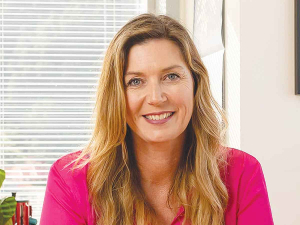
A Labour-led Government won’t be bringing back the controversial freshwater rules of 2020.
National’s much-touted free trade deal with India featured in the Rural Issues Debate at Mystery Creek, Hamilton on Wednesday night.
New Zealand's 2026-27 freshwater fishing season has opened, with anglers encouraged to head to rivers and lakes over the coming days as conditions look favourable across much of the country.
Central Otago District Council (CODC) has voted against a plan to spread treated sewage sludge from Cromwell and Alexandra on farmland near Lauder, a decision Federated Farmers says reflects strong opposition from rural residents.
Pāmu has released its FY26 Integrated Annual Report, reporting a Net Operating Profit of $113 million, more than double the $49 million recorded in FY25.