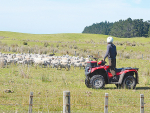
Nasty surprise
The late expansion of Three Waters to Five by Minister Nanaia Mahuta seems to have caught her own Cabinet colleagues out, with even the Prime Minister's office taking a while to get its spin straight on this one.
 increase font size
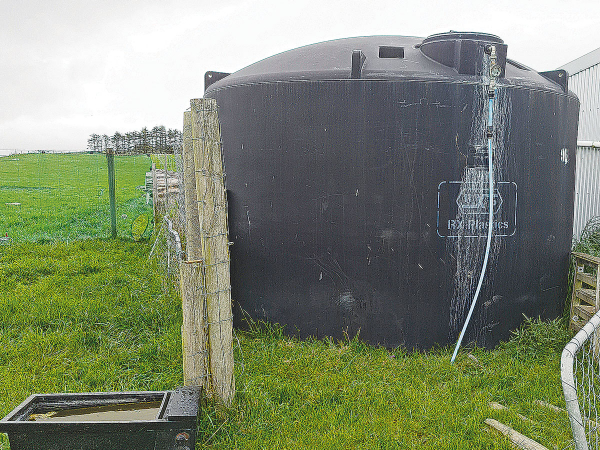 Clutha District is undertaking an assessment of its rural water supplies to see how the water schemes could operate in the future.
An assessment of Clutha District’s rural water supplies is currently underway.
The assessment aims to look at how the schemes could operate in the future.
It comes as the Government seeks to pass the Water Services Entities Bill which has just hit its second reading in Parliament.
If passed, the Bill would establish four water services entities to provide water services in New Zealand.
Clutha District Mayor Bryan Cadogan says reforms are distinctly different for the urban three waters and the rural one water.
“For the most part our rural areas only have a one water – a rural drinking water supply, whereas most urban areas have three waters – drinking water, stormwater and wastewater,” he says.
Council and the rural water scheme’s working party have been working with the Department of Internal Affairs (DIA) following on from earlier work as part of the Rural Supplies Technical Working Group.
“An independent assessment, funded by the DIA, is being undertaken by Morrison Low, looking at the benefits, costs and risks of customer-ownership versus water services entity ownership and operation,” Cadogan says.
Results of the work will be made publicly available and will help to determine whether an owner operated scheme is a viable option.
The assessment will also inform three waters legislation to be fully enacted in mid-2023.
“This work is important – it will play a critical part in determining the future of our rural water schemes and the communities they serve. Council and our rural water scheme committees have been working to advocate for the district’s rural drinking water schemes.”
Clutha District has 11 rural water schemes that provide water for farm use and domestic consumption. A number of townships in the districts are connected to these schemes, including Kaka Point, Waihola, Clinton, Tokoiti, Tuapeka Mouth, Waitahuna, Heriot, Pukerau and Waikaka.
Under the Three Waters reforms, all council-owned and operated drinking water, wastewater, and stormwater services will be transferred to four new water service on 1 July 2024. After this date, councils will no longer have direct roles in managing and operating three water services.
Privately owned and operated water schemes will not be affected.
The Government has agreed, in line with a recommendation from the recent Rural Supplies Technical Working Group, that users of council-owned drinking water schemes that exist primarily to provide water for agricultural purposes may have the option to be excluded from the entity and seek direct ownership and operation of their scheme under certain conditions, yet to be determined in legislation.
“Over the next few months, work will include discussions between council, DIA, farmers, scheme chairs and contractors to ensure the work is factual and practical. If the assessment shows customer ownership is viable, then we would look at how best to structure this option and how Government’s conditions could be met,” says Cadogan who is also chair of the Rural Supplies Technical Working Group.
The work happening in Clutha District will inform approaches to similar assessments of other council owned mixed-use rural water supplies throughout New Zealand.
More information will be sent to rural water scheme consumers in early 2023 to inform them of the results of the assessment.
The late expansion of Three Waters to Five by Minister Nanaia Mahuta seems to have caught her own Cabinet colleagues out, with even the Prime Minister's office taking a while to get its spin straight on this one.

Two district councils have spoken to the Finance and Expenditure Select Committee this week, expressing opposition and concerns regarding the controversial Three Waters Reform.
Federated Farmers has called for the controversial Three Waters Reform to be stopped before the legislation bill reaches its second reading.
Rural water schemes, which primarily provide water for agricultural purposes, may be able to be directly owned and operated by their users.
The Rural Supplies Technical Working Group (RSTWG) has made 30 recommendations in a recent report to Department of Internal Affairs (DIA), including that the country's 100 or so council-owned rural water supply schemes be transferred to the four new co-governed water entities.


Pāmu has released its FY26 Integrated Annual Report, reporting a Net Operating Profit of $113 million, more than double the $49 million recorded in FY25.

Meat Industry Association data, released alongside the Red Meat Sector conference in Wellington, shows export value climbing across the US, China, UK and Canada.
Applications are set to open for the 2027 Zanda McDonald Award, a trans-Tasman award recognised for identifying and fast-tracking talented young leaders in agriculture and agribusiness.
The Royal New Zealand College of General Practitioners (the College) and Hauora Taiwhenua Rural Health Network are calling for investment in a proposed new training pathway for rural GPs, warning that many rural practices are struggling to recruit while a large share of the existing workforce nears retirement.
Federated Farmers has called on Central Otago District Council (CODC) to drop or vote down a plan to truck sludge from Alexandra and Cromwell to farmland near Lauder, warning it would compound an "outrageous" situation created by a separate council's decision weeks earlier.
Synlait has swung to second-half profit as operations stabilise, but the dairy processor still posted a $75.4m annual loss.