
More detail needed on Three Waters
The Government needs to give more detail on its Three Waters policy reset.




 increase font size
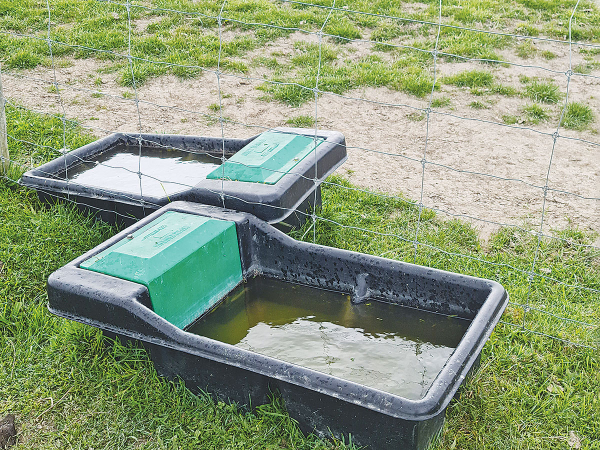 Rural water schemes, which primarily provide water for agricultural purposes, may be able to be directly owned and operated by their users.
Rural water schemes, which primarily provide water for agricultural purposes, may be able to be directly owned and operated by their users.
This would make them independent of one of the four big Water Services Entities (WSEs) that are proposed to take over running all the country’s water services under the Government’s controversial Three Waters Reforms.
Hamiora Bowkett, executive director of Three Waters Reform at the Department of Internal Affairs, says the recommendation to carve out rural mixed-use water schemes was made by the Rural Supplies Technical Working Group earlier this year. This recommendation has now gained government approval.
“This will require 75% of all users (farming and domestic) to agree to the proposal, and for the proposal to be informed by a robust assessment of factors associated with a scheme’s independent operation.”
Meanwhile, Bowkett says DIA officials, Clutha District Council and farmer representatives have agreed to establish a joint governance group to explore the costs, benefits and risks with user ownership versus WSE ownership of Clutha’s mixed use water schemes.
“DIA intends developing a sound methodology for the assessment of ownership options for mixed-use rural schemes that can be applied to schemes in other parts of New Zealand.”
Bowkett says this will then be used to inform the legislative mechanisms to be provided for in the second Water Services Entities Bill, expected to be introduced later this year.
The Government needs to give more detail on its Three Waters policy reset.
An assessment of Clutha District’s rural water supplies is currently underway.
Every Council in New Zealand will receive at least $350,000 of additional funding to ensure they have the resourcing necessary to implement the Three Waters reforms, Associate Minister of Local Government Kieran McAnulty announced today.
OPINION: The Hound reckons the Government's unpopular and controversial Three Waters reforms is creating plenty of jobs - for bureaucrats and contractors - but not for the local communities who are having their water assets stolen 'co-governed' and controlled by four new mega water entities.
Rural water users still remain highly concerned about the Government's contentious Three Waters Reforms.


Pāmu has released its FY26 Integrated Annual Report, reporting a Net Operating Profit of $113 million, more than double the $49 million recorded in FY25.

Meat Industry Association data, released alongside the Red Meat Sector conference in Wellington, shows export value climbing across the US, China, UK and Canada.
Applications are set to open for the 2027 Zanda McDonald Award, a trans-Tasman award recognised for identifying and fast-tracking talented young leaders in agriculture and agribusiness.
The Royal New Zealand College of General Practitioners (the College) and Hauora Taiwhenua Rural Health Network are calling for investment in a proposed new training pathway for rural GPs, warning that many rural practices are struggling to recruit while a large share of the existing workforce nears retirement.
Federated Farmers has called on Central Otago District Council (CODC) to drop or vote down a plan to truck sludge from Alexandra and Cromwell to farmland near Lauder, warning it would compound an "outrageous" situation created by a separate council's decision weeks earlier.
Synlait has swung to second-half profit as operations stabilise, but the dairy processor still posted a $75.4m annual loss.




OPINION: The same mainstream media muppets that brought you Jacindamania in 2017 have been flat out pimping for the Opportunities…
OPINION: Your old mate reckons the atrocious way farmers in the UK are treated by their lords and masters in…