NZKGI Responds to Migrant Worker Exploitation Reports
Where any worker in the kiwifruit industry is mistreated, we expect the authorities to take action.
 increase font size
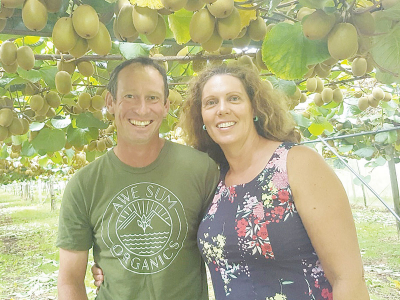 Mark and Catriona White.
Mark and Catriona White dreams were realised after they decided 12 years ago to grow organic kiwifruit.
While it was deemed to be a good business decision, their main reason was to give their children a taste of living in the country, something they had both experienced growing up on farms.
At the time, White was working for NZ Post and wife Catriona was a school teacher.
“When our oldest child was about to start school, we wrote a list of what we wanted in our life to give her the experiences that we had experienced when we were young,” White told Hort News.
“So that was the pathways back to the land and Opotiki in the eastern Bay of Plenty. My wife’s family offered us land they had been growing kiwifruit on from the late 1970s.”
He says growing organic kiwifruit seemed like a viable business option and it appealed to them. “Because as a family we could work in that business and feel safe producing a product that others can enjoy as much as we can producing it.”
Their block is 13ha, some of it bush. Streams through the property have all been fenced off and they have organic sheep that graze the orchard and keep the weeds down.
White says because theirs was a greenfields development they were able to plant tree species such as Japanese cedar, which reduced the habitat for pests.
“One of the differences is that we work with nature. We believe that everything needs to live and find equilibrium in the environment. We use targeted pest control measures.”
About 60% of the Whites’ crop is SunGold and 40% haywards Zespri organic green. The mature vines are doing 15,000 trays per ha and the total across the farm is 70,000 trays.
“At the moment, we get a $2.20 premium for SunGold, while the Zespri organic green is sold in a separate pool from ordinary green and those returns are considerably above the conventional price per tray.
“Most of the Zespri organic green goes to Europe and SunGold mostly goes to Asia and Japan.
“There is a lot of demand for organic produce in California where we’ve been twice to study the organic market.”
White says millennials – aka young people – are having an impact on the market. All the statistics show these consumers are demanding more transparent production of their food and want to know more about the process of growing it.
“When buying a product, they also consider the environmental impact of the food they are eating. I guess it’s called safe food – safe to eat, safe for the environment and safe for the people growing it,” he says.
Mark and Catriona White enjoy their business. They do most of the work themselves, and get some help from backpackers who work part time at the peak of the season.
For them, as growers of organic kiwifruit, their dreams have been realised.
Where any worker in the kiwifruit industry is mistreated, we expect the authorities to take action.

Kiwifruit growers are watchful but remain optimistic as concerns around the potential effects of the El Niño weather pattern this season.
More signs of a booming kiwifruit sector.
After delivering a strong financial year, rural trader PGG Wrightson says the coming months will depend on customer confidence and weather.
New Zealand growers have always adapted to changing conditions, but one challenge is steadily gaining ground across the horticulture sector: resistance.


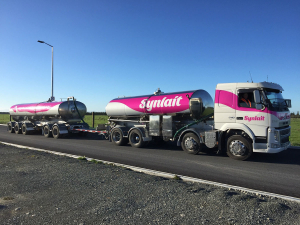
Synlait has swung to second-half profit as operations stabilise, but the dairy processor still posted a $75.4m annual loss.

LIC shareholders have elected a new North Island representative to the co-operative's Board, along with five representatives to its Shareholder Reference Group (SRG), following the company's Annual Meeting held in Invercargill.
Farmers across parts of Southland and South Otago are continuing to deal with difficult conditions after a prolonged run of wet weather, with pressure building around feed supply, stock management, pasture damage, farm infrastructure and everyday workloads.
Federated Farmers says it welcomes Labour's commitment to reviewing the Sharemilking Agreements Act, calling on other major parties to do the same.
For Canterbury dairy farmers Sian Meijer and Rick Wobben, wearable technology has become one of their most valuable on-farm tools - helping manage 1850 cows across an expansive, high-performing dairy operation while improving efficiency, mating outcomes and day-to-day decision making.
Fonterra has unveiled its annual results for the 2026 financial year, posting $27 billion in revenue and close to $20 billion returned to New Zealand farmer owners and unit holders.