Damien O’Connor Criticises Budget 2026 as ‘Miserable’ for Rural New Zealand
A miserable budget that didn’t deliver much for anyone.
 increase font size
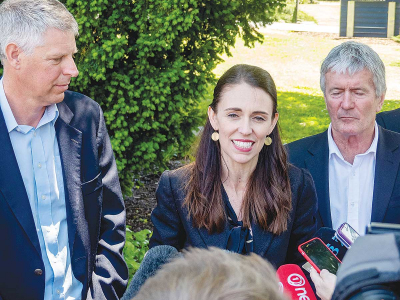 Primary Sector Council chair Lain Jager, Prime Minister Jacinda Ardern and Agriculture Minister Damien O’Connor front the media following the launch of the Primary Sector Council’s ‘Fit for a Better World’ vision, at Lincoln University late last year. Photo: Rural News Group.
Late last year, the Primary Sector Council (PSC) unveiled its vision for the future of New Zealand’s primary industries.
It centres on the Māori concept of Taiao, which emphasises respect for, and harmony with, the natural world.
The council was established by Agriculture Minister Damien O’Connor in April 2018 on a two-year mission to provide strategic advice on issues and to develop a sector-wide vision for the future.
In December, it presented that vision, entitled “Fit For a Better World,” in a high-powered launch at Lincoln University attended by O’Connor, Prime Minster Jacinda Ardern and a lecture theatre full of sector leaders.
PSC chair Lain Jager said the vision was intended as an anchor for strategy and investment, and a guiding star for decision-making.
“It’s a pathway to sustainable prosperity, sector confidence and the social license we badly need in the context of the global challenges that confront us.”
Jager explained that council member Miriana Stephens, of the Māori-owned agribusiness Wakatu Incorporation, had introduced the council to the concept of Taiao, which describes a deep relationship of respect and reciprocity with the natural world.
“We propose that Taiao can be a distinctive guiding star for our agriculture food and fibre sector and therefore it sits right at the heart of our vision,” he said.
“If we are to embrace Taiao and capture the potential economic benefits of this way of thinking and behaving, we need to maximize the productive potential of our catchments and farm within safe environmental limits. That means a relentless focus on developing modern scientifically informed and technology supported regenerative production systems.”
Jager said the council recognised concerns for the global environment, but the sector was already heavily engaged in the transition to environmental excellence and this must continue. As part of the effort, it was important to have a common framework and language describing our relationship with nature, which Taiao would provide.
Jager claimed “Fit for a better world” was a uniquely New Zealand positioning, encapsulating Taiao as the guiding principle and delivering products through ethical and regenerative farming systems.
O’Connor welcomed the release of the vision.
“The international consumers who buy our world-class product increasingly want to know the story behind their food. They want to know it’s climate friendly and sustainably produced, with high animal welfare standards and by a workforce that’s treated with respect and paid fairly.”
O’Connor said NZ farmers and growers produce some of the highest quality food and fibre in the world but must adapt to our consumers’ changing needs.
“I established the Primary Sector Council to provide fresh thinking and develop a vision to help sectors navigate the environmental and sustainability challenges it faces.
“The council’s engagement with Kiwi farmers, growers, fishers, makers and crafters has resulted in a vision which the sector can rally around.”
O’Connor said the council’s final report and recommendations are expected in March 2020.
“The next step is taking the vision and turn it into a realistic and workable plan.”
To enable this, he has established a new body called Food and Fibres Aotearoa New Zealand.
“It will involve government, industry and Māori working together to deliver meaningful change.”
A miserable budget that didn’t deliver much for anyone.
National's decision to ‘dribble’ information about the NZ/India to Labour contributed to the delay in it deciding to supported the FTA.
OPINION: Your old mate hears an international incident is threatening to blow up the long-standing Anzac alliance as Kiwis and Aussies argue over who wants new Australian resident and former NZ Prime Minister Jacinda Ardern.
When it comes to international trade, politicians from all sides of the aisle are united, says Labour's trade spokesman Damien O'Connor.
OPINION: Did former PM Jacinda Ardern get fawning reviews for her book?


Fonterra Co-operative Group chief financial officer Andrew Murray has resigned to take up a role outside the dairy giant.
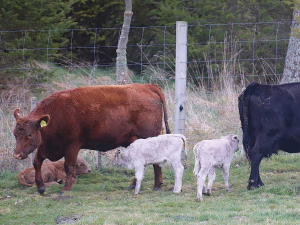
A major move is about to get underway to improve the quality and viability of dairy beef and cattle in NZ.
Veterinarians say changes to the code of welfare for dairy cattle provides a positive foundation for improved cattle welfare across the country.
Today, 15 October, is the International Day of Rural Women, which recognises rural women’s contribution to farming, communities and the environment.
Global dairy giant Lactalis has integrated its Australian operations with the Mainland Dairy consumer business it acquired from Fonterra earlier this year.
High country stations, mixed sheep and beef farms, Māori-owned farms, corporates and family operations are among the nine commercial farms taking part in the Livestock Innovation Farming Transformation programme, known as LIFT.