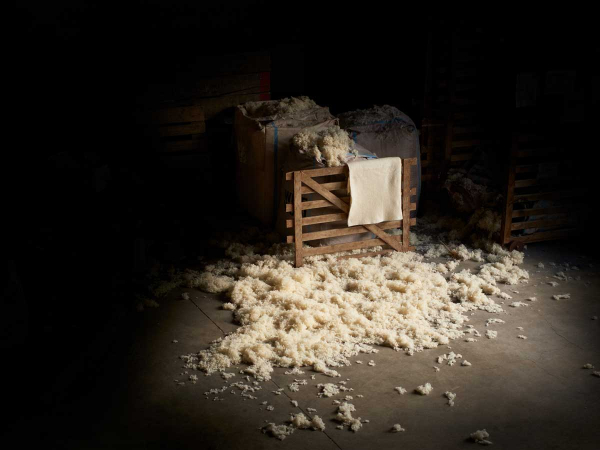
New Zealand strong wool could bring a sustainable bounce back into soft upholstery – and woolgrowers’ bank accounts – through a new project seeking an alternative to synthetic fillers.
The Ministry for Primary Industries’ (MPI) Sustainable Food and Fibre Futures fund is committing $790,000 over three years to a project led by Wisewool aimed at increasing the market potential of woollen knops – the small, light fluffy balls used as a filler ingredient.
MPI director of investment programmes, Steve Penno says the project has the potential to improve returns to strong wool producers and provide an environmentally friendly alternative to existing products made from synthetic materials.
“Woollen knops can be used in baby bedding and insulated clothing, as well as mattresses, so it’s a versatile product with plenty of scope.
“Wisewool will also conduct research and development of needle punched wool blanketing, which can be used in residential and commercial furniture upholstery, insulation for the apparel industry, bedding, and futon markets,” Penno says.
He says one of the main drivers for the investment is the project’s potential to provide an alternative, high-value use for New Zealand strong wool.
“We’ve asked Wisewool to research consumer price preferences to see if the knops can be sold at a price that gives a good return to farmers.”
Wisewool chief executive Henry Hansen says the project will predominantly focus on working out the right components and blends to create a range of woollen knops for different products.
“We’ve discovered that when used in large quantities as a filler ingredient, woollen knops increase the bounce-back and compression resilience of the fibre,” Hansen says.
He says Wisewool will continue researching and comparing the compression resilience of both wool and synthetic fibres, and will adjust its carding machines to produce various wool knop blends.
“We’ll also conduct an environmental impact analysis and in-market testing.”