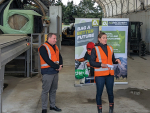
New Rural Recycling Scheme to Replace Voluntary Farm Plastics Programmes by 2027
Environment Minister Nicola Grigg has announced details of a new rural plastics recycling scheme.
 increase font size
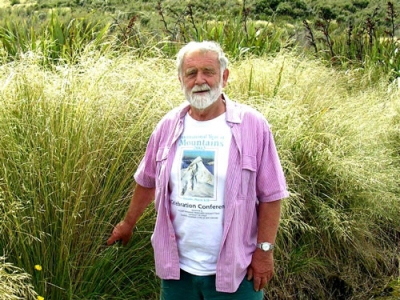 Emeritus Professor Sir Alan Mark.
A renowned conservationist says the world and New Zealand is failing to fulfil many of the basic principles of sustainability.
The conservationist, Emeritus Professor Sir Alan Mark, says we must face up to our situation in order to avert serious risks.
Mark, of the University of Otago, spoke at Lincoln University as keynote speaker for the university's annual state of the nation's environment address.
During his presentation, he suggested that economic growth had become "an end unto itself rather than a means to a better life" and this is bad news for sustainability.
"Many people assume that if we have a healthy economy, other aspects of well-being will follow," says Mark.
"How do we achieve a sustainable economy with a financial system that requires growth for stability?"
Mark raised several environmental concerns affecting New Zealand, including widespread rangeland degradation and loss of biodiversity in areas such as the Denniston Plateau and Secretary Island.
He also pointed out that the increasingly extreme weather patterns seen in the country were likely symptomatic of global warming.
On the Trans Pacific Partnership Agreement, Mark describes it as problematic as it offers "multinational corporations the ability to sue governments for losses relating to policies designed to protect the environment."
"Economic development is now outstripping environmental sustainability in many areas," he said. "Adaptation, or market forces alone, are not viable options to address the environmental crisis.
"GDP is a crude measure of goods and services, wealth and well-being and we need to get away from solely focusing on this as an indicator of a country's performance. Better indicators are healthy children, quality of life and education, native forests and white sandy beaches, as is covered by the Genuine Progress Indicator (GPI) approach to assessing our human welfare.
"To ignore the symptoms of environmental degradation is to fail future generations."
Environment Minister Nicola Grigg has announced details of a new rural plastics recycling scheme.

Almond hulls sourced from Australian orchards may have the potential to help New Zealand cows reduce emissions, boost milk yield and lower input costs.
The Government is introducing a new nationwide rural recycling scheme that will significantly increase the recovery of farm plastics from March next year, Minister for the Environment Nicola Grigg announced today.
The Ballance Farm Environment Awards are coming to the West Coast of the South Island.
Climate, nature and animal wellbeing make up Fonterra's refreshed sustainability roadmap released last week.


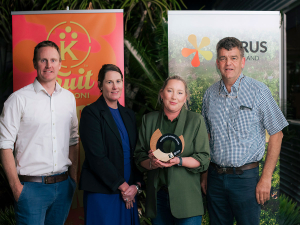
New Zealand's citrus growers were challenged to build their future on the value embedded in their fruit rather than the volume they produce, at Citrus New Zealand's annual gathering in Gisborne on 17 September.
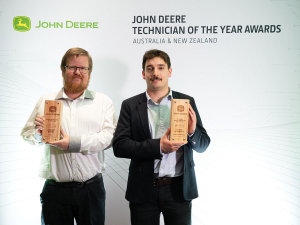
Leading John Deere technicians and apprentices from New Zealand and Australians were recognised at the recent sixth annual JD Technician of the Year Awards, held in Brisbane.
In Dacre, near Invercargill in New Zealand’s South Island, Bruce Dinnington is running a dairy operation unlike any other.
A free online platform aggregating governance vacancies across rural and regional New Zealand has been launched.
Environment Minister Nicola Grigg has announced details of a new rural plastics recycling scheme.
Agricultural drone operators say that a government decision to allow lower-risk drone work without certification won’t lower standards but drive innovation and efficiency.




