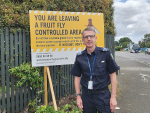
Queensland Fruit Fly Movement Controls Lifted in Mt Roskill
Controls on the movement of fruit and vegetables in the Auckland suburb of Mt Roskill have been lifted.
 increase font size
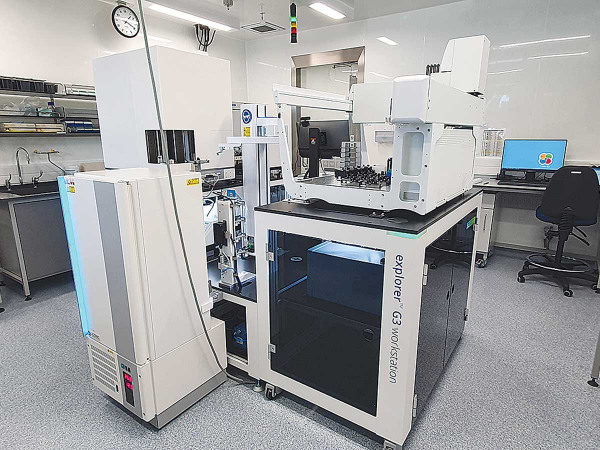 The machine is designed to test up to 7,000 samples per day, far more than current capacity.
A newly arrived antibody testing robot now in action at Biosecurity New Zealand’s Animal Health Laboratory (AHL) at Wallaceville means testing for animal disease will be faster and more efficient.
That’s the claim of the Ministry for Primary Industries (MPI), who recently purchased a German manufactured Explorer G3 workstation diagnosis robot. The machine is designed to test up to 7,000 samples per day for antibodies in FMD and other exotic diseases, which MPI says increases testing accuracy and consistency during future biosecurity responses.
AHL Manager Joseph O’Keefe says that the Mycoplasma bovis outbreak gave insights into how the laboratory could increase its capacity during a biosecurity threat response and what changes could be made; in particular, highlighting the need for automation.
“If an exotic disease such as foot-and-mouth disease (FMD) arrived here, our people could need to test some 3,000 to 7,000 samples a day. Automating this process will speed up our delivery of results, making the process faster for farmers, and better for the animals involved too.”
The first of its kind in New Zealand, the robot was selected through a competitive tender process.
The 750kg machine took a week to set up, with each part being brought through a special airlock into the biosecure containment area. The airlock and fumigation systems in the lab help ensure that infectious materials that enter the lab cannot easily escape.
Once the robot was assembled, the team ran it through stringent testing and calibration using samples of insect-borne diseases to ensure the tests were as accurate as the current manual process. It has now begun day-to-day diagnostic testing.
The machine achieves its efficiency by using a robotic arm to move test plates around various testing stations – adding samples, incubation, washing, reading results.
Each plate contains approximately 90 samples and the robot manages up to 40 plates at once – far faster than a human could manage.
O’Keefe says, once programmed with relevant test protocols, the robot doesn’t need frequent attention or intervention.
This frees up AHL staff for other testing and provides stability throughout intense response periods. The robot can even run tests overnight without staff present.
“Testing delays can affect our economy as antibody testing is essential for maintaining the access and security of product exports to New Zealand’s international markets,” O’Keefe adds.
“If there is an exotic disease outbreak in New Zealand, being able to automatically test large numbers of samples means it will be faster to identify infected properties.”
Outside of responses, the robot is also used to perform antibody tests for animal surveillance programmes and testing groups of animals for import or export purposes.
Controls on the movement of fruit and vegetables in the Auckland suburb of Mt Roskill have been lifted.
Legal controls on the movement of fruits and vegetables are now in place in Auckland’s Mt Roskill suburb, says Biosecurity New Zealand Commissioner North Mike Inglis.
The quick response to the discovery of another fruit fly in Auckland is being praised by fruit and vegetable growers.
Biosecurity New Zealand Commissioner, North, Mike Inglis says the $2.4 million cost of a recent biosecurity operation in South Auckland is small compared to the potential economic impact of an incursion.
Horticulture New Zealand (HortNZ) says that discovery of a male Oriental fruit fly on Auckland’s North Shore is a cause for concern for growers.

OPINION: Farmers around the country are welcoming the proposed reform of local government.
A move to boost farmer uptake of low methane emitting sheep is underway.
Silver Fern Farms has tackled the ongoing war-induced shipping challenges to mideast markets by airlifting 90 tonnes of chilled New Zealand lamb and beef to the United Arab Emirates.
The primary sector is leading New Zealand's economic recovery, according to economist and researcher Cameron Bagrie.
Dairy industry leader Jim van der Poel didn't make much of the invitation he received to the recent New Zealand Dairy Industry Awards in Rotorua.
Farmers around the country are going public big time, demanding their local district, city and regional councils come up with amalgamation plans that meet the needs of rural communities and don't allow urban councils to dominate.