Dairy Sector Drives Strong Rural Property Market Activity in NZ
The latest data from the Real Estate Institute of New Zealand (REINZ) reveals a mixed rural property market due to consistent inflation concerns.
 increase font size
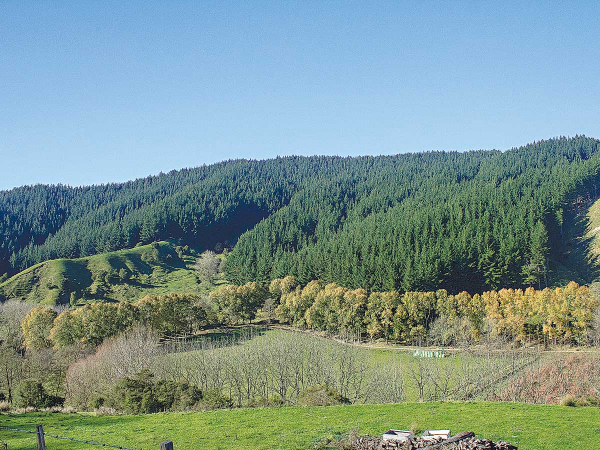 According to REINZ, farm sales are up from last year.
Data released by the Real Estate Institute of New Zealand (REINZ) shows there were 129 more farm sales (+39.2%) for the three months ended February 2021 than for the three months ended February 2020.
Overall there were 458 farm sales in the three months ended February 2021, compared to 517 farm sales for the three months ended January 2021 (-11.4%) and 329 farm sales for the three months ended February 2020.
1,542 farms were sold in the year to February 2021, 23.1% more than were sold in the year to February 2020, with 51.3% more dairy farms, 3.1% more grazing farms, 42.9% more finishing farms, and 30.1% fewer arable farms sold over the same period.
The median price per hectare for all farms sold in the three months to February 2021 was $25,665 compared to $20,569 recorded for three months ended February 2020 (+24.8%).
The median price per hectare decreased 0.8% compared to January 2021.
The REINZ All Farm Price Index decreased 1.0% in the three months to February 2021 compared to the three months to January 2021.
Compared to the three months ending February 2020, the REINZ All Farm Price Index rose 7.1%.
Ten of the 14 regions recorded an increase in the number of farm sales for the three months ended February 2021 compared to the three months ended February 2020, with the most notable being Waikato and Auckland.
Gisborne and Wellington recorded the most notable decline in sales.
Compared to the three months ended January 2021, two regions recorded an increase in sales, namely Southland and Waikato.
Brian Peacocke, REINZ rural spokesman, says “Sales figures for the three-month period ending February 2021 confirm the rural market is in good shape with dairy farm sales holding well followed closely by those in the finishing and grazing sectors.
“Of particular note are the encouraging signals emerging from the world marketplace for dairy produce which in turn is being translated into an increasing payout to the dairy farmers. The increased cashflow from this sector alone will have significant benefits for the New Zealand economy.”
Peacocke says that sales of finishing and grazing properties reflect commitment from those sectors to explore possibilities in the marketplace in spite of serious supply chain issues.
“Activity is gearing up within the horticulture sector as the kiwifruit industry prepares for a bumper harvest, with the availability of reefer shipping helping to overcome the difficulties of transportation to the market due to the extreme shortage of containers.
“Regrettably, with the impact of Covid-19 restricting the availability of labour from off-shore under the Regional Seasonal Employer (RSE) Scheme, the shortage of labour is having a dramatic impact across the horticultural sector with considerable amounts of export potential produce not being able to be harvested, the pip fruit industry being a particular, albeit not isolated, case in point,” he concludes.
The latest data from the Real Estate Institute of New Zealand (REINZ) reveals a mixed rural property market due to consistent inflation concerns.
Farm sales are on the rise. According to recent data from the Real Estate Institute of New Zealand (REINZ), there was an 18.9% increase in farm sales for the three months ending August 2024 compared to the same period in 2023.
It could be that buyers are hunting out the right farm to purchase as farm sales drop for the three months ended December 2023. That’s according to the Real Estate Institute of New Zealand (REINZ).
Recently released data from the Real Estate Institute of New Zealand (REINZ) shows there were 77 fewer farm sales for the three months ended November 2023 than for the three months ended November 2022.
Recent data from the Real Estate Institute of New Zealand (REINZ) shows October was another month in which there were fewer farm sales than at the same time in 2022.


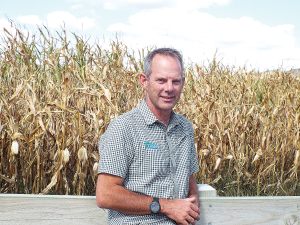
Surprised, humbled and quite thrilled. That’s the reaction of James Allen, one of the founding partners and now chief executive of AgFirst, on being made a life member of the Institute of Rural Professionals.
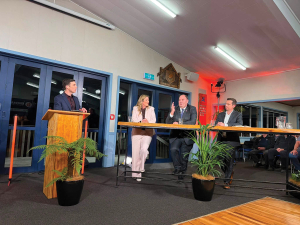
It was billed as a chance for all the political parties to woo the rural vote, but question marks hang over just how effective this was.
Minister of Conservation Hon Tama Potaka has appointed Susan O'Regan as Chair of the Queen Elizabeth II National Trust (QEII) for a three-year term.
Red meat farmers are welcoming Labour’s plan to review the Emissions Trading Scheme and not to campaign on pricing agricultural emissions.
Where any worker in the kiwifruit industry is mistreated, we expect the authorities to take action.
Mid Canterbury Federated Farmers arable chair, Bevan Lill, said Beef + Lamb NZ data indicated that for the last six years, the average arable return on investment was about 0.8% while inflation ran about 4% - so the average arable farm was going backwards at about 3% a year.