Beef + Lamb NZ's Lambing Kit Checklist for a Tough Season
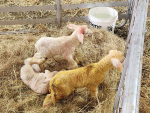
With lambing underway in many regions, Beef + Lamb New Zealand is encouraging farmers to put together a wellequipped lambing kit to help minimise lamb losses, particularly in bad weather.
 increase font size

Sheep and beef numbers for year ending June 2012 are up, says the Beef + Lamb New Zealand (B+LNZ) Economic Service.
Sheep numbers increased 2.6% and beef cattle numbers increased 1%.
This partly makes up for the 4.4% decline in sheep and 2.6% decline in beef cattle the year before.
B+LNZ's annual stock number survey, which establishes the productive base of livestock for 2012-13, shows that while sheep numbers were up 2.6% most of this increase will be stock carried over for slaughter in July-September.
B+LNZ Economic Service executive director, Rob Davison says breeding ewe numbers at 20.61 million are almost static on the previous June when ewe numbers fell 6% to a low of 20.49 million.
Strong mutton prices earlier in the year encouraged a high slaughter of cull ewes for the second year in a row. The offset to this was a high retention of ewe hoggets (+10%) last July which by 30 June 2012 were mature first time in lamb ewes.
"Ewe condition is good across the country. Scanning results for most regions show in-lamb ewes are carrying more multiple lambs with the general comment that scanning percentages are up 5 to 10% on last year.
"All we need now is an excellent spring to ensure high survival of the lambs born."
Beef cattle numbers increased 1% to 3.88 million and partly reversed the 2.6% decline for the previous year. North Island beef cattle numbers increased 3.6% with increases in both the beef cow herd and weaner cattle numbers.
With lambing underway in many regions, Beef + Lamb New Zealand is encouraging farmers to put together a wellequipped lambing kit to help minimise lamb losses, particularly in bad weather.

Chinese beef trade quotas and a looming suspension of Brazilian beef imports into the European Union are expected to reshape global beef trade flows over the remainder of 2026, with implications for New Zealand exporters, according to Rabobank's Q3 Global Beef Quarterly report.
Will a stronger, more coordinated voice help rebuild confidence and improve returns in the wool sector?
Bovine Viral Diarrhoea (BVD) is sometimes viewed as a dairy industry issue, but the reality is that the disease can have serious consequences for beef breeding herds as well.
Matt McRae, a farmer from Mokoreta in Southland who runs a sheep, beef and dairy support business alongside a sheep stud, has been elected to the Beef +Lamb NZ Board as a farmer director.

Minister of Conservation Hon Tama Potaka has appointed Susan O'Regan as Chair of the Queen Elizabeth II National Trust (QEII) for a three-year term.
Red meat farmers are welcoming Labour’s plan to review the Emissions Trading Scheme and not to campaign on pricing agricultural emissions.
Where any worker in the kiwifruit industry is mistreated, we expect the authorities to take action.
Mid Canterbury Federated Farmers arable chair, Bevan Lill, said Beef + Lamb NZ data indicated that for the last six years, the average arable return on investment was about 0.8% while inflation ran about 4% - so the average arable farm was going backwards at about 3% a year.
Seed and grain companies share the concerns of arable farmers about the viability of their sector, says Seed and Grain New Zealand chief executive Dr Sarah Clark.
The New Zealand Institute of Forestry (NZIF) says unnecessary changes to New Zealand’s Emissions Trading Scheme (NZ ETS) will seriously erode investor confidence and result in significant reductions in forest planting rates.