PGG Wrightson Revenue Tops $1.1b as Profit Jumps 46%
After delivering a strong financial year, rural trader PGG Wrightson says the coming months will depend on customer confidence and weather.
 increase font size
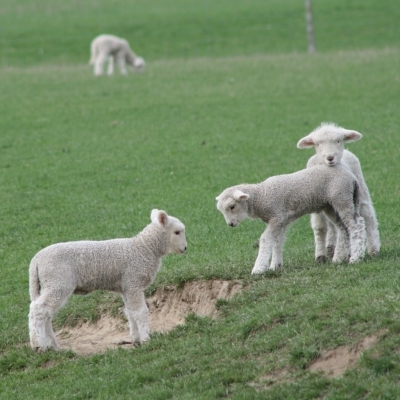
Early arrival of the dry period in the lower North Island has ‘subdued’ sales of store lambs in the past week or so.
PGG Wrightson’s Tony Gallen says the store market has been “hard work” because it’s been so dry and this uncertainty has caused a drop in the number of lambs coming forward in the last few weeks. He told Rural News that farmers appear to hanging on to stock in the hope rain will come and don’t want to sell their stock at low prices.
“We had decent numbers of store animals earlier on, but the other week the numbers were back a bit. Everyone is saying that if it could rain in the next week or ten days they’d be fine, but if it doesn’t come, there could be problems.
“Last year, there was 80-100mm in January and the drought didn’t kick in until late February. But this year it was showery and cool pre-Christmas and all of a sudden the rain stopped and it’s got stinking hot.”
Store lambs are fetching $1.90-$2.10/kg.
Gallen says on a positive note, there was a large ewe fair at Feilding the other week with some 13,500 ewes for sale and prices were on a par with the rest of the country. “Two-tooths were fetching $1.50-$2.00 and in some cases $3.00. Five-year-old ewes made $0.95-$1.05/kg.”
Gallen believes the cattle market has been positive until now. He says at a recent weaner fair most of the vendors were happy provided the weaner bulls had a bit of weight on them.
“Only the dairy weaners have been on sale and the typical Friesian/Hereford cross bulls sold at $450-$550. Heifers made $350-$450 each.”
After delivering a strong financial year, rural trader PGG Wrightson says the coming months will depend on customer confidence and weather.
Strong competition and tightening supply have seen wool reach its highest prices paid at auction since 2011.
A firm belief in the agricultural sector has kept the PGG Wrightson business going for 175 years, says chief executive Stephen Guerin.
Strong farmgate milk price is helping boost investment on farms, says PGG Wrightson chief executive Stephen Guerin.
Booming primary sector exports are helping lift earnings for farm service providers.



LIC shareholders have elected a new North Island representative to the co-operative's Board, along with five representatives to its Shareholder Reference Group (SRG), following the company's Annual Meeting held in Invercargill.
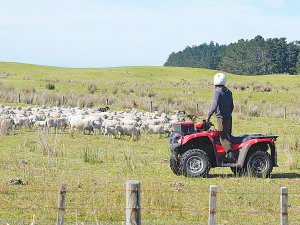
Farmers across parts of Southland and South Otago are continuing to deal with difficult conditions after a prolonged run of wet weather, with pressure building around feed supply, stock management, pasture damage, farm infrastructure and everyday workloads.
Federated Farmers says it welcomes Labour's commitment to reviewing the Sharemilking Agreements Act, calling on other major parties to do the same.
For Canterbury dairy farmers Sian Meijer and Rick Wobben, wearable technology has become one of their most valuable on-farm tools - helping manage 1850 cows across an expansive, high-performing dairy operation while improving efficiency, mating outcomes and day-to-day decision making.
Fonterra has unveiled its annual results for the 2026 financial year, posting $27 billion in revenue and close to $20 billion returned to New Zealand farmer owners and unit holders.
The first major update to the Dairy Cattle Code of Welfare in more than a decade has been released, marking what DairyNZ describes as an important step in ensuring animal welfare standards continue to evolve alongside scientific evidence and on-farm realities.