Labour Supports NZ/India FTA
National's decision to ‘dribble’ information about the NZ/India to Labour contributed to the delay in it deciding to supported the FTA.
 increase font size
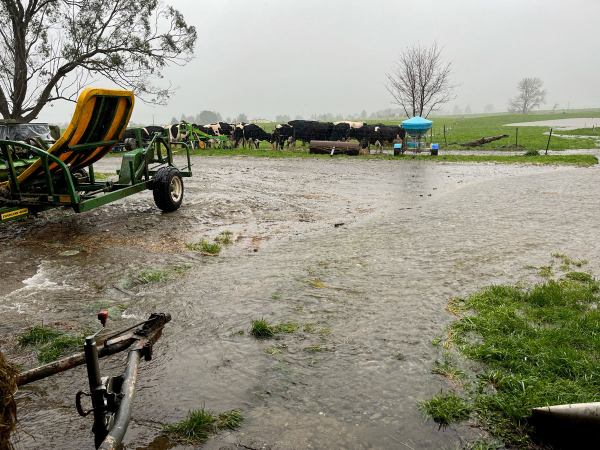 A medium-scale adverse event has been declared in the Top-of-the-South and Far North District. Photo Credit: Cherie Chubb.
Rural Communities Minister Damien O’Connor has classified severe weather that impacted farmers in the Top-of-the-South and the Far North District as a medium-scale adverse event.
The move comes after severe weather and flooding struck the Nelson/Tasman region and the Far North, with milk collection disrupted in both regions.
“The severe weather in the past week has tested farmers and growers in both regions,” O’Connor said.
He said $150,000 would be made available for local Rural Support Trusts and Mayoral Relief Funds to help farmers and growers recover.
The Top-of-the-South will receive $120,000 and the Far North will receive $30,000.
This is on top of the $200,000 Minister for Emergency Management Kieran McAnulty said would be provided to the Mayoral Relief Fund in the Nelson/Tasman and Marlborough regions late last week.
O’Connor said the Ministry for Primary Industries has been working closely with sector groups and other agencies to continue assessing the storm’s impact.
“Paddocks and crops have surface flooding, infrastructure and fencing are damaged, while road closures are impacting access for activities such as milk collection and stock movements,” he said.
“This was a severe storm with over 1m of rain falling over four days in parts of the Nelson region. The top of Rai Valley recorded 1,020 mm and Takaka Airport 508 mm of rain in four days. In Northland, soils are also extremely saturated, having received over 500 mm of rain in recent days. The fact it’s followed the second wettest July on record does not help at all. This is an enormous amount to cope with at the best of times.”
O’Connor said the storm came at the worst time of year for farmers, with lambing and calving under way.
“Even though farmers were well prepared, the clean-up will be challenging because this weather event has been extended over a prolonged period.”
O’Connor said the Government will continue to assess whether further support is needed, e.g. Enhanced Taskforce Green for clean-up, once the full extent of the damage is understood in the coming weeks.
“We know that farmers and growers in other parts of the country have also been impacted by this storm, so extra support may be needed when we have a fuller picture,” he said.
It’s the third time in a little over a year the Government has classified a medium-scale adverse event for the Tasman/Nelson region, O’Connor said.
In July 2021, the region was hit by severe weather, with flooding along the West Coast. Then, in February this year, the region was struck again after a storm caused flooding in Buller, parts of Nelson and Marlborough. Both events were classified as medium-scale adverse events.
“I realise many people will be doing it tough, but I also know there will be many people willing to get stuck in and help support their neighbour’s clean-up.”
The medium-scale event classification covers the Far North District and the three Top-of-the-South districts of Tasman, Nelson City (which includes rural areas such as Cable Bay) and Marlborough.
The funding includes wellbeing support and specialist technical advice for farmers, horticulturists and other primary industry businesses.
National's decision to ‘dribble’ information about the NZ/India to Labour contributed to the delay in it deciding to supported the FTA.

When it comes to international trade, politicians from all sides of the aisle are united, says Labour's trade spokesman Damien O'Connor.
Federated Farmers have reiterated their support for the coalition Government to abolish the present ban on the live export of animals.
As the coalition Government mulls new regulations to reinstate the export of live animals, debate is heating up between supporters and opponents.
OPINION: Your canine crusader was truly impressed by the almost unanimous support given by politicians of all stripes in Parliament to the recent passing of legislation for the NZ/EU free trade deal.


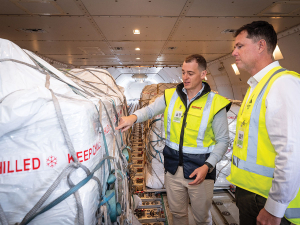
Silver Fern Farms has tackled the ongoing war-induced shipping challenges to mideast markets by airlifting 90 tonnes of chilled New Zealand lamb and beef to the United Arab Emirates.

The primary sector is leading New Zealand's economic recovery, according to economist and researcher Cameron Bagrie.
Dairy industry leader Jim van der Poel didn't make much of the invitation he received to the recent New Zealand Dairy Industry Awards in Rotorua.
Farmers around the country are going public big time, demanding their local district, city and regional councils come up with amalgamation plans that meet the needs of rural communities and don't allow urban councils to dominate.
The battle for the rural vote is on and parties are securing high profile names to try and bolster their chances at the general election.
Horticulture New Zealand says proposed changes to the Plant Variety Rights Act 2022 will drive innovation, investment and long-term productivity.