Let Farmers Decide What They Farm
OPINION: Well, the silly season is upon us and all us politicians are running around shaking babies and kissing hands, or maybe the other way around.
 increase font size
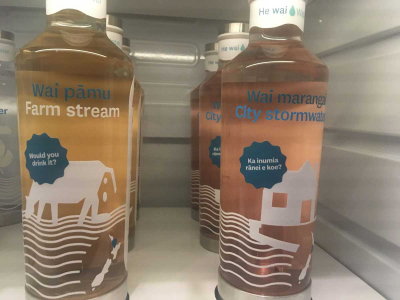 The criticised bottles at the exhibit.
Debate over Te Papa’s controversial exhibition on water quality has farmers continuing their criticism and the museum defending its stance.
The exhibition depicts the quality of water in various places – such as farm streams, lakes and harbour – in bottles which are artificially coloured to show what the museum claims is colour of the water in these places. It also has an interactive display where people can supposedly improve the environment by touching a screen which says ‘less cows’.
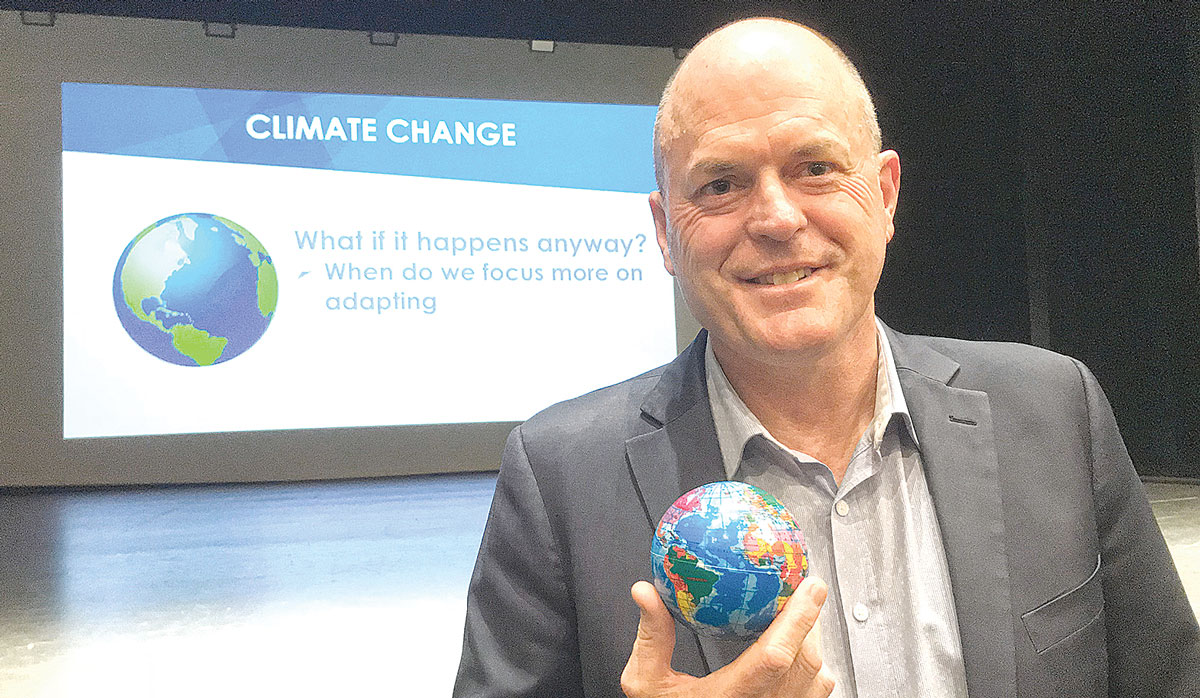
National’s spokesperson on agriculture, Todd Muller has accused the Te Papa of oversimplifying the complex issue of water quality and walking away from science in its exhibition.
“What I am seeing is predetermined view that there should be less agriculture, less dairy and that the NZ future lies in it being less dependent on agriculture. I reject that premise, which is coming from the government and its infusing our museum,” he says.
But Te Papa’s Kate Camp claims the exhibition content is based on various science and research papers – including a report on NZs freshwaters values, state, trends and human impact, by Sir Peter Gluckman, the Prime Minister’s chief science advisor in 2017. She concedes the museum didn’t consult any groups or individuals about the accuracy of its exhibition.
Camp says Te Papa’s challenge is to take a complex and varied picture, and present it in a simple, easy-to-understand way, that is still true to the overall picture.
“We can’t be an encyclopaedia that presents the full complexity of an issue,” she told Rural News. “But we can spark interest and get people thinking and talking. We hope that our visitors will seek out more information and make changes in their own lives to help protect the environment.”
 |
|---|
|
National’s spokesperson on agriculture, Todd Muller has accused Te Papa of oversimplifying the issue of water quality. |
Camp says there is ‘very clear evidence’ that farming has an impact on our waterways, along with other activities, and that’s what the exhibition shows. However, she acknowledges there are many farmers and organisations that are caring for waterways.
Federated Farmers Vice President, Andrew Hoggard says the risk of dealing with a complex subject, such as water quality, so that more people – including children – understand it; is that it becomes too simplistic.
“The problem is that people often draw the wrong conclusions,” he says.
Hoggard says life is complex and the water is very complex. He says it is no good pretending that every farm stream is crystal clear, because it isn’t.
However, Hoggard says it’s far too simplistic to label every farm stream as being in some way polluted.
OPINION: Well, the silly season is upon us and all us politicians are running around shaking babies and kissing hands, or maybe the other way around.
It was billed as a chance for all the political parties to woo the rural vote, but question marks hang over just how effective this was.
There's been widespread support from the primary sector for the Government's announcement on changes to freshwater farm plans that come under the Natural Environment Bill, which is now set to replace the existing RMA.
A pause on Waikato Regional Council's (WRC) plan change that sets new freshwater rules for farming could be announced in the coming weeks.
New Zealanders are being urged to be alert following a confirmed positive case of H5 bird flu this week.



LIC shareholders have elected a new North Island representative to the co-operative's Board, along with five representatives to its Shareholder Reference Group (SRG), following the company's Annual Meeting held in Invercargill.
Farmers across parts of Southland and South Otago are continuing to deal with difficult conditions after a prolonged run of wet weather, with pressure building around feed supply, stock management, pasture damage, farm infrastructure and everyday workloads.
Federated Farmers says it welcomes Labour's commitment to reviewing the Sharemilking Agreements Act, calling on other major parties to do the same.
For Canterbury dairy farmers Sian Meijer and Rick Wobben, wearable technology has become one of their most valuable on-farm tools - helping manage 1850 cows across an expansive, high-performing dairy operation while improving efficiency, mating outcomes and day-to-day decision making.
Fonterra has unveiled its annual results for the 2026 financial year, posting $27 billion in revenue and close to $20 billion returned to New Zealand farmer owners and unit holders.
The first major update to the Dairy Cattle Code of Welfare in more than a decade has been released, marking what DairyNZ describes as an important step in ensuring animal welfare standards continue to evolve alongside scientific evidence and on-farm realities.




