Dairy Sector Drives Strong Rural Property Market Activity in NZ
The latest data from the Real Estate Institute of New Zealand (REINZ) reveals a mixed rural property market due to consistent inflation concerns.
 increase font size
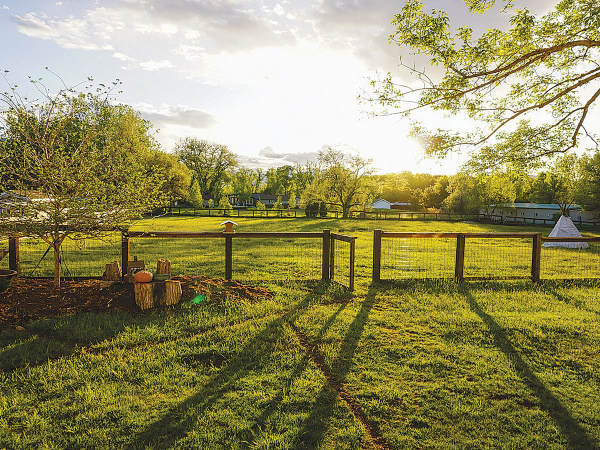 Tensions in the farming sector could be responsible for a drop in farm sales.
The Real Estate Institute of New Zealand (REINZ) says tension in the farming sector is at least partially responsible for a drop in farm sales.
Recent data from REINZ reveals a 35.9% drop in farm sales for the three months ended October 2022 compared to the same period last year.
Overall, there were 173 farm sales in the three months ended October 2022, the same number as in September 2022. Comparatively, in the three months ending October 2021, there were 270 farm sales.
1,501 farms have been sold in the year to October 2022, 284 fewer than in the year to October 2021.
There were 7.2% fewer dairy farms, 20.4% fewer dairy support, 16% fewer grazing farms, 13.2% fewer finishing farms and the same number of arable farms sold over the same period.
The median price per hectare for all farms sold in the three months to October 2022 was $25,270 compared to $31,360 recorded for three months ended October 2021, down 19.4%.
The median price per hectare increased by 9.8% compared to September 2022.
Brian Peacocke, rural spokesman at REINZ, says the sales data confirms a levelling out of farm sales after the 53% drop reported last month.
“Of particular interest currently will be the uptake of rural property during the month of November, given reports of the high number of farms currently on the market.
“Just what is triggering this large surge of properties for sale is yet to play out, but this fact - combined with the previously referred to 53% reduction in sales last month compared to similar periods over the last two years – indicates some concerning trend in the rural sector,” Peacocke says.
“Tension in the farming ranks is palpable; discontent with central Government policies is intense; frustration regarding inexorable cost increases is a dark cloud, and given the recent profits recently announced by the banking sector followed by spiralling interest rates, accusations of price-gouging by the trading banks are now emerging.”
Peacocke says that given the market-related signals reflect an easing in price levels for beef, lamb and dairy, the cautious mood within the rural sector is sobering.
“Land values will inevitably come under scrutiny, particularly for the range of properties other than those considered, by virtue of location, contour and a high standard of improvements, to be at the top end of the quality range.
“On the positive side, extended periods of rain over much of the country is providing great conditions for spring grass growth and crop emergence, which is really pleasing for those on the land,” he concludes.
The latest data from the Real Estate Institute of New Zealand (REINZ) reveals a mixed rural property market due to consistent inflation concerns.
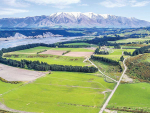
The Real Estate Institute of New Zealand (REINZ) has released its latest rural property report, providing a detailed view of New Zealand’s rural real estate market for the 12 months ending December 2025.
Beef + Lamb New Zealand (B+LNZ) says the Government needs to close loopholes in the guidance around limits on carbon forestry as news of further whole-farm sales emerges.
Farm sales are on the rise. According to recent data from the Real Estate Institute of New Zealand (REINZ), there was an 18.9% increase in farm sales for the three months ending August 2024 compared to the same period in 2023.
It could be that buyers are hunting out the right farm to purchase as farm sales drop for the three months ended December 2023. That’s according to the Real Estate Institute of New Zealand (REINZ).


Farmers are being encouraged to rethink how they manage waste on farm with the launch of ruralwastesorted.co.nz, a new website bringing together practical tips, real farmer experiences and resources.

New Zealand Winegrowers (NZW) is celebrating the India-New Zealand Free Trade Agreement (FTA) coming into force today, bringing New Zealand wine improved access to one of the world’s fastest-growing economies.
New Zealand’s red meat sector has welcomed the India-New Zealand Free Trade Agreement taking effect, which removes India’s 33% tariff on New Zealand sheepmeat.
More than 95 per cent of New Zealand’s forestry and wood exports to India can now enter tariff free as the New Zealand-India Free Trade Agreement comes into force today.
Federated Farmers is backing Feilding High School’s call to keep Agriculture and Horticultural Science as a standalone subject in Year 11.
Food and fibre exports have returned a billion- dollar bonus to the country.