
Meat Industry Association CEO to Step Down
The Meat Industry Association of New Zealand (MIA) today announced that Chief Executive Officer Sirma Karapeeva has resigned from the role.
 increase font size
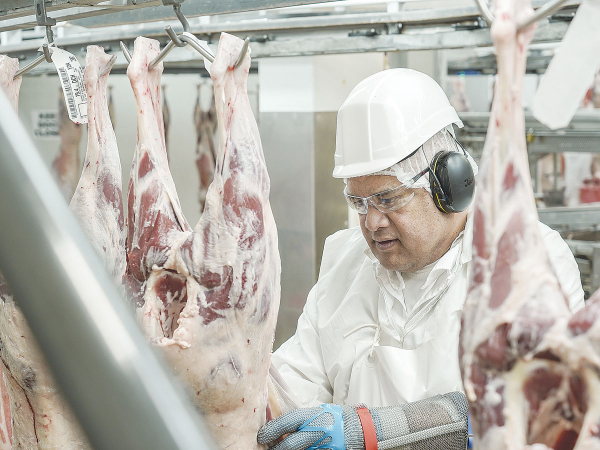 All meat processing plants around the country are experiencing a level of absenteeism due to Covid.
It's tight and challenging keeping the country's meat processing plants operating.
Meat Industry Association (MIA) chief executive Sirma Karapeeva told Rural News that all plants are experiencing a level of absenteeism due to Covid: workers either have the virus or are self-isolating because they are close contacts of people with Covid.
Karapeeva says the degree to which plants are affected and coping is related to their locality. She says all the country's plants are currently open, but she's aware that some had to close for a couple of days because they were short-staffed.
"We saw early on that plants in the north of the North Island were more severely impacted than those in the south. But now Omicron is moving south, so everyone is grappling with the situation and trying to do the best they can to keep processing going," Karapeeva explains. "The fact is with people away the plants can't run at full capacity and there are delays. These vary but we are talking of delays in the region of three plus weeks and in some areas much more than that."
As cull cows start to come in for processing, this is creating a challenge. Karapeeva says meat companies are doing their best to combine shifts or reconfigure shifts to enable them to take the stock and process it. She believes they have been incredibly proactive in communicating these matters to farmer supplies so everyone knows where things are and they can plan appropriately. She adds that while some farmers are better than others at planning to get stock off their properties, the majority do appreciate that this is not of anyone's making and it is what it is.
"Fortunately, at the moment, most farmers have got contingency plans around feed provision. They have got grass so they can continue to hold on to stock for little bit longer," Karapeeva told Rural News.
"But there are some pockets down in Southland starting to experience drier conditions. However, some have anticipated this and sent stock to other regions such as Canterbury where there is grazing available."
Karapeeva believes meat companies are doing an excellent job managing a very complex problem. She says they are dealing with labour shortages, health issues and the worsening problem of logistics.
Chilled Meat Exports Hit
One of the victims of the uncertain logistical situation is chilled meat.
Sirma Karapeeva says the export statistics for February will almost certainly show a drop in chilled meat exports due to unreliable shipping.
"The risk of sending this sort of perishable product and it not making it through the various steps of the supply chain before it gets to market is quite high. NZ prides itself on chilled meat exports and we want to make sure the consumers get this in the best possible condition," she told Rural News.
 |
|---|
|
Meat Industry Association chief executive Sirma Karapeeva. |
"Shipping delays are certainly not helping, so we are seeing quite a lot more frozen product being exported." Karapeeva adds that while a few companies might have used air freight to top up the certain orders, air freight is prohibitively expensive for the volumes of chilled product likely to be exported and there is no real substitute for sea freight.
The logistics problem is expected to be around for at least another year and is being compounded by the Russian/Ukraine conflict. There is also currently an issue in China following another Covid outbreak, which has seen various lockdowns imposed at ports such as Shanghai.
The Meat Industry Association of New Zealand (MIA) today announced that Chief Executive Officer Sirma Karapeeva has resigned from the role.

While things are looking positive for the red meat sector in 2026, volatility in global trade remains a concern, says the Meat Industry Association (MIA).
The Meat Industry Association (MIA) is once again looking for game-changing ideas for New Zealand's red meat processing and exporting sector.
Meat processors are hopeful that the additional 15% tariff on lamb exports to the US will also come off.
New Zealand red meat exports experienced a 29% increase year-on-year in September, according to the Meat Industry Association (MIA).


Synlait has swung to second-half profit as operations stabilise, but the dairy processor still posted a $75.4m annual loss.

LIC shareholders have elected a new North Island representative to the co-operative's Board, along with five representatives to its Shareholder Reference Group (SRG), following the company's Annual Meeting held in Invercargill.
Farmers across parts of Southland and South Otago are continuing to deal with difficult conditions after a prolonged run of wet weather, with pressure building around feed supply, stock management, pasture damage, farm infrastructure and everyday workloads.
Federated Farmers says it welcomes Labour's commitment to reviewing the Sharemilking Agreements Act, calling on other major parties to do the same.
For Canterbury dairy farmers Sian Meijer and Rick Wobben, wearable technology has become one of their most valuable on-farm tools - helping manage 1850 cows across an expansive, high-performing dairy operation while improving efficiency, mating outcomes and day-to-day decision making.
Fonterra has unveiled its annual results for the 2026 financial year, posting $27 billion in revenue and close to $20 billion returned to New Zealand farmer owners and unit holders.




