Boosting Taranaki's horticulture
An ambitious project that aims to make Taranaki a horticultural powerhouse has received a major boost with the announcement of a $975,000 grant from the Ministry for Primary Industries. Nigel Malthus reports...
 increase font size
 Te Puna Umanga Venture Taranaki, the regional development agency for Taranaki, has launched its Branching Out growing trials with the planting of the first crop: garlic.
Te Puna Umanga Venture Taranaki, the regional development agency for Taranaki, has launched its Branching Out growing trials with the planting of the first crop: garlic.
The agency says the milestone marks an important step in the long-term Branching Out project which aims to broaden sustainable land use to increase resilience, diversify and create value-add for farming businesses, develop new related enterprises, create new jobs and attract fresh revenue and investment to Taranaki.
The garlic cloves were planted yesterday, on the shortest day of the year, with the first ground broken at Francis Douglas Memorial College where the initial cloves were planted.
Following this, plantings took place at North Taranaki and South Taranaki dairy farms, both participating in inaugural growing fields.
Seven other Taranaki high schools are also participating in the trials through a specialised education programme supported by the LA Alexander Trust and developed in collaboration with their agricultural education and project advisor Ross Redpath.
“We’ve kicked off the growing trials with garlic as it’s one of several crops that have been selected for placement in a four-year crop rotation to provide a sustainable system where soil quality is maintained through restorative crops, inputs are minimised, and disease and pest risks are minimised,” says Branching Out project manager Michelle Bauer.
Bauer says she is thrilled to have close to 40 Taranaki school students involved in the growing trials.
“By exploring the potential benefits and value-addition opportunities of garlic, the project aims to create a pathway for students to consider the food sector as an exciting career option,” she says.
Through Branching Out’s investigations, it found significant areas of land in Taranaki are suitable for both annual or perennial crop production thanks to the region’s favourable soils, topography, and climate.
The project will also evaluate market opportunities for these crops and establish the necessary infrastructure for their production, storage, and transport.
Bauer says that in the first year of trials, Branching Out will sow key crops at each site, closely monitoring plant development, measuring yield, and conducting rigorous quality testing.
“During the second year, we will undertake small-scale production of a shortlist of crops to determine their commercial attributes, assess compatibility with farm systems, and ascertain scalability,” she says.
“It is critical to identify consumer demand, a suitable market and ensure the necessary processing and manufacturing infrastructure is in place prior to pursuing a specific crop,” says Bauer. “This is precisely why we adopt a full value chain approach, ensuring that the crops not only thrive in Taranaki but also offer clear pathways to domestic and export opportunities and success.”
An ambitious project that aims to make Taranaki a horticultural powerhouse has received a major boost with the announcement of a $975,000 grant from the Ministry for Primary Industries. Nigel Malthus reports...
The Government has announced a series of new investments through its Sustainable Food and Fibre Futures fund (SFF Futures) in a move designed to kickstart sustainable and high-value wool and food and fibre.
New Zealand’s largest garlic and shallot producer is finding success with Kubota tractors.
Marlborough still maintains the title of New Zealand garlic king, producing about 70% of the country’s total crop.
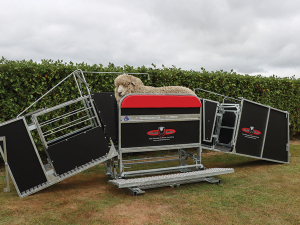
Oamaru-based livestock handling specialist Te Pari has bought Combi Clamp, the New Zealand manufacturer of Combi Clamp manual sheep handlers.
Agriculture Minister Todd McClay has admitted that a scheme bringing workers from Pacific nations to work on orchards has become too hard to navigate but says changes are coming.
A new app designed in New Zealand aims to help sheep, beef and deer farmers capture, analyse and use body condition score data more effectively.
Canterbury farmer Andy Macfarlane has been appointed to the board of AgriZeroNZ, the public-private partnership designed to accelerate the development and deployment of emissions reduction tools for New Zealand farmers.
For over 50 years Mel Ewers has been supporting the apple sector navigate through compliance and quality assurance issues.
The apple sector is enjoying a bumper harvest season.