fbpx
Print this page
Tuesday, 18 August 2015 14:06

Claas spends up on sleeping red giant

Written by 
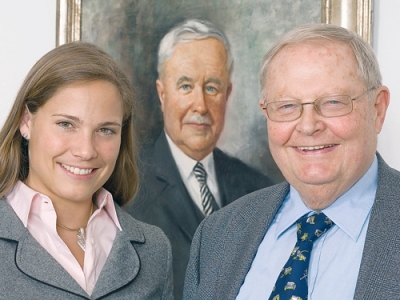
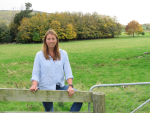
Catherine and Helmut Claas-Muelhaeuser. Catherine and Helmut Claas-Muelhaeuser.

While the the world’s farm machinery industry is feeling it tough, sitting alongside an agricultural sector that appears to be in the doldrums, it’s encouraging to hear one big company is looking to the future.

German harvesting and tractor manufacturer Claas is betting large on Russia at a time when others are pulling back and out, as the country struggles with political unrest and record low oil prices.

The 3.8 billion euro company, already operating a factory in Krasnodar, will spend at least 120 million euros (NZ$ 200m) building a second plant, with the capacity to take production to 2500 units per annum. Scheduled to open in the last quarter of 2015, the combined site will be Claas’s fourth largest in size.

Catherin Claas-Muelhaeuser, who with her father Helmut (93), owns most of the Harsewinkel-located company, is backing the Russian expansion.

“Despite the current challenges in Russia, we are convinced about the future of Russia,” she says. “We believe there are great prospects for its agriculture, but it has a need for investment in farm technology.”

This comment makes sense considering Russia’s 122m ha of farmland, only 60% effectively farmed. It uses mostly outdated machinery dating back to the Soviet Union.

 “The no. 1 priorities for our growth are Russia and Ukraine, in that order, and they’re the reason for our investment, despite the difficulties,” says Claas KgaA chief executive Lother Kriszun. 

He says those who are courageous and stay for the long run will be viewed positively by potential Russian customers. 

“We should also remember that Russia is not Putin. It is a large country on the European continent and we are sure the situation will normalise in due course.” 

More like this

New CLAAS Swath Turner Fixes Twin-Rotor's Blind Spot

Twin rotor swathers have become the ‘go-to’ for forming swaths to feed hungry harvesters and balers, however, the design layout often means that crop located between the two rotors is not picked up, turned over or incorporated into the swath formed for subsequent harvesting.

Claas Jaguar 1000 and Orbis 10500 Win ASABE Innovation Awards

After its flagship 1200 model set a Guiness World Record in forage harvesting, mopping up 4096 tonnes of whole crop silage in 12 hours, Claas has picked up a brace of awards from the American Society of Agricultural and Biological Engineering (ASABE).

Featured

Southland Farmers Face Wet Weather Toll, Support Available

Farmers across parts of Southland and South Otago are continuing to deal with difficult conditions after a prolonged run of wet weather, with pressure building around feed supply, stock management, pasture damage, farm infrastructure and everyday workloads.

How Wearable Tech Powers This 1,850-Cow Dairy Farm

For Canterbury dairy farmers Sian Meijer and Rick Wobben, wearable technology has become one of their most valuable on-farm tools - helping manage 1850 cows across an expansive, high-performing dairy operation while improving efficiency, mating outcomes and day-to-day decision making.

New Dairy Welfare Code Released, Takes Effect 2027

The first major update to the Dairy Cattle Code of Welfare in more than a decade has been released, marking what DairyNZ describes as an important step in ensuring animal welfare standards continue to evolve alongside scientific evidence and on-farm realities.

National

Machinery & Products