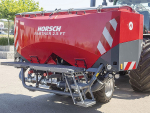
More front hoppers
German seeding specialists Horsch have announced a new 1600- litre double-tank option that will join its current Partner FT single tank line-up.
 increase font size
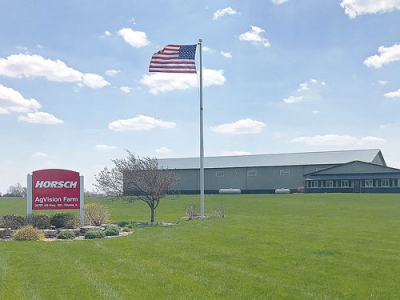
Hoping to encourage more discussion with farmers in the US, German arable manufacturer Horsch is now running another agricultural demonstration farm.
The AgVision Farm in Downs, Illinois, follows the company’s existing demo farm, AgroVation, in the Czech Republic.
AgVision will help develop the Horsch brand in North America and focuses on key agricultural topics important in the US market. It will also create a centre of expertise where farmers can talk with Horsch staff to better understand the company’s knowledge base and get experience of machines in use on the farm.
The 66ha farm is in the ‘corn belt’ of the US, in an area well known for growing mainly soybeans and maize.
The company will expand the farm’s rotation to include sugar beet, wheat and rape under the guidance of farm manager Daniel Fulton who is also experienced in field test analysis.
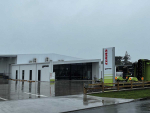
The set-up also includes an administration building with a training room and a machine hall with an adjoining repair shop.
Already converted to controlled traffic farming (CTF), the farm will demonstrate Horsch’s knowledge of this and will look at the importance of soil and climate conditions.
Already in use on the farm is a 32-row Maestro 32.15m single grain seed drill, working alongside a Joker disc cultivator; these will be joined by more Horsch equipment such as a Leeb LT sprayer.
Although catch crops have not played a major role in the US until recent years, the farm will have a special focus on this. It is hoped it will help impart experiences from the European market and address questions.
The demo farm will also look at techniques such as single, precision sowing of cereal crops. Likewise, test plots will be planted to compare non-GMO seed with GMO-seed varieties already part of everyday life in US agriculture but heavily criticised in Europe.
German seeding specialists Horsch have announced a new 1600- litre double-tank option that will join its current Partner FT single tank line-up.
European dairy co-operative Arla Foods is forecasting a total revenue of nearly $25 billion this year.
According to numbers sourced from national authorities, 151,800 tractors were registered across Europe in 2023, of which 26,200 tractors (17%) were 37kW (50 hp) and under and 131,900 (83%) were 38kW and above.
OPINION: European farmers are going to extreme lengths to have their message heard.
OPINION: Farmer protests have swept Europe in recent weeks.


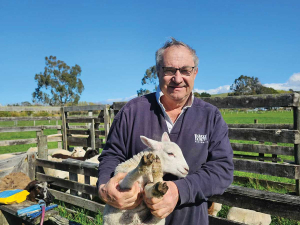
Decades piloting planes has ensured vet and farmer David Hayes is focused on safety. So, after a serious accident while welding on farm, he is sharing his experience so others can learn from it.
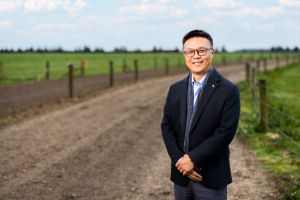
Canterbury milk processor, Synlait Milk has confirmed Leon Fung as its chief executive officer.
OPINION: Making it easier to collect rainwater and use it to grow crops and livestock is a no brainer.
As part of its Election 2026 coverage, Rural News asked political parties how they would help pull the arable sector out of the doldrums. Here's what they said:
Farmers are being encouraged to rethink how they manage waste on farm with the launch of ruralwastesorted.co.nz, a new website bringing together practical tips, real farmer experiences and resources.
New Zealand Winegrowers (NZW) is celebrating the India-New Zealand Free Trade Agreement (FTA) coming into force today, bringing New Zealand wine improved access to one of the world’s fastest-growing economies.