More To Overall Health Than Bugs and Viruses
OPINION: More than three decades ago, I was part of a group who received a monthly audio cassette tape from international leadership statesman, Dr. John Maxwell.
 increase font size
 Got the work-life balance right? That’s part of the mix. Tools are also available to help manage things like staff rostering. And help is available if you need to reach out.
Rural life, and agriculture is driven by changing seasons that dictate on-farm tasks and operations and busy times can mean pressure on owners or employees.
The pressure of a high workload over an extended period can create illness or fatigue, often in the form of the “silent killers” such as high blood pressure, diabetes or obesity.
While you wouldn’t baulk at making informed decisions about stock, pastures or crops, it’s sometimes too easy to forget about making good decisions about the overall management of your staff and indeed your own time to keep things on an even keel.
Tired pastures lead to a dip in production, so get “fixed” with renovation or replacement. In much the same vein, staff and family also need rest, good nutrition and some form of recreation to perform at their best too. People working at their optimum make for a more productive business, better levels of morale and ultimately an improvement to the bottom line.
Looking at the broader picture, research suggests that many sheep and beef farmers face a greater risk of accidents over summer, with longer days coupled with family commitments leading to potential fatigue Likewise, during those busy times, meals are typically eaten “on the run” at irregular times, or long periods are spent sat on tractor seats, in the same position, with no other exercise.
As the Work/Life balance swings in the wrong direction, particularly if the financial situation is tight, some owners or workers can easily feel overwhelmed, a situation that gets compounded, particularly if they are unwell or overtired.
So, what can we do to make sure we don’t get sucked into this downward vortex, both for our own health and that of our employees? If you are an employer, use available resources like the DairyNZ website to get information on the basics like good rostering.
From a personal standpoint, forward plan to make sure you get a few days away from the farm.
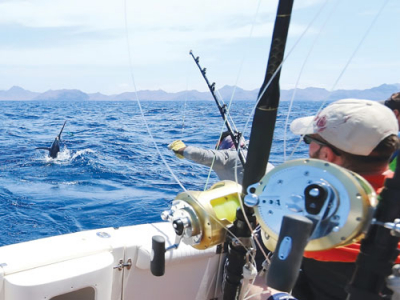
Whether it’s a game of golf or some fishing with a few mates, or even a meal, a show and a night away with the “other half”- it’s a great way to give the battery a recharge.
If you are feeling unwell, or indeed overwhelmed, reach out and seek some help.
That might be a chat with a spouse, a neighbour who understands the pressures you’re facing, or your GP.
Reaching out doesn’t me you’ve failed or you’re a bit of a “softie” – it means you’re responsible in realising that your health or that of your staff is paramount.
After all, stress and fatigue lead to poor decisions and irrational though processes, that leads to increased costs to the business, missed opportunities, risk of injuries, or ultimately fatalities. What would you do if key members of your workforce fell ill or left because they felt worn out, or how would the farm operate, and your family cope without you?
Investment in your own and your staff’s welfare has no downsides, only the benefits of greater well-being, better morale and the ability to overcome the challenges that life throws at us.
OPINION: More than three decades ago, I was part of a group who received a monthly audio cassette tape from international leadership statesman, Dr. John Maxwell.
OPINION: In the 1980s, concern was expressed in West Germany about the falling birth rate. Some simple analysis was performed by Professor Helmut Sies, physician and biochemist at Dusseldorf University. His letter ‘A new parameter for sex education’ was published in Nature in 1988:
Celebrating 50 years in the rural landscape of Central Canterbury and beyond, Ashburton-based Carrfields, has been the exemplar for all aspects of modern agriculture via its extensive range of services including supply, growing, agronomic advice and marketing.
Rural Women New Zealand this month submitted on the Draft Mental Health and a Wellbeing Strategy 2026-2036, because a person's postcode should not determine the quality of their mental health support.
The Government has announced its support for 18 community-based initiatives through its Rural Wellbeing Fund.


LIC shareholders have elected a new North Island representative to the co-operative's Board, along with five representatives to its Shareholder Reference Group (SRG), following the company's Annual Meeting held in Invercargill.
Farmers across parts of Southland and South Otago are continuing to deal with difficult conditions after a prolonged run of wet weather, with pressure building around feed supply, stock management, pasture damage, farm infrastructure and everyday workloads.
Federated Farmers says it welcomes Labour's commitment to reviewing the Sharemilking Agreements Act, calling on other major parties to do the same.
For Canterbury dairy farmers Sian Meijer and Rick Wobben, wearable technology has become one of their most valuable on-farm tools - helping manage 1850 cows across an expansive, high-performing dairy operation while improving efficiency, mating outcomes and day-to-day decision making.
Fonterra has unveiled its annual results for the 2026 financial year, posting $27 billion in revenue and close to $20 billion returned to New Zealand farmer owners and unit holders.
The first major update to the Dairy Cattle Code of Welfare in more than a decade has been released, marking what DairyNZ describes as an important step in ensuring animal welfare standards continue to evolve alongside scientific evidence and on-farm realities.