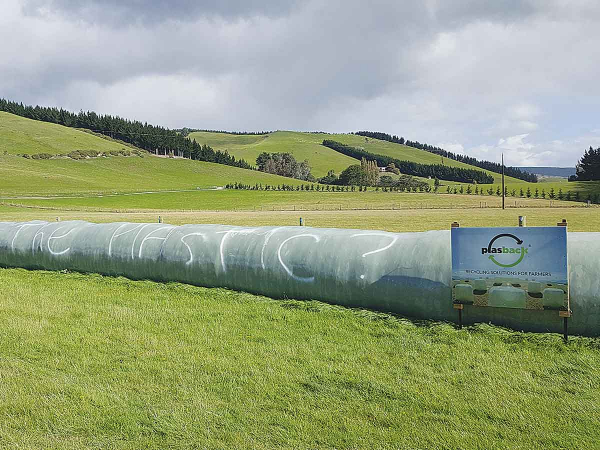
Nationwide on-farm recycler Plasback has more than doubled the volume of waste plastic it collected this year.
Some 3916 tonnes of bale wrap, silage sheet, polypropylene bags and other waste plastic made up its latest annual collection cycle.
“That’s enough plastic to go around the world five times, even though 2019-2020 was a bad season in terms of weather,” says Plasback manager Chris Hartshorne.
“The farming community should be applauded for its efforts to look after its plastic waste responsibly, with the base of farmers we collect from growing and enquiries from other rural businesses who want us to recycle products such as irrigation pipe and plastic packaging.”
Despite this good news, the high volume that the company is collecting is putting stress on its network of contractors, who collect the plastic from farms throughout the country.
Silage wrap importer Grevillia Ag recently joined the Plasback scheme, which Hartshorne says sets an example that other distributors should follow.
“Most New Zealand importers do not support Plasback, so they are getting a free ride on the backs of the companies that do,” he says.
The plastic Plasback collects, is recycled and repurposed into products such as builders’ film and Tuffboard, a plastic alternative to plywood.
“We are also working with a Kiwi company that is using Tuffboard to make a new generation of traps to control rats and other pests in conservation areas,” Hartshorne adds.
The introduction of two new plastic wraps that contain a significant percentage of recycled plastic, with Cycled Wrap from Aspla and Silotite Sustane from Berry BPI, is a significant step for the industry.
These products have the same stretch characteristics and UV resistance as products made entirely from virgin plastic.
Although Plasback is an accredited product stewardship scheme under the Waste Minimisation Act, it is not funded by government, so the collection fees that farmers pay to have their waste plastic picked up only covers some of the cost of collection and processing.
“It’s up to agricultural plastic distributors to be responsible and join an accredited product stewardship scheme,” Hartshorne says. “If they don’t, they are essentially freeloading on those who are paying their share.”
He says farmers should contact their rural supply store or contractor to make sure they are using products supplied by companies that support Plasback.
“It’s only fair.”