fbpx
Print this page
Friday, 05 August 2022 12:55

Tractor tech does the thinking

Written by  Mark Daniel
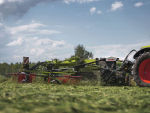
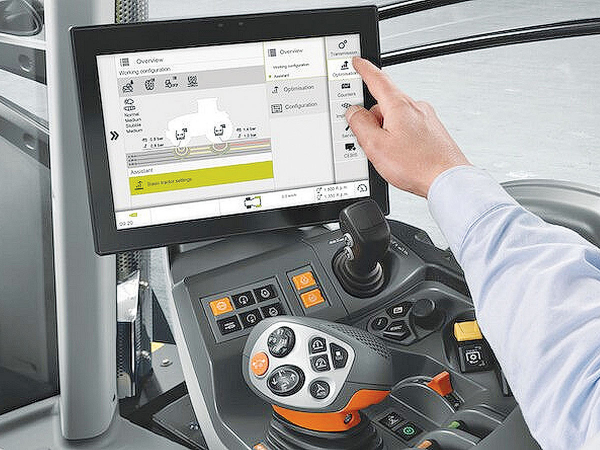
Claas has integrated the Terranimo application into its CEMOS control system for tractors. Claas has integrated the Terranimo application into its CEMOS control system for tractors.

German manufacturer Claas has integrated the Terranimo application into its CEMOS control system for tractors.

While CEMOS is still the only selflearning, interactive driver assistance and process optimization system, the Terranimo application will enable the tractor-implement setting to be even more focused on soil protection.

Terranimo is a simulation model. It was developed by the Bern University of Applied Sciences (BFH-HAFL) in cooperation with the Agroscope Reckenholz Research Institute, Aarhus University in Denmark and the Swedish University of Agricultural Sciences (SLU) and calculates and visualizes the risk of compaction. The model’s algorithms are based, among other things, on decades of accumulated best expertise.

In CEMOS for tractors, these are combined with the other information – such as soil type and condition, working depth, field condition (uncultivated, shallowly tilled or deep tilled), attachment, tyre type and ballasting.

Based on this combined information and the technical data calculated by CEMOS, such as static or dynamic axle loads, Terranimo calculates the compaction risks for three soil layers. Based on the assessment, CEMOS can then provide the driver with further recommendations for ballasting and optimizing the tire pressure to create the least damage to the soil structure.

If any changes are made to the tractor or implement settings, any changes in the risk of compaction flows directly into the current risk assessment of the Terranimo function. As a result, the driver will receive direct feedback on the effect that changing the settings will have on the soil structure.

More like this

New CLAAS Swath Turner Fixes Twin-Rotor's Blind Spot

Twin rotor swathers have become the ‘go-to’ for forming swaths to feed hungry harvesters and balers, however, the design layout often means that crop located between the two rotors is not picked up, turned over or incorporated into the swath formed for subsequent harvesting.

Motueka Farm Machinery Sold as Sturgeons Retire After 44 Years

Close to the Abel Tasman and Kahurangi National Parks, Motueka is known for apples, pear and kiwifruit orchards, alongside specialised crops such as hops. Indeed, that specialisation, saw the area being the New Zealand centre of the tobacco growing, until the early 1980s.

Can-Am Unveils 2027 SSV, ATV Range With New Defender HD10

Can-Am has introduced its 2027 range of side-by-side vehicles (SSV) and all-terrain vehicles (ATV), including the industry leading Defender, the Maverick R and the hugely capable Outlander ATV, incorporating a host of advancements designed to deliver an exceptional riding experience.

Featured

Southland Farmers Face Wet Weather Toll, Support Available

Farmers across parts of Southland and South Otago are continuing to deal with difficult conditions after a prolonged run of wet weather, with pressure building around feed supply, stock management, pasture damage, farm infrastructure and everyday workloads.

How Wearable Tech Powers This 1,850-Cow Dairy Farm

For Canterbury dairy farmers Sian Meijer and Rick Wobben, wearable technology has become one of their most valuable on-farm tools - helping manage 1850 cows across an expansive, high-performing dairy operation while improving efficiency, mating outcomes and day-to-day decision making.

New Dairy Welfare Code Released, Takes Effect 2027

The first major update to the Dairy Cattle Code of Welfare in more than a decade has been released, marking what DairyNZ describes as an important step in ensuring animal welfare standards continue to evolve alongside scientific evidence and on-farm realities.

National

Machinery & Products