Four-Year Trial Confirms Plantain Cuts N Losses 33%
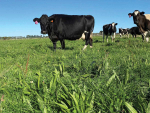
A four year trial has reaffirmed that mixing plantain into dairy pastures can help reduce nitrogen losses to freshwater while maintaining milk production and profitability, say researchers.
 increase font size
 Dr Suzi Keeling
The wellbeing of hill country farmers is at the heart of a new tool developed by the Hill Country Futures Partnership programme.
The $8.1 million Hill Country Futures Partnership is a five-year programme co-funded by Beef + Lamb New Zealand (B+LNZ), the Ministry of Business, Innovation and Employment, PGG Wrightson Seeds and Seed Force New Zealand.
The partnership has developed FarmSalus, a tool designed to help understand and monitor the human component of farming.
It has been designed for rural professionals and farmer group facilitators to support their conversations with farmers about farmer wellbeing and how it impacts the resilience of their farm business and environment.
B+LNZ sector science strategy manager, Dr Suzi Keeling says the tool fills a gap in the existing toolkit.
“While there are a lot of tools and surveys to measure economic or environmental success, there is little around to monito the health and wellbeing of the farmers themselves.
“FarmSalus considers all aspects of the farm system and how these impact on farmer health. The tool consists of a short survey, which takes about 30 minutes to complete. It is accompanied by training resources for the facilitators,” Keeling says.
FarmSalus was designed to assist meaningful discussion between farmers and their advisors, rather than be a detailed tick-box list.
The process of completing the FarmSalus survey enables farmers to identify their own personal values and assess if their farming practices and lifestyle are meeting these.
From this, farmers can identify which areas of their farming system are impacting the most on their own personal wellbeing and sense of resilience.
The FarmSalus was developed in response to a need identified by hill country farmers and was co-designed by the Hill Country Futures team and farmers, external industry groups, individuals and agricultural consultants.
The Hill Country Futures social research team (Nature Positive and B+LNZ) carried out 170 face-to-face interviews with almost 300 farmers, rural professionals, academics and industry leaders throughout New Zealand.
A four year trial has reaffirmed that mixing plantain into dairy pastures can help reduce nitrogen losses to freshwater while maintaining milk production and profitability, say researchers.
Matt McRae, a farmer from Mokoreta in Southland who runs a sheep, beef and dairy support business alongside a sheep stud, has been elected to the Beef +Lamb NZ Board as a farmer director.
Among the regular exhibitors at last month’s South Island Agricultural Field Days, the one that arguably takes the most intensive preparation every time is the PGG Wrightson Seeds site.
The red meat sector is poised for a strong rebound this season, with export receipts forecast to top $10 billion and farm profitability to almost double.
Progeny testing at Pāmu’s Kepler farm in Southland as part of Beef + Lamb New Zealand’s Informing New Zealand Beef programme is showing that the benefits of hybrid vigour could have a massive impact on the future of beef breeding.


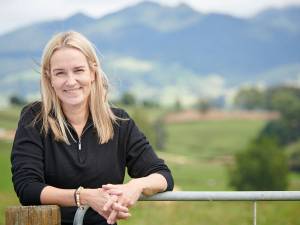
Minister of Conservation Hon Tama Potaka has appointed Susan O'Regan as Chair of the Queen Elizabeth II National Trust (QEII) for a three-year term.
Red meat farmers are welcoming Labour’s plan to review the Emissions Trading Scheme and not to campaign on pricing agricultural emissions.
Where any worker in the kiwifruit industry is mistreated, we expect the authorities to take action.
Mid Canterbury Federated Farmers arable chair, Bevan Lill, said Beef + Lamb NZ data indicated that for the last six years, the average arable return on investment was about 0.8% while inflation ran about 4% - so the average arable farm was going backwards at about 3% a year.
Seed and grain companies share the concerns of arable farmers about the viability of their sector, says Seed and Grain New Zealand chief executive Dr Sarah Clark.
The New Zealand Institute of Forestry (NZIF) says unnecessary changes to New Zealand’s Emissions Trading Scheme (NZ ETS) will seriously erode investor confidence and result in significant reductions in forest planting rates.