International Day of Rural Women: Two DairyNZ Farmers’ Stories
Today, 15 October, is the International Day of Rural Women, which recognises rural women’s contribution to farming, communities and the environment.
 increase font size
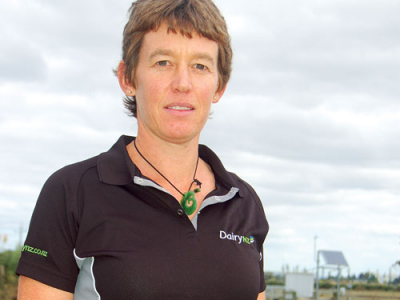 Jenny Jago.
Better pasture management, greater fertiliser efficiency, reduced farm expenses and seamless payroll and roster systems – there’s an app for that.
Well, not quite yet, but researchers and analysts have produced the Health and Safety Data Standard and its Farm Features and Attributes Data counterpart. These are the work of Transforming the Dairy Value Chain and the Red Meat Profit Partnership – two Primary Growth Partnership (PGP) programmes jointly funded by industry and MPI.
Andrew Cooke, managing director of Rezare Systems, the company doing the R&D as part of the PGP programme, says the new data standards will help build a “dictionary” that will help developers and others translate the data from many applications and tools into a common language.
“Farmers won’t directly apply the standards themselves, but over time the farm data standards will mean that the information generated and used by the different tools and technologies they have is more compatible, so it can be re-used between applications,” says Cooke.
He expects the greatest immediate benefit for farmers to be time saved.
“Think of the hours farmers now spend filling in forms, or sitting with various reps and advisers helping them fill in forms and calculators.
“Most of that time could be saved or turned to more valuable conversations.”
The Health and Safety Data Standard covers information from various tools designed to ease the burden of legislation that came into force last year and potentially involves systems covering payroll, rosters and farm finances.
The Farm Features and Attributes Data Standard is designed to help organisations re-use and exchange farm maps and other ‘spatial’ information.
“It seems like every second farm software package now comes with a mapping tool,” says Cooke.
The framework for both standards was defined during workshops, followed by research, editing and reviews.
“Rezare Systems then brought the definitions together into a single document to make it easy for farm and environment software vendors to find and use the standard definitions.”
The two new standards and others being developed are part of a wider project building DataLinker.
“That’s the next logical step – a framework that companies can actually use to share data. DataLinker lets all these applications work together as though they were one tool, regardless of which vendors the farmer has selected.”
He says the longer term benefit will be smarter tools and better advice for farmers. “Imagine the benefit of a few percentage points improvement in pasture utilisation, fertiliser efficiency or reduced farm working expenses.”
Andrew Fletcher, programme manager of the Transforming the Dairy Value Chain PGP, also sees benefits from work with data.
“The convenience of smartphone apps and the power of big data analysis have great potential for farming, offering benefits across the entire supply chain,” he says. “However, before we can do this we need to be able to combine data from multiple sources. These common data standards are a critical step.”
Jenny Jago, DairyNZ strategy and investment manager and chair of the industry steering committee overseeing the work, is keen to see organisations using the new standards, along with others developed over the past two years.
“It’s now up to organisations to adopt the common language, which will allow better information flows through the industry and the benefits from this important work to be realised.”
• Rob Mitchell is communications manager for Transforming the Dairy Value Chain.
Today, 15 October, is the International Day of Rural Women, which recognises rural women’s contribution to farming, communities and the environment.
The first major update to the Dairy Cattle Code of Welfare in more than a decade has been released, marking what DairyNZ describes as an important step in ensuring animal welfare standards continue to evolve alongside scientific evidence and on-farm realities.
Have a plan in place for your cows and staff.
DairyNZ deputy chair Cameron Henderson has been re-appointed unopposed for another term.
OPINION: The stats speak for themselves.


Federated Farmers has welcomed new rural policies released by ACT, saying they align closely with its own election priorities.

Rural Contractors NZ says proposed changes to land transport rules for agricultural vehicles are a welcome response by the Government to out of date regulations which have seen members hit with huge fines.
Alliance is calling for final applications for its 2027 Graduate Programme, with applications closing on Sunday 25 October.
Decades piloting planes has ensured vet and farmer David Hayes is focused on safety. So, after a serious accident while welding on farm, he is sharing his experience so others can learn from it.
Canterbury milk processor, Synlait Milk has confirmed Leon Fung as its chief executive officer.
OPINION: Making it easier to collect rainwater and use it to grow crops and livestock is a no brainer.