McRae Wins Southern South Island B+LNZ Director Vote
Matt McRae, a farmer from Mokoreta in Southland who runs a sheep, beef and dairy support business alongside a sheep stud, has been elected to the Beef +Lamb NZ Board as a farmer director.
 increase font size
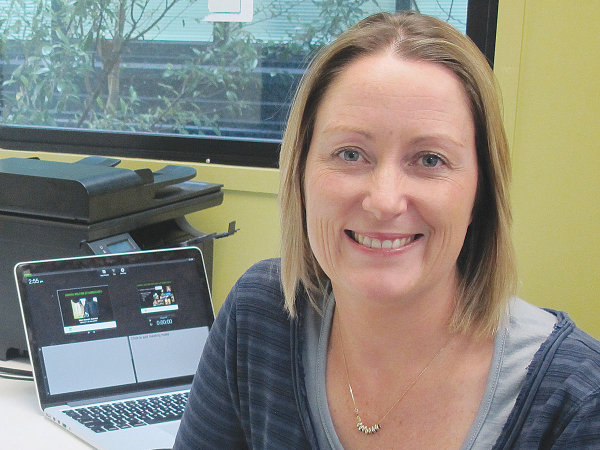 B+LNZ's Hill Country Futures programme manager Dr Mhairi Sutherland.
"Science is important for farmers," says Dr Suzi Keeling, Beef + Lamb New Zealand's sector science strategy manager.
"It is about having a firm foundation of knowledge that is defendable. Having confidence in the information you use to make farming decisions is key."
The Hill Country Futures Partnership, a five-year programme co-funded by Beef + Lamb New Zealand, the Ministry of Business, Innovation and Employment, PGG Wrightson Seeds and Seed Force New Zealand, is aimed at providing that kind of science for farmers. The $8.1m programme is focused on future proofing the profitability, sustainability and wellbeing of New Zealand's hill country farmers, their farm systems, the environment and rural communities. It differs from most pastoral-based research in that it considers the whole-farm system and critically, the wider communities these systems exist within.
"The Hill Country Futures Partnership programme incorporates traditional science approaches, farmer knowledge and perspectives, field studies and social research. It has a strong emphasis on forages and providing decision-making tools to help farmers select the best forage option for different land management units," says Keeling.
"The programme was originally focused on more traditional types of science - collecting data, interpreting it and providing guidance on how to use it. But the opportunity was there for it to also include trying to understand the human element. It is quite different to a lot of previous work because it marries more traditional science with trying to see the value, focus and drivers of farmers - making the science the programme produces more tangible and real."
Assembling the team of scientists, from across a wide range of disciplines and different organisations took some time. The team represents diverse skill sets and science disciplines including agronomy, economics, environmental science, farm forestry, plant genetics, modelling and analysis, landscape ecology, remote sensing, sociology and soil science and includes experts from universities, Crown Research Institutes and specialist consultants.
Dr Mhairi Sutherland, B+LNZ's Hill Country Futures programme manager, says a key strength of the programme has been the way it brings together many people with very different scientific backgrounds to work on separate but interconnected and complementary projects.
A big part of Sutherland and Keeling's work is facilitating all the multi-disciplinary participants and work components.
"That is a critical and very enjoyable part of our role. It is rewarding to get the project team together to discuss and share insights and ideas about hill country farming," Sutherland explains. "We work hard to support the connections between scientists and to remind them how their parts of the programme fit with other parts."
She says the list of outputs is phenomenal for research in general and they are seeing many exciting outcomes.
"Science is not useful if it stays in a science journal. This is about getting the science to an audience, and that is what this research programme is about," Sutherland adds. "The programme has very good momentum. Exciting things have already been achieved and that will keep increasing. We will have more to share with farmers soon."
Strong Team
Professor Derrick Moot, of Lincoln University, was the first to come on board and get the projects he is leading underway.
Moot, in collaboration with others, has built an open access national forage database - AgYields to help inform decisions of 'which legume where'. His team are also co-ordinating a number of forage trials at research and farm locations around the country to help farmers match their property's different land management units with the appropriate legume.
Meanwhile, Edmar Teixeira (Plant & Food Research) and Moot are developing models to help answer questions around legume forages' impact on production, environment, climate change, nutrient leaching and carbon sequestration. This work is complemented by data being collected by Nathan Odgers (Manaaki Whenua Landcare Research), whose team is mapping micro-indicators, such as soil temperature and moisture, in the hill country landscape.
Cameron Ludemann (Cameron Ludemann Consulting) has led work that assessed if the DairyNZ Forage Value Index (FVI) for ryegras could be adapted to sheep and beef farms.
James Millner (Massey University) and his team are evaluating the diverse potential uses of native shrubs on sheep/beef hill country farms. This includes as an alternative forage, enhancing biodiversity, mitigating soil erosion whilst also advancing our Mātauranga Māori knowledge of native shrub species.
Katherin Dixon (Nature Positive) and Angela McFetridge (B+LNZ) are developing a vision for a resilient farming future using information gathered from interviewing almost 300 farmers and others connected to hill country farming.
Scarlatti (Adam Barker, Karen Mitchelmore, Hannah Binnie) a research, analytics and evaluation firm, are evaluating the behavioural change that occurs as a result of the findings that come out of the Hill Country Futures programme. This will help assess the impact of the programme and how to advance extension design.
Matt McRae, a farmer from Mokoreta in Southland who runs a sheep, beef and dairy support business alongside a sheep stud, has been elected to the Beef +Lamb NZ Board as a farmer director.

OPINION: The good times felt across the dairy sector weren't lost at last week's Beef + Lamb NZ annual meeting.
Beef + Lamb New Zealand (B+LNZ) is calling on livestock farmers to take part in a survey measuring the financial impact of facial eczema (FE).
Beef + Lamb New Zealand (B+LNZ) chair Kate Acland says there are clear governance processes in place to ensure fairness and transparency.
The red meat sector is watching anxiously as the US embarks on a tariff war with its key trading partners.
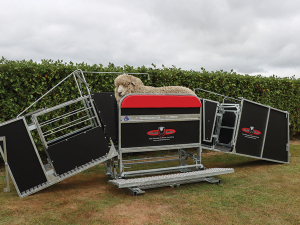
Oamaru-based livestock handling specialist Te Pari has bought Combi Clamp, the New Zealand manufacturer of Combi Clamp manual sheep handlers.
Agriculture Minister Todd McClay has admitted that a scheme bringing workers from Pacific nations to work on orchards has become too hard to navigate but says changes are coming.
A new app designed in New Zealand aims to help sheep, beef and deer farmers capture, analyse and use body condition score data more effectively.
Canterbury farmer Andy Macfarlane has been appointed to the board of AgriZeroNZ, the public-private partnership designed to accelerate the development and deployment of emissions reduction tools for New Zealand farmers.
For over 50 years Mel Ewers has been supporting the apple sector navigate through compliance and quality assurance issues.
The apple sector is enjoying a bumper harvest season.