Govt Commits $4m to Rural Wellbeing Initiatives
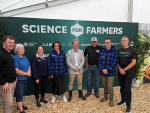
While the District Field Days brought with it a welcome dose of sunshine, it also attracted a significant cohort of sitting members from the Beehive – as one might expect in an election year.
 increase font size
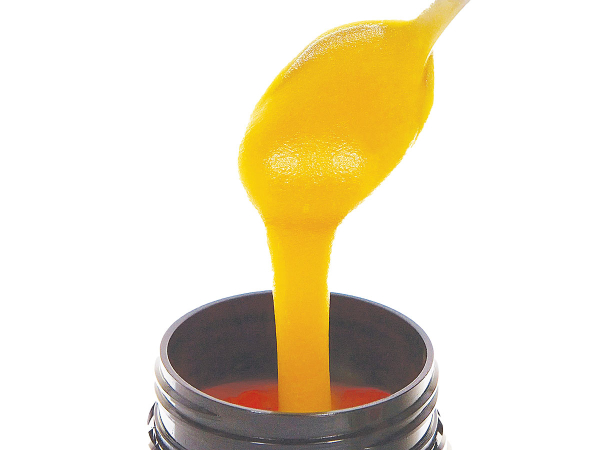 Manuka honey can only be sourced from and produced in New Zealand, according to the Manuka Charitable Trust. Photo Credit: NZ Manuka Honey Facebook Page
A recent Plant & Food Research study comparing the DNA of trees commonly called manuka in New Zealand and Australia has found such significant genetic differences between the two that the researchers are now recommending the two plants be designated as different species.
With research funding from Te Pitau Ltd, the operating arm of the Mānuka Charitable Trust, Plant & Food Research and the Department of Conservation, mānuka samples were collected in Tasmania and in New Zealand with permission from Māori landowners.
Analysing 2000 variable DNA markers called ‘SNiPs’ (single DNA letter changes) in the DNA from each plant from both New Zealand and Tasmania, nine family clusters corresponding with different geographic regions were identified in New Zealand and two in Tasmania.
“The SNiP is DNA variance between two individuals and we detect where they are across the chromosome of manuka, string them across populations and curate the frequency of each variant across populations,” said report co-author Dr David Chagne. “When you add up the differences in frequency between variety across each chromosome and between populations… it can tell you how much difference is between populations versus differences within those populations.”
The study found the New Zealand clusters were more closely related than those found in Australia, with evidence of recent cross breeding. The genetic differences suggest that New Zealand and Australian mānuka diverged 9-12 million years ago.
Chagne said that the several distinct clusters in New Zealand showed the normal genetic spread from families spread across a wide geographic area. “The two Australian clusters, while related to each other, are vastly different genetically and could potentially be classified as different species.
“We measured the FST (total genetic variance) between NZ and Australian populations above 35%; the same sort of FST values between nashi and European pear, which are considered different species. That gives an extent of how different the leptospermum trees in Australia are from New Zealand.”
With the researchers noting the results had significant cultural and commercial implications- especially for products derived from each species, including honey- Mānuka Charitable Trust (MCT) chair Pita Tipene says this provides further evidence of the claim that mānuka is a recognised taonga (treasure) under the Treaty of Waitangi and its honey can only be sourced from and produced in Aotearoa New Zealand.
“Mānuka is a Māori word and tree that belongs to us. The expropriation of the name ‘mānuka honey’ to a plant or natural product from outside Aotearoa is taking the identity and associated epistemology of our culture, our knowledge and what we believe in, and being used in a way that’s misleading. What’s more, it’s ignoring the original names developed over thousands of years of history of the Aboriginal peoples of Australia.”
Chagne stresses that although some funding from the study came from the MCT, the results are objective and free of conflict. The chair of the UMF Honey Association, Rob Chemaly says “Origin matters because people buy ‘mānuka honey’ as they see the value in origin and terroir, particularly when it comes to natural products.
While the District Field Days brought with it a welcome dose of sunshine, it also attracted a significant cohort of sitting members from the Beehive – as one might expect in an election year.
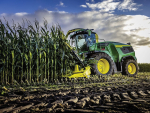
After what has been a difficult year with redundancies and factory downsizing, John Deere is reversing course, announcing it will bring 140 employees back to its Waterloo, Iowa operations as demand increases for its 8R and 9R tractors.
Austrian manufacturer Pöttinger gave a sneak peek of a new automatic swath placement system for the Novacat V 10000 ED/RC Collector mowers at Agritechnica 2025, and recently confirmed that the upgrade will be available for the upcoming European mowing season.
Mahindra & Mahindra, the world's largest tractor producer by volume and India's leading automobile manufacturer, has announced plans to establish its largest integrated automobile and tractor manufacturing facility in Nagput, Maharashtra, marking a major expansion of its manufacturing footprint.
John Deere has announced the launch of three new models in both 8R and 8RX formats, featuring additional higher horsepower (HHP) options and improved performance, manoeuvrability, and versatility.



National’s pledge to introduce 19 new national standards shows the party is serious about getting Wellington out of farming, Federated Farmers says.
The National Party’s policies to make it easier to grow fresh vegetables, secure reliable water and energy and simplify farm planning are practical changes that will give growers the confidence to invest, according to Horticulture New Zealand (HortNZ).
Fonterra Co-operative Group chief financial officer Andrew Murray has resigned to take up a role outside the dairy giant.
A major move is about to get underway to improve the quality and viability of dairy beef and cattle in NZ.
Veterinarians say changes to the code of welfare for dairy cattle provides a positive foundation for improved cattle welfare across the country.
Today, 15 October, is the International Day of Rural Women, which recognises rural women’s contribution to farming, communities and the environment.