New Research Shows Good Farming Practices Reducing Nutrient Losses on Dairy Farms
Analysis of decades of research has revealed the good farming pracrtice plays a critical role in reducing nutrient losses to improve freshwater outcomes.
 increase font size
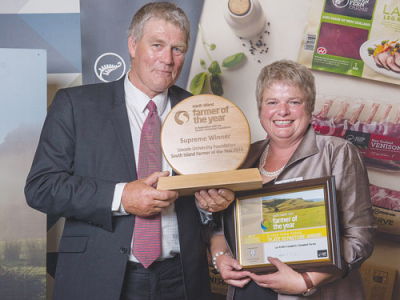 Fairlie farming couple Neil and Lyn Campbell with the Lincoln University Foundation Farmer of Year and Plate to Pasture awards announced in November last year.
A South Canterbury couple have been named the 2016 Lincoln University Foundation Farmer of the Year, based on a detailed and analytical approach to farm management.
Neil and Lyn Campbell farm 769ha of rolling hills and flats in Middle Valley, just east of Fairlie, running sheep and deer and producing a variety of crops.
Chief judge Nicky Hyslop cited the Campbells’ “efficient, incredibly flexible and adaptive” approach to developing their dryland property. Their focus had been on systems to generate the most profit at the most effective time, with land stewardship always the foundation of their decisions.
Hyslop says that when the Campbells moved to their property their aim from the start was to be in the top 10% of producers. They not only changed how the property was run, they instigated analysis systems so every aspect of the farm operations could be measured and compared against key performance indicators.
“Neil and Lynn use accurate data to validate their decisions,” Hyslop says. “There’s no reliance on hunches or assumptions. Hard data is analysed to compare and choose between the different enterprises on the farm.”
Hyslop says the farm’s small paddock sizes also allow for specialist crops to be grown – oat and grass seed, and rape seed for oil -- for maximum return.
“We can’t compete on volume and, likewise, we aren’t big enough to compete by going straight to the market,” Neil Campbell says. “So our best option is to deliver each product at the time when it is most profitable.
“We go from summer dry valley floor to higher altitude moist hill country. Some of the things we are doing at altitude are more common at sea level, like growing crops. The diversity of our business gives us strong balance environmentally and financially.”
The Campbells hope the farm remains in the family and the judges noted their succession planning. Their aim is for a sustainable and environmentally compatible farm producing nutritious food.
“Our biggest and most important goal is to continue to enjoy what we do,” Campbell says. “Farming is a fantastic industry; if we can be part of telling that story and encouraging the younger generation into the industry we will be satisfied.”
The Campbells’ prize a $20,000 travel and study grant. As part of their win they will also host a field day at the farm in early April.
Analysis of decades of research has revealed the good farming pracrtice plays a critical role in reducing nutrient losses to improve freshwater outcomes.
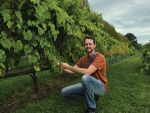
A Lincoln University research fellow is working to safeguard grapevine species from extinction, using careful science and liquid nitrogen.
The South Island Dairy Event has announced Jessica Findlay as the recipient of the BrightSIDE Scholarship Programme, recognising her commitment to furthering her education and future career in the New Zealand dairy industry.
Fussy children might be frustrating, but fussy mealybugs could help protect the New Zealand wine industry from grapevine leafroll-associated virus 3.
The future of New Zealand’s agricultural sector grew a little brighter, with the South Island Agricultural Field Days (SIAFD) now accepting applications for its scholarships through Lincoln University, offering $10,500 to up to six exceptional students who are poised to become the next leaders in the primary industries.


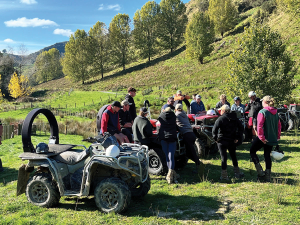
A recent Beef + Lamb New Zealand quad safety field day, held along the rugged Whanganui river valley at Kakatahi, focused on identifying risks and taking appropriate actions to minimise unplanned accidents.

Healthy snacking company Rockit has announced Wang Yibo, one of China's most influential celebrities, as its new brand ambassador.
Rabobank has celebrated the tenth anniversary of its AgPathways Programme, with 23 farmers from Otago and Southland gathering for two-and-a-half days to learn new business management and planning skills.
Adopting strategies to reduce worm burden on farm goes hand-in--hand with best practice farm management practices to optimise stock production and performance, veterinarian Andrew Roe says.
Last night saw the winners of the 2026 Beef + Lamb New Zealand (B+LNZ) Awards named at a gala dinner at Te Pae Christchurch Convention Centre.
A 12-month pathway programme has helped kickstart a career in dairy for an 18-year-old student-turned-farmer.