
Pāmu and Meet the Need Launch Mince Recipe Cards for Food Banks
A partnership between state-owned enterprise Pāmu (Landcorp Farming Limited) and charity Meet the Need is putting more than quality New Zealand beef into food bank parcels this year.




 increase font size
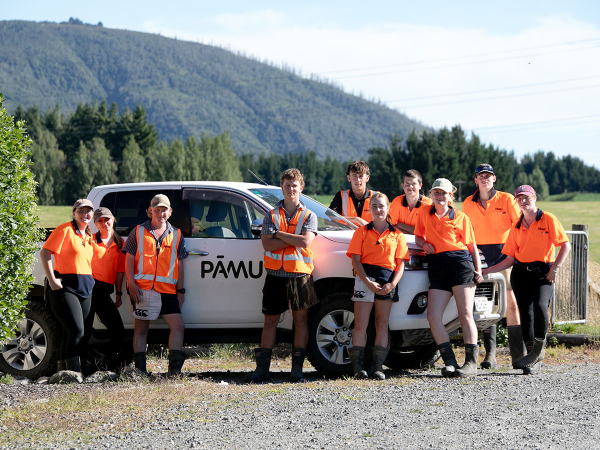 From left to right: Tori Cheetham, Sienna Barltrop, Aidan King, Ryan Sayers, Case Hasler, Grace Dolton, Reuben Joyce, Libby Meredith, Alex Iremonger, Caitlin Flack
Pāmu has welcomed ten new apprentices into its 2026 intake, marking the second year of a scheme designed to equip the next generation of farmers with the skills, knowledge, and experience needed for a thriving career in agriculture.
The arrival of the new cohort comes as Pāmu confirms the success of its 2025 pilot year, with 100% of the inaugural class successfully completing their foundation year and transitioning into full-time roles on Pāmu farms across the country.
Pāmu CEO Mark Leslie says the retention of the 2025 class validates the business’s investment in the future.
“Seeing our entire inaugural class successfully transition into roles on Pāmu farms is proof that this model works,” says Leslie.
“They have grown immensely over the past twelve months, not just as farmers, but as young professionals. Their success has paved the way for the 2026 cohort, who we are excited to see develop over the coming year.”
The ten new apprentices—many of whom finished secondary school only weeks ago—are now settling into life at Aratiatia Farm. Here, they will balance full-time farm work with formal qualifications in dairy and livestock. Over the next three years, apprentices will rotate through diverse farming environments, gaining the technical proficiency required to work in modern, farming operations while earning Level 3 and 4 Primary ITO qualifications.
Pāmu Apprenticeship Scheme Manager Gary Brady notes that the programme prioritises personal growth alongside the "how-to" of farming. Pastoral care is central to the scheme; apprentices live together on farm, managing budgets, cooking, and sharing household responsibilities to build independence. Regular wellbeing check-ins, personality profiling, and open communication ensure mental health is supported, while involvement in Open Farm days strengthens their connection to the sector.
“Our objective is to prepare these young people for long-term employment in the industry,” Brady says.
“This involves respecting the land, understanding new technology, and developing the character to lead in their future roles.”
This year’s group brings together a diverse range of backgrounds from across the North and South Islands:
After a year of foundational training, apprentices will select a specialty in either dairy or livestock for their second and third years to align with their career objectives.
A partnership between state-owned enterprise Pāmu (Landcorp Farming Limited) and charity Meet the Need is putting more than quality New Zealand beef into food bank parcels this year.

State farmer Pamu has delivered its strongest operating result on record.
Beef+Lamb New Zealand and the Ag Emissions Centre have launched a new research project aimed at helping beef farmers reduce methane emissions without impacting productivity or profitability.
State farmer Pāmu is opening its farm gates this summer in an effort to give the rural sector the opportunity to see how large-scale, multi-system farming is delivering productivity and profitability across New Zealand.
Bank of New Zealand (BNZ) and Pāmu (Landcorp Farming Limited) have developed a new way for landowners to earn revenue from existing native forests.


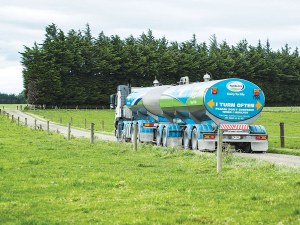
Fonterra has unveiled its annual results for the 2026 financial year, posting $27 billion in revenue and close to $20 billion returned to New Zealand farmer owners and unit holders.
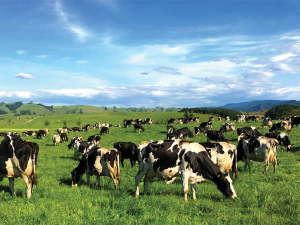
The first major update to the Dairy Cattle Code of Welfare in more than a decade has been released, marking what DairyNZ describes as an important step in ensuring animal welfare standards continue to evolve alongside scientific evidence and on-farm realities.
Ravensdown shareholders have elected Jane Montgomery and Kate Acland to the Ravensdown Board for three-year terms, following a closely contested director election.
Federated Farmers says new legislation replacing the Resource Management Act will cut red tape, unlock investment and help grow New Zealand's export-led economy, after the Planning Bill and Natural Environment Bill passed their third reading in Parliament yesterday.
Leading figures from the major political parties will be questioned on their primary sector policies at the Rural Issues Debate at Mystery Creek Events Centre, Hamilton, on 30 September.
OPINION: Have a plan in place now!




OPINION: The same mainstream media muppets that brought you Jacindamania in 2017 have been flat out pimping for the Opportunities…
OPINION: Your old mate reckons the atrocious way farmers in the UK are treated by their lords and masters in…




