A five-year study has found that the cost of reducing emissions without technology may be significant and unsustainable for Northland dairy farmers.
The study has also presented the region's farmers options of trying pasture species other than perennial ryegrass as they grapple with changing climatic conditions.
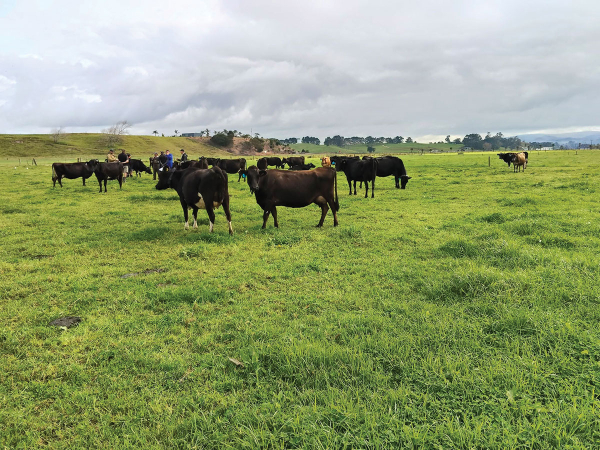
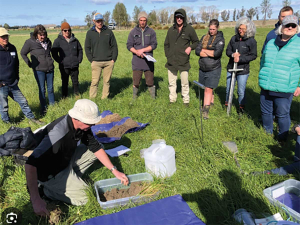
The study was conducted by the Northland Dairy Development Trust (NDDT) on the Northland Agricultural Research Farm (NARF), Dargaville. A field day was held last month to reveal the results.
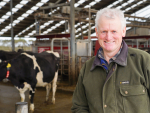
Trust coordinator Kim Robinson told Rural News that the study set out to learn two things.
One was the cost of reducing emissions without technology.
"We have shown this cost is significant and unsustainable and as a result I think most farmers are waiting for either new cheap tech or significant pricing signals before they make large system changes," says Robinson.
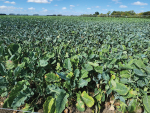
The study also looked at which pasture species other than perennial ryegrass perform better in the Northland climate.
Robinson says many farmers are now interested in the tall fescue cultivars as a result of the trial.
"They also now understand the management and establishment must be different to ryegrass, which is critical to their success.
"The seed companies are also more open to selling these pastures.
"Farmers can have the confidence to try some of these options knowing how to get the best out of them," she says.
The study which started in 2021-22 season included three farm types:
- Baseline Farm - existing Italian ryegrass/kikuyu pastures. Stocking rate three cows/ha and up to 190kg applied N/ha.
- Alternative Pastures Farm - 75% of pastures in tall fescue and/or cocksfoot-based pastures, with legumes & herbs. Stocking rate three cows/ha and up to 190 kg applied N/ha.
- Low Emissions Farm - existing Italian ryegrass/kikuyu pastures, targeting a 25-30% reduction in methane emissions and 50% reduction in nitrous oxide emissions (compared to the Baseline Farm). Stocking rate was 2.1 - 2.3 cows/ha with no nitrogen fertiliser applied.
All farms used limited imported feed to fill feed deficits (up to 800kg/cow of mainly palm kernel expeller PKE). Trial measures captured pasture and milk production and composition, profit, labour input and management difficulty and environmental impact.
Results have varied over the five years. However, milk production was highest on the Baseline Farm in three of those seasons while the Alternative Pastures Farm had the highest milk production in the other two seasons. Drier summers favoured the Baseline Farm which has a higher kikuyu presence in the pastures.
Milk production on the Low Emissions Farm where no nitrogen fertiliser was applied has been between 20% and 39% lower than the Baseline Farm. The variation in milk production on the Low Emissions Farm appears to be related to variance in clover presence. Over the five seasons, clover content of the pasture on the Baseline Farm has averaged 9% while the Low Emissions Farm has averaged 24%.
Financial analysis of each farm (using actual milk prices) across the five years of the study shows that on average the Baseline and Alternative Pastures Farms have had relatively similar farm operating profit. The Low Emissions Farm operating profit has averaged $698/ha lower than the Baseline Farm, although it was not the least profitable farm in two of the five years.
Emissions Profile
Greenhouse gas emissions on the three farmlets were calculated using the Overseer model.
Emissions have been relatively similar between the Baseline and Alternative Pastures Farms, due to similar stocking rate, milk production, PKE and N inputs.
The Low Emissions Farm averaged 26% less methane and 46% less nitrous oxide for the five years of the trial.
The higher milk production on the Low Emissions Farm during the 2025/26 season led to lower reductions in methane and N2O compared to the previous four years.
The methane levels fluctuate somewhat in line with milk production and stocking rate, as methane is closely related to feed eaten.