International Day of Rural Women: Two DairyNZ Farmers’ Stories
Today, 15 October, is the International Day of Rural Women, which recognises rural women’s contribution to farming, communities and the environment.
 increase font size
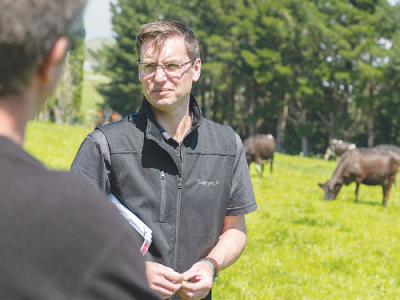 Dairy NZ’s Adam Duker.
Game-changing new research into how plantain crops can reduce nitrogen (N) loss from dairy farms will see upper Manawatu farmers at the forefront of dairy science.
In the Tararua catchment, dairy farmers are faced with reducing N loss from pastures by an average of 60%, to meet the council’s One Plan targets. To achieve those, farmers are adopting a range of onfarm changes – and the region’s new plantain research could be a key component.
The Tararua Plantain Project, recently funded from the Sustainable Farming Fund, is a new approach by DairyNZ to reduce farm N loss through a combination of plantain and good management practice.
“Plantain provides us with an excellent low-cost opportunity to meet this challenge,” says DairyNZ catchment engagement leader Adam Duker.
He says the crop can be used as a pasture mix for dairy cattle feed, but its properties have also been proven to reduce nitrogen loss.
“Farmers in the catchment have already been making onfarm changes to reduce nutrients and sediment impacting the Manawatū River,” Duker says.
“The river water quality is improving as a result and, by adopting plantain as a fodder crop on their farms, we expect to see further improvements over time.”
The Tararua Plantain Project involves paddock-scale research on six farms where plantain crops are expected to reduce nitrogen from cow urine.
Plantain roots also lock more nitrate into soil, preventing run-off into waterways.
“The project is farmer-led and focuses on tangible, practical solutions to the environmental challenge by testing the feasibility of plantain at the farm and catchment scale. We’d like to see plantain as a staple part of the dairy cow’s diet in this area by 2025,” Duker says.
“It will allow our farmers to maintain similar levels of milk production; we hope the project will demonstrate how to keep their businesses profitable, reduce environmental impact and minimise the effect on the community.”
DairyNZ is working with Horizons Regional Council, Massey University, agronomists and a project team of six on the Tararua Plantain Project, which began this season and will run for seven years.
The project aims to achieve plantain use on 125 dairy farms to increase farm business and community resilience, and quantified gains in water quality.
Form more visit: www.dairynz.co.nz/tararua
Today, 15 October, is the International Day of Rural Women, which recognises rural women’s contribution to farming, communities and the environment.
The first major update to the Dairy Cattle Code of Welfare in more than a decade has been released, marking what DairyNZ describes as an important step in ensuring animal welfare standards continue to evolve alongside scientific evidence and on-farm realities.
Have a plan in place for your cows and staff.
DairyNZ deputy chair Cameron Henderson has been re-appointed unopposed for another term.
OPINION: The stats speak for themselves.



National’s pledge to introduce 19 new national standards shows the party is serious about getting Wellington out of farming, Federated Farmers says.
The National Party’s policies to make it easier to grow fresh vegetables, secure reliable water and energy and simplify farm planning are practical changes that will give growers the confidence to invest, according to Horticulture New Zealand (HortNZ).
Fonterra Co-operative Group chief financial officer Andrew Murray has resigned to take up a role outside the dairy giant.
A major move is about to get underway to improve the quality and viability of dairy beef and cattle in NZ.
Veterinarians say changes to the code of welfare for dairy cattle provides a positive foundation for improved cattle welfare across the country.
Today, 15 October, is the International Day of Rural Women, which recognises rural women’s contribution to farming, communities and the environment.