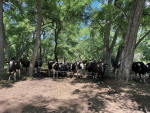
DairyNZ Tests Heat Stress Solutions for Dairy Herds
New DairyNZ research will help farmers mitigate the impacts of heat stress on herds in high-risk regions of the country.
 increase font size
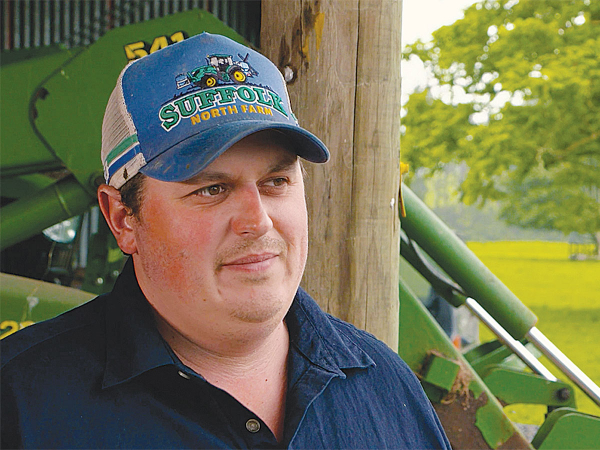 Taranaki dairy farmer Robert Buchanan says Flashmate is a solution that delivers results without the stress and at an affordable cost.
Heat detection is a challenge in any season, but autumn calvers know that cold and wet weather slows cows down, making heats harder to call with confidence.
According to the makers of the Flashmate heat detector, anxiety over `lost milk’ from missed heats and poor-quality submissions can drive up stress levels on farm.
Robert Buchanan farms 280 cows at Inglewood and faced a steep heat detection learning-curve some years ago. He says Flashmate is a solution that delivers results without the stress and at an affordable cost, which has been using for many years now.
“Our empty rates have dropped a lot. Last year we didn’t have any empty two-year-olds and I had one empty three-year-old, so something’s obviously working for us,” Buchanan says.
He was determined to make a step up in performance from tail paint, without lifting farm costs long-term. This was important, given the possibility of future down-turns which can extend or even eliminate the payback on higher-cost commitments.
Next came considerations of training and staff requirements, along with effort to interpret data needed to make your own final heat decisions. With long-term resilience in mind, he opted to keep it really simple.
“We’ve trialled collars and found Flashmates are a lot more attainable in terms of cost.
“It all corresponds, they fit in well with a system like ours. We try to keep costs down and I‘ve used them six years in a row. There’s no lying with it really, it’s either on or off.”
In winter weather, cows may be cycling, even if they’re not making this obvious to the team. Silent heats drag down submissions, impacting six-week in-calf and empty rates.
“We’re picking up silent heats with hardly any marking on tail paint. You’re definitely picking up more cows earlier and picking up those cows that you’d normally miss,” says Buchanan.
And later in the mating period, poor submissions carry additional risk.
“Flashmates are another visual thing you can say, ‘that cow, she’s definitely not on’ [so] you don’t put that cow up for AI, so you’re not getting that embryonic loss.”
New DairyNZ research will help farmers mitigate the impacts of heat stress on herds in high-risk regions of the country.
Thirty years ago, as a young sharemilker, former Waikato farmer Snow Chubb realised he was bucking a trend when he started planting trees to provide shade for his cows, but he knew the animals would appreciate what he was doing.
With the advent of climate change, dairy farmers could expect to be dealing with more days where their cows are suffering from heat stress.
As temperatures rise, our cows face the challenge of maintaining production and health while battling the heat.
New research from the University of Queensland and the Queensland Alliance for Agriculture and Food Innovation (QAAFI) has revealed that changing the diets of pregnant sows could be key to improving animal welfare by easing heat stress.



Federated Farmers has welcomed new rural policies released by ACT, saying they align closely with its own election priorities.

Rural Contractors NZ says proposed changes to land transport rules for agricultural vehicles are a welcome response by the Government to out of date regulations which have seen members hit with huge fines.
Alliance is calling for final applications for its 2027 Graduate Programme, with applications closing on Sunday 25 October.
Decades piloting planes has ensured vet and farmer David Hayes is focused on safety. So, after a serious accident while welding on farm, he is sharing his experience so others can learn from it.
Canterbury milk processor, Synlait Milk has confirmed Leon Fung as its chief executive officer.
OPINION: Making it easier to collect rainwater and use it to grow crops and livestock is a no brainer.