Dairy sheep farms set to boost stock numbers
Stock expansion and management tweaks are on the cards for a couple of Waikato dairy sheep farmers coming to the end of their milking season.
 increase font size
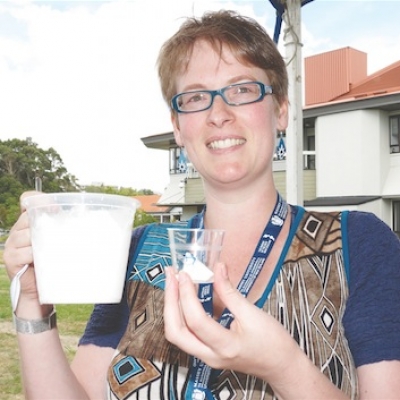 Dr Abby Thompson
Sheep milk products will sell only if the consumer likes the taste.
Dr Abby Thompson, food innovation manager at the Riddet Institute, Palmerston North, and her team at the conference handed out samples of sheep milk products. These included yoghurt and several ice-cream varieties that proved popular with attendees.
Thompson, a food scientist, says most consumers will choose a sheep milk product on the basis of its taste, wholesome heritage and because it’s a ‘bit different’ – a neat product.
“Sheep milk products fit the idea of food culture or heritage that is becoming increasingly popular around the world,” she told Rural News.
“An example is the slow food movement: enjoying our food, taking pleasure in it and appreciating what has happened to bring it to our table – including the farmers milking the sheep and people transforming it into ice-cream or cheese.”
She perceives an image problem for sheep milk products in New Zealand: they are not what many consumers would instinctively associate with great tasting, good quality food. So for a sheep milk industry to succeed, most of its products would be for export – a view shared by most attending the conference.
On developing sheep milk products, Thompson says there are “science challenges”.
“The higher levels of protein mean that there are potential precipitation issues when you freeze or heat the milk. But on the other hand, the increased levels of fat and protein means there is effectively ‘less water’ in sheep milk than in cow milk, enabling you to take the milk straight from the sheep and make it into thick creamy yoghurts and beautiful gelatos without having to add extra cream.”
A food product must simultaneously appeal to the consumer’s heart, tongue and head.
Stock expansion and management tweaks are on the cards for a couple of Waikato dairy sheep farmers coming to the end of their milking season.

Noted animal geneticist Dr Jock Allison is full of praise for the initiative to build a larger sheep milking industry.
Plans to expand the sheep milk industry have advanced to the formation of a society to develop and promote the industry, confirmed at the close of a recent two day conference at Massey University.
New Zealand could lead the world in sheep milk production, says Nuffield scholar Lucy Griffiths. She told the recent Ewe Milk Products and Sheep Dairying Conference at Massey University the industry is well set up to lead internationally.
Lincoln University farm management and agribusiness lecturer Guy Trafford is so convinced about the opportunities sheep milk presents he plans to manufacture his own ice cream from it.


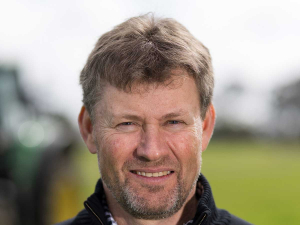
Mark Hooper has been appointed the new chair of NZPork, the industry organisation representing New Zealand pig farmers.

As the India-New Zealand free trade agreement enters into force, New Zealand’s apple industry has reaffirmed its commitment to the long-term development of India’s apple sector.
Fonterra shareholders can begin voting on Tuesday 20 October in the 2026 Board of Directors’ election, a Co-operative Council election in one Ward, and seven Annual Meeting resolutions.
National’s pledge to introduce 19 new national standards shows the party is serious about getting Wellington out of farming, Federated Farmers says.
The National Party’s policies to make it easier to grow fresh vegetables, secure reliable water and energy and simplify farm planning are practical changes that will give growers the confidence to invest, according to Horticulture New Zealand (HortNZ).
Fonterra Co-operative Group chief financial officer Andrew Murray has resigned to take up a role outside the dairy giant.