Lodestone's Solar Farm Clears Fast-Track Approval
The managing director of a company seeking to build a solar farm in Canterbury says receiving fast-track approval is a “really positive outcome”.
 increase font size
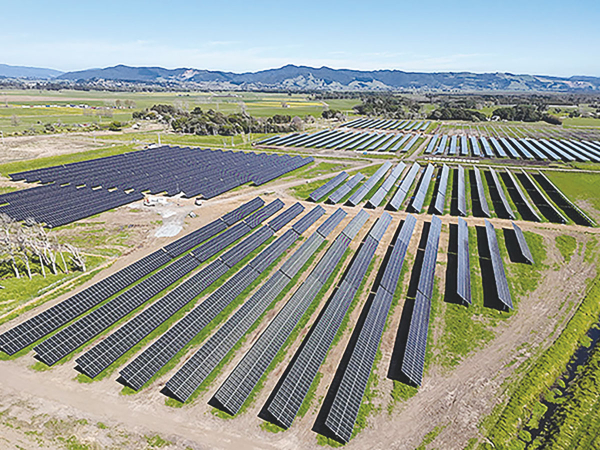 Lodestone’s Kaitaia solar farm, which came online late last year.
There are plenty of possibilities for successful farming operations in, under and around largescale solar electricity generation installations.
That’s the claim of one of New Zealand’s foremost agrisolar companies, Lodestone Energy.
“There’s a lot of ways to do this, there’s a lot of examples in America, in Europe, where these practices are evolving,” says Lodestone managing director Gary Holden.
Lodestone came online late last year with what is currently the country’s largest gridconnected solar farm, at Kaitaia. It has four more in development in the North Island, and recently revealed a push into the South Island with consents granted for three sites in Canterbury. Its current three-phase expansion plan envisages a total of 19 farms around the country.
Holden told Rural News that will mean 19 slightly different farming arrangements because at the end of the day it will be each farmer’s decision on how they use the land under the rows of 2.3m high panels.
“The very simple version is you just run sheep like you would if you were rotating them through paddocks in a typical grazing scenario,” he explains. “But it’s early days and we’ve got a lot to learn. And then over time, we’ll try other things. We’ll try horticulture, we’ll try cattle. So far, sheep looks like it’s going to work really well.”
Holden says it’s important to realise that farming isn’t a big part of the overall economics of a solar plant but it was about creating a scenario where the farm can be retained as a productive unit.
Stocking numbers can be maintained at 80-85% of what they might have been without the panels, while studies have shown that the shade can actually be beneficial, he said.
“You think about the way that summer heat bakes grass and turns it brown – a bit of shade can actually yield more volume of grass through the summer period,” he adds.
“The sheep also apparently do better in shade. They can hide from rain. They overheat less. We are expecting to find that the sheep do better.
“If there’s a wool production component to the operation then we’ve heard that potentially the wool quality will be better because it’s got those degrees of protection.”
Holden says there’s a “growing brains trust” building knowledge on how to farm under solar panels and more will be known in three, four or five years from now.
 |
|---|
|
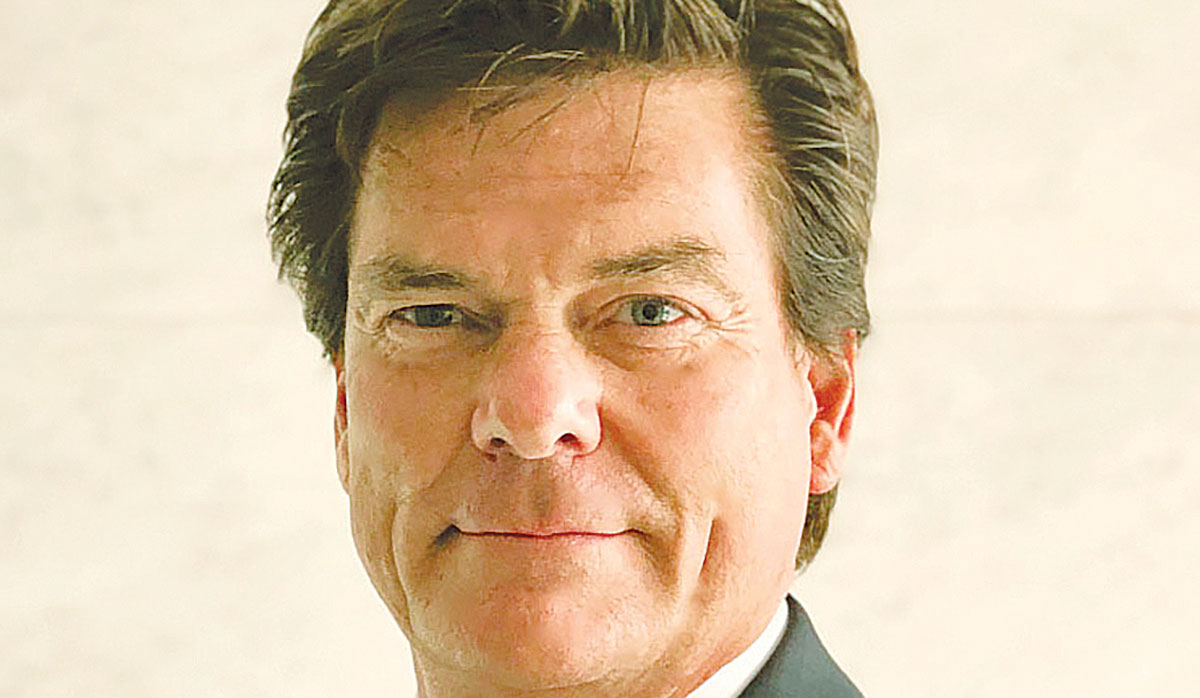
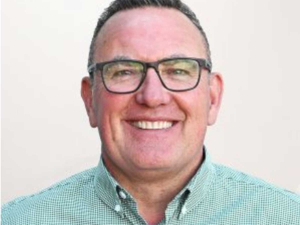
Lodestone Energy managing director Gary Holden. |
“But there is nothing we’ve heard that would suggest that it’s a bad idea,” he told Rural News. “As long as we’re not, you know, putting goats and things that might want to climb on the panels, we are pretty safe to start out with sheep and then evolve from there."
While some operators may choose fixed panels, Holden says Lodestone had made a design decision to standardize on electrically operated swivelling solar panels that track the sun through the day. This was because Lodestone sells electricity direct to customers – such as a recent deal to supply power to 260 stores for the Warehouse retail group. He claims investing in the tracking mechanisms meant Lodestone could get a lot more production in the shoulders of the day to better match the stores’ long opening hours.
Holden agrees that horticulture could be more complicated to integrate, particularly in choosing crops that won’t interfere with the rotating mechanism.
“Again, it’ll be experimenting. We’ll probably do a bunch of trials – we’ll take parts of different farms in different parts of the country to experiment with different things. It’s a work in progress.”
The managing director of a company seeking to build a solar farm in Canterbury says receiving fast-track approval is a “really positive outcome”.
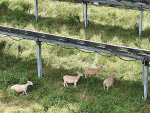
One of New Zealand's latest and largest agrivoltaics farm Te Herenga o Te Rā is delivering clean renewable energy while preserving the land's agricultural value for sheep grazing under the modules.
Solar generation company, Lodestone Energy is partnering with Haldon Station, located in the heart of the Mackenzie District, to build and operate a 220 MW utility-scale solar farm.
Solar generation company, Lodestone Energy is now delivering energy from its second solar farm, Rangitaiki in the Bay of Plenty.
Adding solar power generation to the rural economy is picking up pace, with one of the country's leading solar generation companies announcing plans for another 150 GWh (gigawatt-hours) per year at three Canterbury sites.

Farmer-owned fertiliser company, Ballance Agri Nutrients is welcoming National’s plan to negotiate security agreements with key supplier countries to protect New Zealand-bound products from export restrictions and greater supply chain certainty.
Carrfields has announced the appointment of Stu Hall to the newly created role of chief operating officer, Carrfields Ltd, reflecting the continued growth of their agribusinesses and the need to ensure the company has the leadership capacity and support in place as it pursues the emerging opportunities ahead.
New Zealand's role is not to compete with Indian growers, according to NZ Apples and Pears.
The potato industry is celebrating the success of two rising stars - James Blair, the 2026 Young Grower of the Year and runner-up and innovation award winner, Amber Davy.
Twenty-eight emerging leaders from across the horticulture sector spent two days last month learning valuable skills and connecting with industry experts.
There are five entrants in this year’s Young Horticulturist of the Year, competing in a series of technical, practical, business and leadership challenges.