Four Candidates Confirmed for Fonterra Board Election
Four candidates have been confirmed for two director positions on Fonterra’s board.
 increase font size

FARMERS’ PROBLEMS caused by the drop in Fonterra’s forecast milk solid payout are best tackled head-on with agribusiness management training, says Primary ITO, which offers courses in this discipline.
The need is urgent to review and revise budgets and monitor cashflow to ensure debt levels don’t rise unnecessarily. Spending cuts, increasing milk production and generally improving onfarm performance are among the options.
Primary ITO’s Diploma in Agribusiness Management supports farmers in honing their business management skills to manage risks like a volatile payout and take control of their business.
Key subjects include business and finance, where students learn to develop and monitor financial plans, monitor on-farm performance against objectives, and develop a budget to share with their bank manager or accountant, are all directly applicable to the farmer’s own business.
Cath Blake, manager of Dairy Training Ltd, says cashflow budget development and implementation are vital. “The skills farmers gain by completing the Diploma in Agribusiness assist in managing financial risk…. This financial capability helps farmers to look to the goals of the business and gives long term confidence in the dairy industry.”
Staff costs can also be a point of contention when budgets are tightened. Staff may be let go or professional development and training costs cut.
Mark Paine, DairyNZ strategy and investment leader (people and business) says recruiting the right staff and keeping staff motivated can mean staff turnover is reduced.
“The cost of staff turnover to the dairy industry is about $300 million per year. If we can hold onto our good staff, this can lead to better business performance.”
The Diploma in Agribusiness Management includes human resource management as a key subject, and supports farmers’ staff development. Farmers learn how better to recruit, select and induct staff, and build good working relationships and assess performance.
The Agribusiness Diploma is a collaborative project between Primary ITO, DairyNZ, Beef and Lamb New Zealand and HortNZ. Studies are open to farmers, growers and agribusiness operators.
www.primaryito.ac.nz/diploma
Four candidates have been confirmed for two director positions on Fonterra’s board.
A record farmgate milk price and strong global demand is laying the foundation for continued growth of organic dairy farming in New Zealand.
Waikato milk processor Tatua has again declared a record milk payout to farmer shareholders, leaving other processors in the dust.
Fonterra has unveiled its annual results for the 2026 financial year, posting $27 billion in revenue and close to $20 billion returned to New Zealand farmer owners and unit holders.
Fonterra Co-operative Group has confirmed the independently assessed candidates standing for election to its board in 2026.


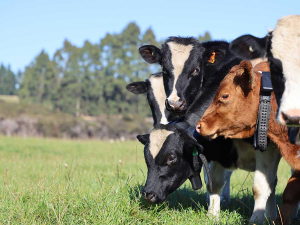
High country stations, mixed sheep and beef farms, Māori-owned farms, corporates and family operations are among the nine commercial farms taking part in the Livestock Innovation Farming Transformation programme, known as LIFT.
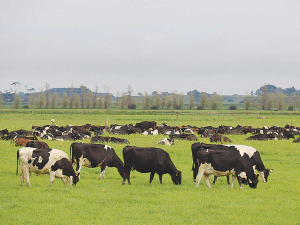
OPINION: New health and safety guidance unveiled by the Government recently provides farmers greater certainty about what is expected of them when managing risks on farm.
The National Animal Welfare Advisory Committee (NAWAC) is seeking public feedback on proposed changes to the Code of Welfare for Rodeos.
A New Zealand initiative supporting farmers to restore the health of grazing landscapes has received international backing through the Regenerative Fund for Nature, a global collaborative fund supporting regenerative agriculture and the communities that produce natural fibres for the fashion industry.
Combine premium New Zealand products, blend in a family ritual and what do you get? A world-class functional drink.
Entries are now open across eleven regions for the 2027 New Zealand Dairy Industry Awards (NZDIA).