Czarnikow Launches Digital Milk Pricing Tool in NZ
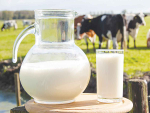
New Zealand dairy farmers are set to be the first in the world to receive access to a new digital physical milk pricing tool that enables them to fix the price for their physical milk.
 increase font size
I’D LIKE to talk about what New Zealand has to offer and about innovation in the New Zealand primary sector.
One of the biggest challenges the world faces in the coming decades is feeding its rapidly growing population. Growing markets, particularly in Asia, and the expansion of the global middle class, means agricultural producers will struggle to keep up with demand. The world’s biggest challenge can also be a nation’s biggest opportunity.
As a nation of over 4 million that feeds about 40 million, New Zealand is well placed to take hold of this opportunity. New Zealand prides itself on a world class reputation for producing high quality primary produce. But this reputation is not earned simply by producing mouth-watering steaks or outstanding wines, such as the ones displayed on the banner behind me.
New Zealand’s reputation is built on trust and integrity. It is vital that we retain this, so we have developed a world leading food safety regime. It is why we carefully manage the impacts of production on our environment, and strive to have a world class animal welfare system.
We need to assure our customers that New Zealand’s produce is made in a high quality, safe, ethical, and environmentally sustainable manner. Maintaining this reputation is paramount for New Zealand’s economic future.
The New Zealand Government is focused on economic growth, particularly in the aftermath of the global financial crisis and the earthquakes in Christchurch. As Minister for Primary Industries, a key focus of mine is to boost the productivity and competitiveness of New Zealand’s primary sector.
In the 1980s New Zealand underwent a comprehensive structural reform. These reforms removed agricultural subsidies along with a wide range of other industry protections. Because of these reforms, New Zealand is now one of the most efficient agricultural producers in the world. Following these reforms New Zealand primary sector productivity has doubled. For example, today we produce the same amount of lamb meat that we did prior to the reforms, but with half the number of sheep.
While this is good progress we need to do better. In international trade New Zealand is at a distinct disadvantage. We are a small country, with a small population, located in the middle of the South Pacific Ocean at the bottom of the world. But as I’ve said, your biggest challenges can also be your biggest opportunities. Our trading disadvantage has meant that we need to do more with less and to work smarter.
Innovation in the primary sector is a key priority for me and for the New Zealand government. That is why we launched the Primary Growth Partnership, or the PGP. The PGP is a partnership between industry and government. We jointly invest in research and innovation that will deliver long term economic growth and sustainability to the primary sector.
There is an exciting variety of projects underway, including selective mussel breeding, steep land forest harvesting, improving pasture quality and increasing the value extracted from animal carcasses.
The Prime Minister and I have a brought a number of our leading businesses with us on this trip, all on the cutting edge of agricultural innovation.
So why have we come here?
Mexico has astonishing potential as one of the world’s major emerging economies, on the edge of a thriving Asia-Pacific region, with strong export growth and a government focused on driving further economic growth. Trade relationships between New Zealand and Mexico are growing stronger.
New Zealand can also learn a lot from Mexico, just as I hope Mexico can learn from New Zealand. Mexico’s reputation for a high quality horticulture industry is well known in New Zealand. I want New Zealand to be a part of the Mexico story, just as I want Mexico to be a part of the New Zealand story.
An edited version of a speech given by Primary Industries Minister Nathan Guy to ‘Innovation in Agribusiness’ forum, Mexico.
New Zealand dairy farmers are set to be the first in the world to receive access to a new digital physical milk pricing tool that enables them to fix the price for their physical milk.

Makers and retailers of animal health and crop thriving products are backing the Government’s plan to step up approval processes for new offerings.
OPINION: New Zealand farmers have earned the right to be recognised as true world leaders in agricultural innovation.
The 2016 National Fieldays is underway with organisers hoping to bring town and country together in the advancement of agriculture.
New Zealand has some of the most innovative approaches to agribusiness in the world, but it has a ‘’glaring gap’’ in innovation in governance, says the Institute of Directors.


Supply chain problems, growing protectionism and a move to greater food security are some of the key challenges facing New Zealand exporters, according to our top trade negotiator, Vangelis Vitalis.
A spat within the ranks of the New Zealand Deer Farmers Association has resulted in the suspension of outspoken North Canterbury farmer Barry Cuttance.
After delivering a strong financial year, rural trader PGG Wrightson says the coming months will depend on customer confidence and weather.
Beef+Lamb New Zealand and the Ag Emissions Centre have launched a new research project aimed at helping beef farmers reduce methane emissions without impacting productivity or profitability.
The apple sector is working with the Government to unlock access to two key markets that could bring millions in revenue for apple growers.
Celebrating 50 years in the rural landscape of Central Canterbury and beyond, Ashburton-based Carrfields, has been the exemplar for all aspects of modern agriculture via its extensive range of services including supply, growing, agronomic advice and marketing.