NZ Rural Contractors Push for Urgent VDAM Rule Reform
While the Government has moved quickly to make commercial hauliers' lot easier during the current fuel crisis, they appear to be stuck in the creep box when it comes to the agricultural industry.
 increase font size
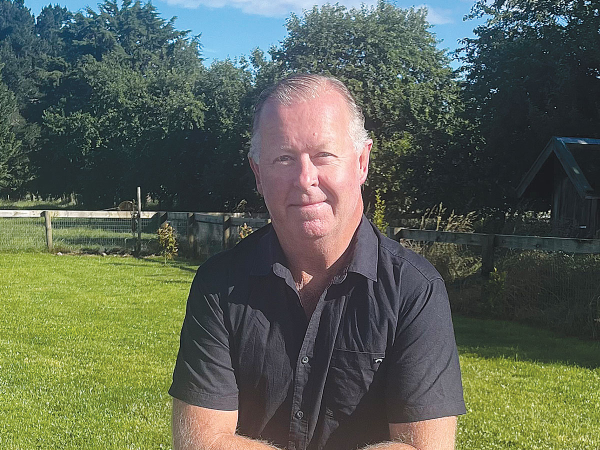 Rural Contractors New Zealand chief executive Andrew Olsen says his members are particularly vulnerable to fatigue.
Concern about fatigue impacts during a busy season prompted Rural Contractors New Zealand to launch a campaign about the risks. Chief executive Andrew Olsen explains.
Every job has it's pressures, but rural contractors work to weather windows and crop constraints, driving big machinery, so they can be particularly vulnerable to fatigue.
Rural Contractors NZ takes health & safety seriously. We had three separate presentations to our June conference about protecting our members' physical and mental health as well as that of their staff.
Now we are running a campaign to reduce the risk of fatigue this season.
This will feature an industry veteran and former RCNZ president Steve Murray is doing some short videos which spell out that avoiding fatigue risks requires everyone to do their bit.
Under health and safety laws, every employer must take 'all reasonably practicable steps' to prevent their workers being harmed. This means taking a systematic approach to identify, assess and control risks at work including fatigue and stress.
These can, of course, arise at home or at work but either way employers need to be alert to whether staff are able to work without putting themselves or workmates at risk. We suggest making fatigue a regular conversation with workers and encouraging them to talk if they are at risk. Breaks also need to be built into often-busy schedules, and if anyone is showing signs of fatigue, stand them down.
Skilled machinery operators remain hard to find but we say to members that, if they can, roster on extra staff during busy times and rotate them around the machines and tasks. Sometimes it might mean not being able to do a job. Those running rural contracting businesses can work such long hours themselves, trying to cover gaps, that they fall victim to the very risk they are trying to avoid with their staff.
We are also saying that as an employee, you need to play your part in ensuring the safety of yourself and your workmates. That includes getting as much quality sleep as possible and not getting on the turps ahead of a big day's work.
If you think a workmate is fatigued, you need to ensure someone is alerted as they could be a risk to you and others.
Of course, landowners also have a role to play. Rural contractors can sometimes be put under too much pressure to meet impossible deadlines.
Just be aware that while a rural contractor wants to do their best for you, they share the same lack of control of the weather or crop cycles.
And the last thing anyone wants is for a fatigued driver to do harm to themselves or someone else.
There are risks for everyone if you push yourself or others too hard.
Let's all work for a safe season by avoiding fatigue.
While the Government has moved quickly to make commercial hauliers' lot easier during the current fuel crisis, they appear to be stuck in the creep box when it comes to the agricultural industry.
Ensure your insurance is fully comprehensive and up to date because as a rural contractor you don’t know what’s around the corner.
Rural contractors are getting guidance on how to deal with recent rising fuel prices.
Rural contractors want the Government to include a national standard for air plans as part of its Resource Management Act reforms.
Rural Contractors NZ have launched a campaign today against the risks of fatigue in their industry.



Now in its fourth year, the 2026 Fencing Industry Awards, formed part of the proceedings of the FCANZ Conference, held in Nelson during August.
DairyNZ deputy chair Cameron Henderson has been re-appointed unopposed for another term.
OPINION: The stats speak for themselves.
Farms across the upper North Island are trialling different pasture mixes as part of a research programme that aims to build greater resilience into farming systems.
Election years are always a concerning time for farmers, according to DairyNZ chair Tracy Brown.
The Ballance Farm Environment Awards are coming to the West Coast of the South Island.