All locked up and without a plan to unlock
OPINION: Australia and the UK have just concluded a free trade deal.
 increase font size
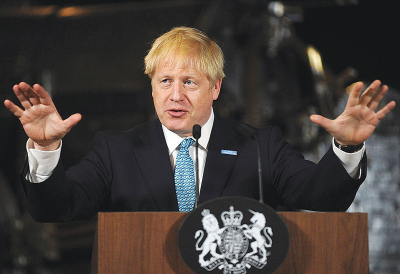 New UK PM Boris Johnson – along with Brexit – were two of the key talking points of the recent NZ farmers’ tour to Britain.
OPINION: You'd be forgiven if your eyes were starting to glaze over reading yet another Brexit headline, but we seem to be getting to the sharp end of things now.
Setting off on our annual UK and Ireland farming tour in June, we knew Brexit would be a hot topic. It was pretty clear a day or two into our trip just how frustrated the British people are with the status of this 2016 decision to leave the European Union.
About 30 million people voted and the ‘leave’ voters won by a close margin -- 52% to 48%. It’s easy to understand why the process has been hard going, with aspects like ‘the divorce bill’ and the ‘Irish backstop’ being particularly tricky.
After hearing heartfelt points of view and exasperation during our first few farm visits, we decided it was best practice not to mention ‘the B word’ unless it was first raised by our hosts. Inevitably it would come up, mostly the uncertainty and how the farming industry will adapt to a post-EU Britain.
We heard various perspectives, but immigration frustrations and the bureaucracy of Brussels were a motivator for many in England and Wales, both with a majority of ‘leave’ voters.
Most farmers we met in Scotland felt differently. A majority of Scots voted to remain in the EU. Many cannot see how they will survive without the extended European trade opportunities and feel uncertain that Westminster’s promises to the south will be extended to the north. Scotland’s First Minister, Nicola Sturgeon, is even calling for a new independence vote.
From a farming perspective, many Scots value the EU as an important source of affordable labour (eg Poland, Romania) and the EU’s single farm payment remains a significant proportion of income for many British farmers.
The Irish have their own concerns about Brexit. Like Scotland, a majority in Northern Ireland voted to remain in the EU. While there are still tensions, Northern Ireland has experienced 20 years of relative peace following ‘the troubles’ and they want this to continue. They fear that a return to a ‘hard’ border could cause a new wave of tension, not to mention the practicalities of movement and trade with a ‘hard’ border in place.
Brexit, we discovered, isn’t the only troublesome ‘B word’ in the UK right now. There’s also Prime Minister Boris Johnson. After three weeks of travelling and meeting locals throughout the UK, we were yet to meet one of his supporters. But clearly, they’re out there.
• Kirstie Macmillan is a director of Farm To Farm Tours
OPINION: Australia and the UK have just concluded a free trade deal.
Agriculture and Trade Minister Damien O'Connor is off to Europe soon to try and breathe some life into free trade talks between NZ and the UK, and NZ and the European Union.
OPINION: Former NZ agriculture and trade minister, and ex-High Commissioner to the UK, Lockwood Smith, was the only non-UK member of the UK Trade & Agriculture Commission (TAC), which was tasked by Secretary of State for International Trade, Liz Truss, to look at finding a way forward of Britain supporting trade liberalisation, while ensuring UK standards are not undermined.
OPINION: One of life’s commercial shibboleths is that one should be wary of going into business with close friends because emotion is always involved.
The United Kingdom-European Union agreement – announced late last year –on post-Brexit trade arrangements will deliver certainty.
Farms across the upper North Island are trialling different pasture mixes as part of a research programme that aims to build greater resilience into farming systems.
Election years are always a concerning time for farmers, according to DairyNZ chair Tracy Brown.
The Ballance Farm Environment Awards are coming to the West Coast of the South Island.
Most dairy regions around the country have had a pretty good season so far says Tracy Brown.
Rural leader Mark Hooper has been appointed as an independent director to the NZPork board, bringing extensive farming, governance and advocacy experience to the role.