
NZ Apple Sector Pushes for Japan & Korea Market Access
The apple sector is working with the Government to unlock access to two key markets that could bring millions in revenue for apple growers.




 increase font size
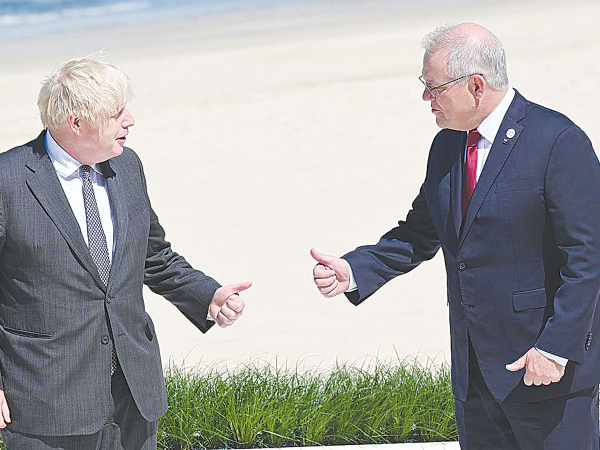 UK Prime Minister Boris Johnson and his Australian counterpart Scott Morrison have agreed in principle to a free trade deal.
OPINION: Australia and the UK have just concluded a free trade deal.
According to multiple news sources, it includes a substantial revamp of visa requirements to make it easier for professionals and young travellers to work and live in both countries, recognises a raft of qualifications, welcomes investment, especially in green technology and phase out tariffs and quotas.
This is a good result for trade liberalisation, but frankly it should have been us.
Both New Zealand and Australia started their negotiations last June, but Australia seemed to want it more. There has been an urgency from Australia that has been lacking with NZ.
Dan Tehan, Australia's Trade Minister, flew to the UK in April to negotiate with his counterpart face to face to ensure Scott Morrison could conclude this deal off the back of his G7 invitation.
Damien O'Connor arrived in London last week to begin his equivalent face to face meetings. He deserves to feel uncomfortable sitting watching the formal announcement of the Australian deal - it's not good enough.
Now the really tough test goes on O'Connor and (Prime Minister Jacinda) Ardern to match if not better the Australian deal.
Our NZ exporters want no constraints in exporting their goods and services to the UK, accepting that there will probably be a transition period of some sort. Our employers want access to significant numbers of UK skilled people to help the recovery of their businesses from Covid-19. Our businesses want UK investment and global perspectives to help fund their growth. Our young people want to travel to the UK and ensure those OE years are a part of their lived experience.
Bi-lateral trade deals are a moment in time for governments to showcase how much they value strengthening integration between two peoples and nations. They are litmus tests on how they see the future.
In Boris Johnson and Scott Morrison, with their respective 'I love Australia' and 'Global Britain' mantras express a contagious enthusiasm for what is possible. For them, connecting their countries with each other and the world is critical and Australia and UK appear set on coming out of Covid with a 'go get 'em' attitude creating a pervasive domestic momentum.
New Zealand, by contrast, seems locked in perpetual hand wringing and self-flagellation. We are locked up, seemingly without a plan to unlock; closed to migration of any substance, afraid of foreign investment.
At the very time our Trade Minister should be promoting our agricultural sectors sustainability credentials with gusto, this government holds it up to the light, not to celebrate but to find flaws to critique, regulate and tax.
The Government even frames climate change not as an exciting opportunity to embrace innovation and amplify our strengths, but to close down whole sectors, destock and plant trees.
Worse still is the 'life and death' catastrophizing language used to frame it from the very top.
Bringing this 'hunker down' and defensive attitude to a negotiating table is bad for NZ exporters and I fear it will pervade the UK/NZ FTA deal.
The urgency, the enthusiasm, the passion for NZ exporters needs to be front of centre - starting now!
Todd Muller is National's spokesman on trade and export growth.
The apple sector is working with the Government to unlock access to two key markets that could bring millions in revenue for apple growers.

Talk the language of business when communicating the benefits of Free Trade Agreements (FTAs) - that's the message to the Government and its officials from public and international trade law expert Sarah Salmond.
A trade deal with the United Arab Emirates has moved a step close following a meeting between NZ's Trade Minister Todd McClay and UAE Trade Minister Dr Thani bin Ahmed Al Zeyoudi.
ANYTHING GOOD for Australia is in the long run good for New Zealand. That’s the reaction of Trade Minister Tim Groser to the news that Australia has signed a free trade agreement with China, and to speculation that their FTA with China is better than NZ’s, especially regarding dairy products.
National Party trade spokesman Todd McClay will become the party’s agriculture spokesperson, National leader Christopher Luxon announced today.


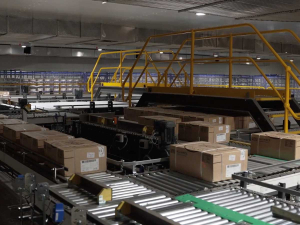
Alliance is calling for final applications for its 2027 Graduate Programme, with applications closing on Sunday 25 October.
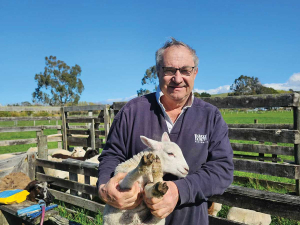
Decades piloting planes has ensured vet and farmer David Hayes is focused on safety. So, after a serious accident while welding on farm, he is sharing his experience so others can learn from it.
Canterbury milk processor, Synlait Milk has confirmed Leon Fung as its chief executive officer.
OPINION: Making it easier to collect rainwater and use it to grow crops and livestock is a no brainer.
As part of its Election 2026 coverage, Rural News asked political parties how they would help pull the arable sector out of the doldrums. Here's what they said:
Farmers are being encouraged to rethink how they manage waste on farm with the launch of ruralwastesorted.co.nz, a new website bringing together practical tips, real farmer experiences and resources.

OPINION: It seems Canterbury processor Synlait is still in the doldrums.
OPINION: Get offside with New Zealand First leader Winston Peters at your own peril.




