
NZ Apple Sector Pushes for Japan & Korea Market Access
The apple sector is working with the Government to unlock access to two key markets that could bring millions in revenue for apple growers.




 increase font size
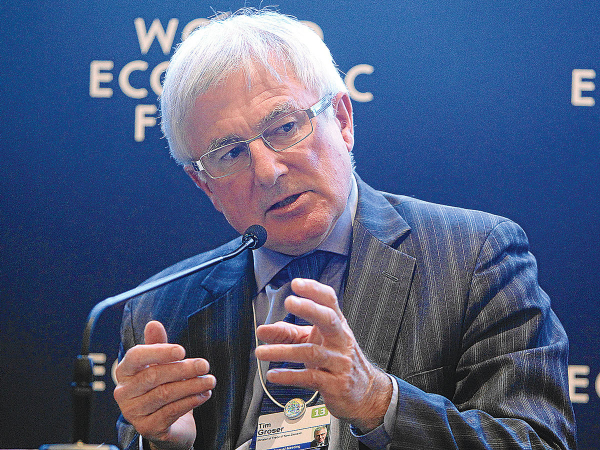 Trade Minister Tim Groser.
ANYTHING GOOD for Australia is in the long run good for New Zealand. That’s the reaction of Trade Minister Tim Groser to the news that Australia has signed a free trade agreement with China, and to speculation that their FTA with China is better than NZ’s, especially regarding dairy products.
Grosser told Dairy News that the final details of the Australia/China FTA haven’t been revealed and won’t be for several months. He says once the political announcement has been made, the lawyers from both countries go over the agreement in detail to make sure the agreement in Chinese matches the English text. The process is called ‘legal scrubbing’.
From what he has gleaned so far, Groser says there is a degree of similarity between the New Zealand FTA with China and the Australian one. But he says it appears the Australians may have made some gains in the phasing out of tariffs – a point he will take up with the Chinese.
But Groser says any suggestion Australia would displace New Zealand in the Chinese market is ridiculous.
“The Chinese market is expanding so rapidly that Fonterra reached the conclusion five years ago that there was no possibility of a New Zealand based production system keeping up with demand.
“That is why Fonterra is investing $1 billion in producing milk in China. And the New Zealand dairy industry is twice the size of the Australian industry.
“We were the same size 15-20 years ago but we now produce about 19 billion litres of milk and they produce 9-10 billion. So this idea that there is not enough room for us in China now that Australia has negotiated this good FTA deal is not based on any numerical analysis.”
Groser says a strong Australian economy is good for New Zealand and if their FTA strengthens their economy it will have a positive flow-on effect for New Zealand.
“Specifically anything good for the Australian dairy industry is good for New Zealanders because the 10,000 Fonterra shareholders own 20% of the Australian dairy industry. It’s an interesting paradox, it’s not a win-lose thing at all. New Zealand has a slice in the success of the Australia deal.”
Groser says key Australian products such as sugar, wheat, rice and cotton are not included in the FTA.
Differences will even out over time
DAIRY COMPANIES Association of New Zealand (DCANZ) executive director Kimberly Crewther says the deal is a good one and differences between the Australian and New Zealand FTA’s will even out over time.
“It’s a case of swings and roundabouts,” she says.
Under the Australian FTA, the tariffs on dairy products will be phased out in 4-11 years. This means the tariffs on New Zealand product will be phased out sooner than Australia’s. However under the New Zealand FTA there are limits on the percentage of goods admitted tariff free every year; this is called a ‘safeguard’ clause and it appears Australia may not have such a restriction in its FTA.
“Over time it will even itself out. With infant formula, for example, we have achieved zero tariffs now and there is no volume restriction. The Australians are going to take another four years to get to their own tariff rate cut. For butter we are under a safeguard provision and the Australians will have small tariff advantage once we hit the volumes.”
Crewther says it’s probably too early to predict how the two FTAs will compare. But there are positive messages for farmers.
“In the global context it is another step towards liberalisation for dairy products.”
The apple sector is working with the Government to unlock access to two key markets that could bring millions in revenue for apple growers.

China remains New Zealand’s biggest market, taking $23 billion of our exports, but it’s no longer a commodity story, says Prime Minister Christopher Luxon.
Fonterra is strengthening its foodservice presence in China with the launch of a new cream for professional bakeries at Bakery China 2026 in Shanghai.
OPINION: Your old mate hears an international incident is threatening to blow up the long-standing Anzac alliance as Kiwis and Aussies argue over who wants new Australian resident and former NZ Prime Minister Jacinda Ardern.
OPINION: What does the birth rate in China have to do with stock trading? Just ask a2 Milk Company.


In Dacre, near Invercargill in New Zealand’s South Island, Bruce Dinnington is running a dairy operation unlike any other.

A free online platform aggregating governance vacancies across rural and regional New Zealand has been launched.
Environment Minister Nicola Grigg has announced details of a new rural plastics recycling scheme.
Agricultural drone operators say that a government decision to allow lower-risk drone work without certification won’t lower standards but drive innovation and efficiency.
OPINION: Warning bells are ringing in the arable sector.
Farmgate lamb prices are down by 8%, beef cattle by 4.5% and farm expenditure up by 4.2%.



OPINION: It seems Canterbury processor Synlait is still in the doldrums.
OPINION: Get offside with New Zealand First leader Winston Peters at your own peril.




