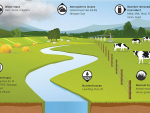
OverseerFM Adds Five New Crops in Model Update
Overseer Ltd has released an update to OverseerFM, the farm environmental modelling software, incorporating research findings that refine its estimates of crop nitrogen uptake.
 increase font size
 Parliamentary Commissioner for the Environment Simon Upton.
OPINION: The infallibility of Overseer – the tool farmers have been required to use to measure nutrient loss – has come crashing down following a report by a special science advisory panel.
The panel managed to get access to the base data that supports this software model, which is owned jointly by MPI, AgResearch and the Fertiliser Association of NZ.
For a long time, farmers and many others have been questioning the veracity of Overseer. Horticulturalists in particular have pleaded with councils and the courts that the tool does not suit their needs. Their pleas have been ignored.
Credit must go to the Parliamentary Commissioner for the Environment, Simon Upton, who in 2018 conducted his own review into Overseer. He didn’t have the benefit of the data the science advisory panel had this time, but clearly saw the weaknesses in Overseer and drew it to the attention of the Government and the public.
There is no doubt that Overseer is a useful tool, but clearly its scientific value has been over-estimated by all and sundry. The company which owns it says Overseer still says it is doing what it is designed to do. The answer to that is probably yes – it helps some farmers estimate nutrient loss – but to use it as a legal tool is a bridge too far.
Farmers rightly argue that they have spent millions of dollars trying to stop Overseer being used as a regulatory tool and have got nowhere. They should rightly feel aggrieved.
But the problems don’t end there. What are the alternatives? Will an upgraded Overseer be ready in time to legally monitor the essential freshwater reforms? Will the Government revert to putting in rules such as the EU has, which are input rather than outcome-based?
The report, which is excellent, has now just added to the uncertainty that farmers and councils face in trying to implement all the changes in the pipeline.
Will we see legal challenges to Horizons’ One Plan and how will the courts now deal with future plans? It seems that, for the moment at least, Overseer’s days as a regulatory tool are over.
Thank you Simon Upton for your persistence!
Overseer Ltd has released an update to OverseerFM, the farm environmental modelling software, incorporating research findings that refine its estimates of crop nitrogen uptake.

New Zealand's Emissions Trading Scheme (NZ ETS) encourages afforestation while not achieving climate goals, says a new report released by the Parliamentary Commissioner for the Environment, Simon Upton.
A four year trial has reaffirmed that mixing plantain into dairy pastures can help reduce nitrogen losses to freshwater while maintaining milk production and profitability, say researchers.
The Parliamentary Commissioner for the Environment, Simon Upton, wants environmental information to be treated as critical national infrastructure.
Parliamentary Commissioner for the Environment Simon Upton is calling for cross-party consensus on the country's overarching environmental goals.


During the nesting season, from September to December, industrious starlings can quickly build nests in the darker areas behind tractor and vehicle, usually close to hot engines, typically resulting in localised damage or in some cases complete write-offs.
The meat processing industry is much more collegial than it was in the past and is now more focused on common goals.
With the last couple of months having seen some potential tractor purchases put on hold with the impending election and continued input cost rises, year-to-date figures, ending September, has seen deliveries up around 5% over the same period in 2025, with a total of 2026 units.
Beef+Lamb New Zealand is calling for nominations for director roles in the Northern South Island and Northern North Island electoral districts.
Fonterra chief executive, Richard Allen says being resilient has helped the dairy industry overcome extreme volatility in recent years.
The head of the Ministry for Primary Industries (MPI) trade and international relations group says New Zealand is well-positioned to secure trade access and compete internationally as the world becomes more complicated, demanding and uncertain.