
Red Meat Farmers Welcome Labour's Emissions Pricing Pledge
Red meat farmers are welcoming Labour’s plan to review the Emissions Trading Scheme and not to campaign on pricing agricultural emissions.
 increase font size
 He Waka Eke Noa has proposed two alternative options to the ETS.
OPINION: The He Waka Eka Noa partners - including Beef + Lamb NZ - have developed two emissions pricing options as alternatives to bringing agriculture into the Emissions Trading Scheme (ETS).
In 2019, following the passage of the Zero Carbon Act, the Government consulted on bringing agriculture into the Emissions Trading Scheme (ETS). The agricultural sector, working together, convinced the Government not to do this and to work with the sector and iwi on an alternative approach for managing our emissions - through the He Waka Eka Noa partnership - with a view to introducing the framework in 2025.
However, the Government made it clear that if we did not meet certain milestones, it would bring agriculture immediately into the ETS. There is already legislation in place that would allow it to do this - the 'ETS backstop'.
The partnership needs to provide advice to the Government by the end of April 2022 on an alternative framework.
The partners in He Waka Eka Noa (including the Government) have developed two alternative options to the ETS. A high-level explanation of these options has been released, along with an outline of what the ETS backstop would like.
Information is being made available now, so you have time to understand what's being considered, how the options work and how they compare. There will be a full formal consultation process in February where you can provide feedback (more detailed information will be released in late January ahead of this).
B+LNZ has worked to try and come up with a better system for agriculture that seeks to fairly treat different types of farming systems and the different stages of farmers in their development, as well as working for other sectors. We have been part of this process with other agricultural organisations, including DairyNZ and Federated Farmes, and the Government and iwi.
Our key priorities have been:
Our vision is to establish a framework that is separate for agricultural emissions from the ETS and which can be evolved and improved over time.
While they're not perfect, we believe the alternative emissions pricing options have advantages over the ETS for sheep, beef and dairy farmers. We believe they provide farmers with a lot more control and options to reduce the costs they face over time, either through getting their on-farm actions recognised or through better recognition of their sequestration.
The proposals are a starting point and will evolve as science, measurement and technology allow more accurate recognition of what's happening on individual farms.
New Zealand is the only country into the world to have taken a split gas approach to methane emissions, through the Zero Carbon Act. B+LNZ does not agree that the methane targets in the Act are justified based on the science around methane's impact on warming.
However, we can't change the targets through He Waka Eke Noa and this is a separate process. There will be a review of the targets in 2024 and we are committed to working with Federated Farmers, DairyNZ and others to get the targets reviewed using the latest science.
It's important to note that if we're unable to reach agreement on a pricing framework and agriculture goes into the ETS, in effect we will have lost the split gas outcome and it won't matter what the targets are as the methane price will simply be linked to a rapidly-increasing carbon price.
Source: Beef+Lamb NZ.
Red meat farmers are welcoming Labour’s plan to review the Emissions Trading Scheme and not to campaign on pricing agricultural emissions.
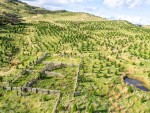
The New Zealand Institute of Forestry (NZIF) says unnecessary changes to New Zealand’s Emissions Trading Scheme (NZ ETS) will seriously erode investor confidence and result in significant reductions in forest planting rates.
New Zealand's Emissions Trading Scheme (NZ ETS) encourages afforestation while not achieving climate goals, says a new report released by the Parliamentary Commissioner for the Environment, Simon Upton.
Conversions of sheep and beef farms to forestry have slowed, however new research from Beef + Lamb New Zealand (B+LNZ) suggests land of value for food production remains at risk.
The Climate Change Commission has recommended maintaining the current New Zealand Emissions Trading System (NZ ETS) settings but warns of a potential unit shortfall as early as 2028.


Federated Farmers says it welcomes Labour's commitment to reviewing the Sharemilking Agreements Act, calling on other major parties to do the same.
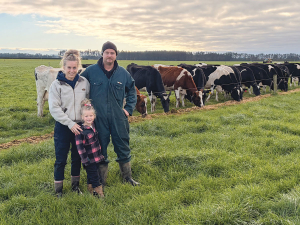
For Canterbury dairy farmers Sian Meijer and Rick Wobben, wearable technology has become one of their most valuable on-farm tools - helping manage 1850 cows across an expansive, high-performing dairy operation while improving efficiency, mating outcomes and day-to-day decision making.
Fonterra has unveiled its annual results for the 2026 financial year, posting $27 billion in revenue and close to $20 billion returned to New Zealand farmer owners and unit holders.
The first major update to the Dairy Cattle Code of Welfare in more than a decade has been released, marking what DairyNZ describes as an important step in ensuring animal welfare standards continue to evolve alongside scientific evidence and on-farm realities.
Ravensdown shareholders have elected Jane Montgomery and Kate Acland to the Ravensdown Board for three-year terms, following a closely contested director election.
Federated Farmers says new legislation replacing the Resource Management Act will cut red tape, unlock investment and help grow New Zealand's export-led economy, after the Planning Bill and Natural Environment Bill passed their third reading in Parliament yesterday.




