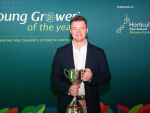
James Blair Named 2026 Young Grower National Champion
James Blair, an agronomist for AS Wilcox and the Pukekohe regional champion, has won the 2026 Young Grower national title.
 increase font size
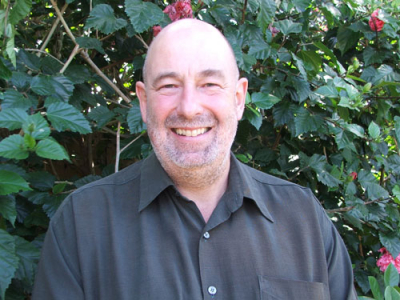 Mike Chapman.
Election year is the time to pitch for policies that will enable the continued growth and prosperity of New Zealand.
My pitch is for the Government to develop a food security policy.
Three key ingredients form the basis of this proposed policy. The first is that many of our fruit and vegetable growing operations are inter-generational, and we want that to continue. They have been in existence long enough for the fourth and, sometimes, the fifth generation to be entering the business. To continue this succession, there needs to be a focus on ensuring the land can be sustainably farmed.
This leads to the second ingredient for the proposed policy – sustainable environmental standards that are achievable. For each generation to pass the land onto the next in the best possible state for continued growing, the business has to be environmentally sustainable.
Additionally, the growth of horticulture is driven by exports, which attract premium prices because of our quality and healthy offerings. NZ horticultural exports are not just commodities, they are food, and consumers have high expectations.
To continue to attract a price premium as exports, our horticultural operations have to establish, and be audited against, environmental standards. High standards are set by the retailers we sell to. To maintain intergenerational ownership of our orchards and gardens we need to run environmentally sustainable operations and, to sustain these enterprises financially by earning premium prices, there is a need to meet standards imposed by those we sell to.
The third element is the need to protect our land. Growers face rapid expansion of our cities, particularly Auckland, and the proliferation of lifestyle blocks, putting the squeeze on our top growing areas, such as Pukekohe. If we do not protect this land we will end up having to import spring vegetables that are now grown locally and delivered in the freshest state.
This is because our spring vegetables are mostly grown around Pukekohe where the soils and climate enable earlier growth then elsewhere in NZ. Note that this is not just a critical issue in the Auckland area where the best land for horticulture is under threat; it is true in every major horticulture growing region.
The policy I am pitching is for the Government to develop a food security policy so that NZ can supply its domestic needs and do so at affordable rates. As noted above, the proposed food security policy is integrally linked to sustainable land management. So any food security policy would need to incorporate the continuation and improvement of environmental sustainability. The two are integrally linked and feed directly into financial and social sustainability for NZ.
Horticulture is a significant employer in rural NZ on a per hectare basis. It supports local communities through permanent employment of local people and seasonal employment of local and temporary workers from offshore, i.e. backpackers and recognised seasonal employer (RSE) scheme participants.
All these workers contribute to the local economy. But most importantly, the survival of rural communities is predicated on the residents having the financial means to live in that community.
The food security policy therefore does much more than protect the best horticultural land; it ensures NZ can feed itself, it keeps rural NZ populated and thriving, and it makes NZ financially sustainable.
• Mike Chapman is the chief executive Horticulture New Zealand.
James Blair, an agronomist for AS Wilcox and the Pukekohe regional champion, has won the 2026 Young Grower national title.
Blueberries have the potential to become a major horticultural export, earning up to $150 million within the next three to five years.
New Zealand needs to make sure that it continues to focus on its own food security, according to HortNZ board member and blueberry grower Dermott Malley.
According to a progress report on the Aotearoa Horticulture Action Plan (AHAP), New Zealand's horticulture sector is making real progress on the big issues facing growers.
Horticulture New Zealand’s Board has welcomed the re-election of grower-elected directors Alistair Petrie and Doug Brown.


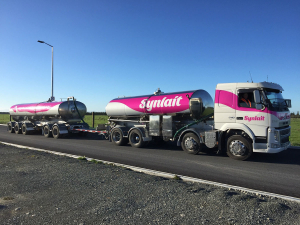
Synlait has swung to second-half profit as operations stabilise, but the dairy processor still posted a $75.4m annual loss.

LIC shareholders have elected a new North Island representative to the co-operative's Board, along with five representatives to its Shareholder Reference Group (SRG), following the company's Annual Meeting held in Invercargill.
Farmers across parts of Southland and South Otago are continuing to deal with difficult conditions after a prolonged run of wet weather, with pressure building around feed supply, stock management, pasture damage, farm infrastructure and everyday workloads.
Federated Farmers says it welcomes Labour's commitment to reviewing the Sharemilking Agreements Act, calling on other major parties to do the same.
For Canterbury dairy farmers Sian Meijer and Rick Wobben, wearable technology has become one of their most valuable on-farm tools - helping manage 1850 cows across an expansive, high-performing dairy operation while improving efficiency, mating outcomes and day-to-day decision making.
Fonterra has unveiled its annual results for the 2026 financial year, posting $27 billion in revenue and close to $20 billion returned to New Zealand farmer owners and unit holders.




