Fonterra Elections 2026: Voting Opens Tuesday 20 October
Fonterra shareholders can begin voting on Tuesday 20 October in the 2026 Board of Directors’ election, a Co-operative Council election in one Ward, and seven Annual Meeting resolutions.
 increase font size
 Fonterra's lacklustre 20-page document will struggle to stimulate farmers, already in favour of a radical change in the board size.
Fonterra's new discussion booklet on revamping its governance is titled 'Let's have the Conversation'.
But the lacklustre 20-page document will struggle to stimulate farmers, already in favour of a radical change in the board size.
After being stunned in November by 54% shareholder support for a leaner board, the co-op's board and Shareholders Council agreed to speed up the process.
Farmer shareholders were told that several years of preparatory work had been done by a joint board/council review committee locally and overseas.
Sadly, for farmers the discussion document doesn't reflect this, it outlines what most farmers already know.
Last week, the board and council held farmer meetings around the country to discuss the discussion booklet; next month the co-op will develop its proposal based on farmer feedback.
In April, a draft proposal will be submitted to farmers; a second discussion booklet will be distributed, followed by another round of farmer meetings.
Farmers will vote on the final proposal in May.
A proposal floated by former directors Colin Armer and Greg Gent called for a nine-member board, appointed by farmers; this gained 54% support at the last annual meeting but fell short of the 75% support required to force a constitutional change.
The dilemma facing Fonterra's board is that most farmers are already in favour of a smaller board; they voted for the Armer/Gent proposal despite, defying a recommendation from the board and council.
It's clear that farmers have made up their mind; a fitter and leaner board is the way to go.
One issue up in the air on board representation is the future of independent directors; currently Fonterra has nine elected and four independent directors.
The independents wield lots of influence and can end up holding the balance of power; when Armer lost the chairmanship to incumbent John Wilson by one vote in 2012, the independents are believed to have backed Wilson.
The Armer/Gent proposal seeks only farmer-elected directors on the board.
In its discussion booklet, Fonterra argues for having qualified independent directors.
Farmers will be mulling over their options in the coming months; they have already defied the board and Shareholders Council once on the issue; they won't hesitate to do that again.
Fonterra shareholders can begin voting on Tuesday 20 October in the 2026 Board of Directors’ election, a Co-operative Council election in one Ward, and seven Annual Meeting resolutions.

Fonterra Co-operative Group chief financial officer Andrew Murray has resigned to take up a role outside the dairy giant.
Four candidates have been confirmed for two director positions on Fonterra’s board.
A record farmgate milk price and strong global demand is laying the foundation for continued growth of organic dairy farming in New Zealand.
Waikato milk processor Tatua has again declared a record milk payout to farmer shareholders, leaving other processors in the dust.


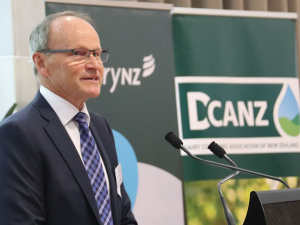
Dairy processors are ready to further boost New Zealand’s export earnings but want the incoming government to match their ambition with good policy.
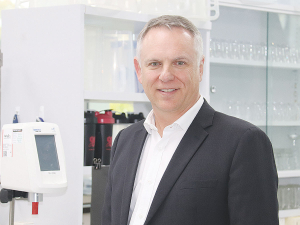
Massey University is best placed to solve the “problems” facing the dairy industry, says vice chancellor, Pierre Venter.
Synlait's longest serving employee – a man who joined the Canterbury-based milk processor even before it began processing milk – is now its newest executive.
A dairy industry leader believes eradicating the common and costly disease, Bovine Viral Diarrhoea (BVD) is within reach.
A farmgate milk price of $10/kgMS this season is firming up as milk powder prices soar and the New Zealand dollar weakens.
Federated Farmers has welcomed new rural policies released by ACT, saying they align closely with its own election priorities.