
Alliance Group chief executive steps down
Alliance Group chief executive Willie Wiese is leaving the company after three years in the role.




 increase font size
 Alliance chair Mark Wynne
After two years, Alliance Group has returned to profit.
For the year ending 30 September 2025, Alliance recorded a net profit before tax of $24.6 million on revenue of $2.1 billion, compared to a net loss before tax of $120.8 million on revenue of $1.8 billion the previous year.
Alliance chair Mark Wynne says the result represents a significant milestone in Alliance's reset as the company looks forward to its joint venture partnership with Ireland-based Dawn Meats.
“After two very challenging seasons, it’s pleasing to return to profit. This result reflects the hard decisions we’ve made as part of our ruthless back-to-basics strategy," Wynne says.
“We have also worked hard to reduce our reliance on sheepmeat by strengthening our beef capabilities, diversified our market mix and enhanced transparency with our farmer-shareholders.”
Wynne says the strategic investment partnership with Dawn Meats, approved by farmer-shareholders in October, will further strengthen Alliance's financial position and long-term competitiveness.
“The partnership will ensure Alliance has the financial strength, scale, market reach and capability to thrive in global markets while safeguarding the interests of our farmers.
“Following a full business reset, Alliance has adopted a disciplined, back-to-basics approach focused on creating more market value, returning more value to farmers and driving greater enterprise efficiency.
“Over the past 12 months, Alliance has strengthened its financial position by reducing costs and optimising processing capacity. We have enhanced farmer offerings, invested in smarter technology, reduced inventory levels by around half compared with the same time last year and improved sales velocity.
“For the first time in many years, the company also funded capital expenditure on fixed assets directly from free cash flow.”
Meanwhile, Alliance chief executive Willie Wiese says the results show the company's strategy of focusing on the core business through its back-to-basics approach is working.
“We’ve focused on the business fundamentals of enterprise efficiency, market value creation and organisational discipline -- and the benefits are now flowing through to farmers.
“Operational improvements have lifted yields across all species through better plant performance and processing reliability. These changes have already made a tangible difference to farm-gate returns.
“The changes we have made to the way we sell, supported by positive pricing and demand across key export markets, provided a welcome boost after two difficult years when many farmers faced losses following a sharp correction in ovine pricing in China.
“While trading conditions in China remain challenging, Alliance’s diversified market approach helped balance performance. Strong demand in North America, Europe and the United Kingdom contributed to the positive result.
“Beef demand was particularly strong in the United States, where herd numbers are at their lowest for 75 years and domestic consumption remains high.
“Our long-standing customer relationships again proved their value, helping maintain pricing stability for our farmers.”
Wiese says technology has also played in Alliance's turnaround.
“The rollout of a new Enterprise Resource Planning (ERP) system improved transparency, strengthened control and enhanced decision-making across the business.
“Combined with disciplined cost management, sharper execution and improved processing performance, these changes have created a leaner and more agile business, capable of responding quickly to changing market conditions.
“The past year has been about creating organisational effectiveness and running the business more efficiently, making better use of every dollar, and rebuilding trust and confidence with farmers.
“There’s still work to do, but the foundations are now in place. We’re grateful to our farmers for their loyalty and commitment as we’ve reshaped the business.
“The Alliance team deserves a lot of credit for our turnaround. Our people have worked hard to get the company back onto a firm footing despite significant uncertainty, showing real commitment and pride in what we do for our farmers and communities.
“With the back-to-basics approach now embedded, we’re well positioned to achieve our ambition of creating a high-performing company for our people, farmers and customers.
“We’re excited about our new partnership with Dawn Meats and the potential value it will unlock in the business and across the globe.”
Alliance Group chief executive Willie Wiese is leaving the company after three years in the role.
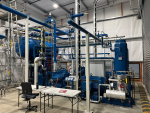
Alliance Group has commissioned a new heat pump system at its Mataura processing plant in Southland.
Alliance and Dawn Meats have completed their new strategic partnership.
OPINION: Your old mate hears some of the farmers involved in the Meat Industry Excellence (MIE) group ten years ago think the Alliance deal with Irish company Dawn Meats is “an absolute disaster” – and is the kind of outcome they predicted back then if nothing changed.
The new majority owner of meat company Alliance has no plans to close any processing plants. Instead, Dawn Meats plans to extract more value from Alliance's existing footprint.



Testing confirms H5 bird flu in a single northern giant petrel, found dead on a remote Cape Palliser beach in the Wairarapa, says Dr Mary van Andel, the Ministry for Primary Industries' (MPI) Chief Veterinary Officer.

"What's for dinner?" may sound like a simple question, but for many Kiwi parents, answering it has become a job in itself.
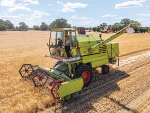
Fifty Eight years ago, on the 16th of August 1968, August Claas, the founder of the harvesting company and father of Helmut Claas, personally presented a Claas Senator combine harvester to Scottish farmer John Steven.
New Zealand consumers are paying more for beef mince than ever before, with the average retail price now sitting above $24 per kilogram, according to Rabobank.
State farmer Pamu has delivered its strongest operating result on record.
Four years since it was first detected in New Zealand, researchers and growers now know much more about management of maize pest fall armyworm (FAW).

OPINION: The same mainstream media muppets that brought you Jacindamania in 2017 have been flat out pimping for the Opportunities…
OPINION: Your old mate reckons the atrocious way farmers in the UK are treated by their lords and masters in…